
BOUDREAUX’S COLLISION · REPAIR EDUCATION
Tire Sidewall Damage After Curb Impact
Sidewall cuts, bulges or other visible damage after a curb impact warrant appropriate tire assessment. A tire can retain air while still having a concerning condition. The wheel and nearby suspension may also need inspection.
Illustration: Tire Sidewall Damage After Curb Impact
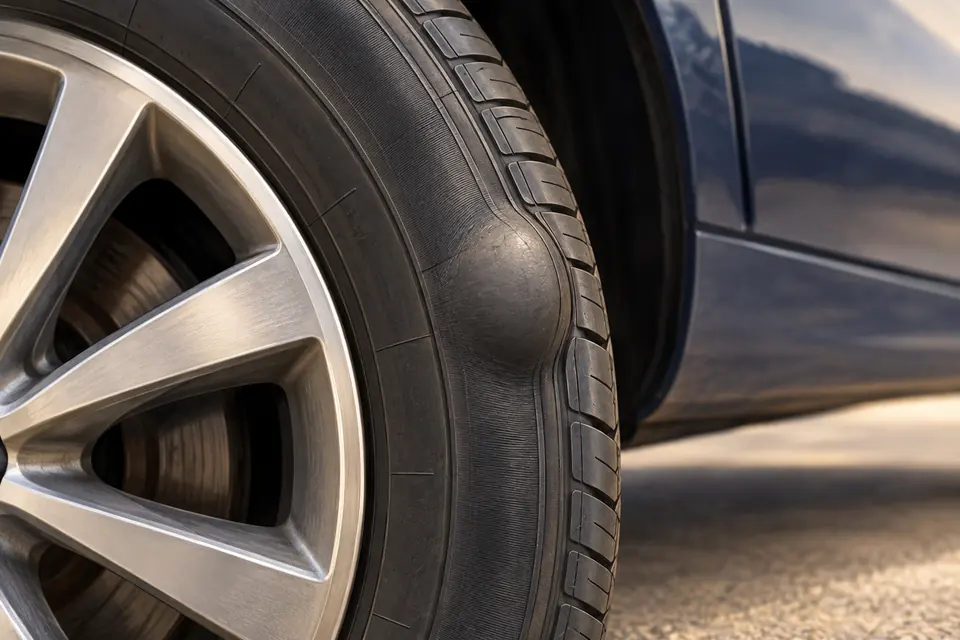
Generated educational illustration: tire sidewall assessment context. Not an actual customer repair, diagnostic result, staff member or Boudreaux’s facility.
What to Clarify for Your Vehicle
Do not rely on air pressure alone as driving clearance. Tell the shop or tire professional where the impact occurred and any visible changes. Tire condition, wheel condition and alignment are separate questions that should not be collapsed into one check.
A sidewall bulge is not ordinary cosmetic damage
An outward bulge after an impact can indicate internal tire damage. Cuts and other sidewall injuries also require proper assessment. A tire holding air is not proof that its structure is sound, and a sidewall injury should not be treated like a routine tread puncture.
Do not continue driving on a tire with a visible bulge to see whether it worsens. Arrange professional guidance and suitable transport or assistance. The vehicle and tire instructions matter to any temporary replacement arrangement.
Inspect the wheel assembly as well as the tire
A curb impact can affect the wheel and related suspension or steering components. Replacing the tire does not automatically settle every damage question. Ask what else was inspected and whether alignment assessment is required.
Document the damaged area from a safe standing position. Do not crawl beneath an unstable vehicle or touch sharp damaged edges. Tell the shop whether pressure was lost and whether the wheel was struck directly; that history helps focus the inspection.
Example: an inflated tire with an outward bulge
Suppose a tire develops an outward sidewall bulge after a curb impact but still appears to hold its pressure. The pressure observation does not establish that its internal structure is intact. The bulge needs professional assessment and should not be treated as ordinary cosmetic scuffing.
Arrange suitable assistance rather than driving to watch the condition change. If a temporary wheel or tire arrangement is needed, it must be appropriate for the vehicle and its instructions. This page does not prescribe a universal spare-tire procedure for every damaged vehicle.
Tell the shop whether the wheel was directly struck, whether pressure was lost and whether steering or suspension symptoms changed. Ask what related components require inspection. Replacing the visibly damaged tire may be necessary, but does not independently establish the condition of the wheel and surrounding assembly. Keep any additional assessment with the collision scope so the repair record explains more than the tire purchase.
Further repair information
USTMA: tire repair limits and inspection
General background and manufacturer examples do not replace current applicable information for the actual vehicle and operation.
Related Guidance
Separate a surface scrape from a structural tire concern
A curb can mark a wheel and damage a tire during the same contact. A superficial-looking scuff is not enough information to judge the tire’s condition, particularly when the impact was substantial. Cuts, bulges, exposed material or a change in shape call for prompt professional assessment. A tire that still holds air can have damage that is not apparent from an outside photograph.
Record the affected wheel and the direction of the strike if you can do so from a safe position. Do not crawl underneath the vehicle, jack it up on the roadside or touch damaged material to measure a cut. Tell the receiving shop about pressure loss, a new vibration or visible distortion before arranging movement.
Sidewall and shoulder damage are outside the repairable tread-puncture area identified in tire-industry guidance. A plug advertised for a tread puncture is not a remedy for impact damage to a sidewall. A qualified tire professional should make the replacement assessment.
A replacement decision also needs the vehicle requirements
If replacement is needed, the tire must suit the vehicle and its application. Ask the repairer to check the specified size, load and speed requirements and any manufacturer instructions about matching tires on the vehicle. Replacing one damaged tire is not automatically the right answer for every drivetrain or set of remaining tires.
Ask whether the wheel itself needs examination for damage and whether the impact also calls for suspension or alignment assessment. A new tire does not straighten a bent wheel or restore a damaged suspension component. Those are separate findings with separate remedies.
When comparing an initial estimate with a revised plan, look for the reason behind any additional tire or wheel operation. A useful explanation connects the observed damage, the manufacturer’s requirements and the proposed part. Keep photographs of the affected area for the repair discussion, but do not interpret a photograph as approval to continue driving.
Plan transport before testing the tire on the road
Do not drive a damaged tire to see whether a bulge grows or a vibration becomes worse. Contact roadside assistance or the receiving shop for transport guidance. If a spare is an option, its use still depends on safe installation, vehicle instructions and whether other collision damage prevents movement. This page cannot establish those conditions remotely.
Give the tow provider the confirmed receiving address and tell the shop about wheel damage before arrival. New Orleans and Luling are separate Boudreaux’s locations; choosing the correct destination avoids an unnecessary transfer. Ask which collision-related tire assessment can be arranged with the selected shop.
At pickup, request the tire specification and the explanation of any remaining wheel or suspension findings. Keep that information with the repair invoice. If a pressure warning, vibration or unusual steering behavior appears afterward, contact the shop promptly and ask about safe transport instead of assuming the new tire resolved every effect of the impact.