
From the Boudreaux’s archive
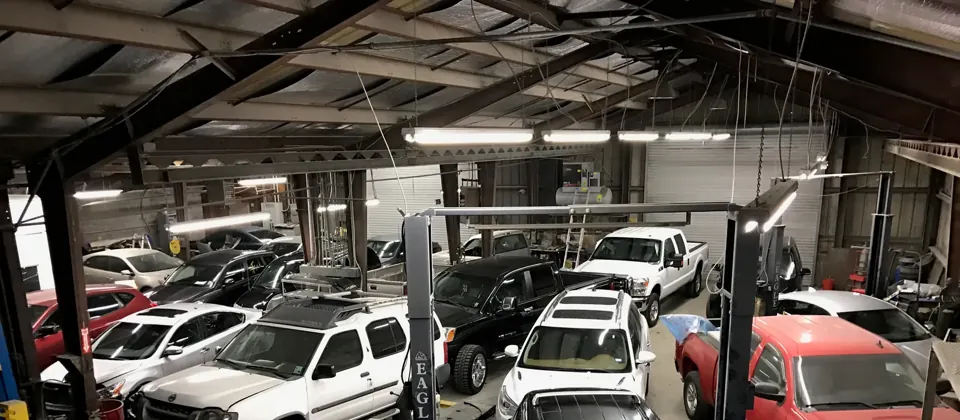
Owner-supplied archive view of the New Orleans workshop, cropped to exclude vehicle inventory tags. This historical facility context does not establish present capacity or receiving arrangements; confirm drop-off with the selected team.
What should I do before dropping off my vehicle?
Confirm the drop-off arrangement with the shop first. Gather keys, relevant claim and vehicle information, and remove belongings that are not needed for the repair when it is safe to do so.
Describe warning lights, leaks, drivability concerns and prior symptoms. Ask whether child seats, aftermarket accessories or unusual loading affect access or vehicle-specific checks. If the vehicle may be unsafe, arrange transport instead of driving it to the shop.
How This Fits Into the Repair Plan
Confirm receiving first, prepare safely accessible belongings and relevant keys or records, and describe current movement concerns. Make the actual contact and authorization arrangements clear at handover.
Related Repair Guidance
Confirm the receiving plan before preparing the vehicle
Identify the chosen shop and confirm acceptance, visit purpose and receiving instructions. New Orleans and Luling are separate destinations. A route link or online request does not establish permission to leave a vehicle without an arrangement.
Tell the team about any rolling, steering, closure or driving concern. If transport is involved, confirm the plan before dispatch and provide the driver the exact shop address and agreed instructions. Do not drive an uncertain vehicle simply to avoid arranging movement.
Ask which information or documents are relevant to the actual intake. A dated estimate, vehicle identity and known concerns may help the conversation, but the shop can clarify what is needed for the current step. Avoid bringing unrelated private records as if every document must be supplied.
If the vehicle is elsewhere or access is limited, explain that before arrival. A receiving plan should follow the actual circumstances rather than a generic assumption that the owner will drive in and leave immediately.
Related reading: Vehicle Intake Before Collision Repair and What Happens When Your Vehicle Arrives at the Body Shop?.
Prepare belongings and history without disturbing damaged areas
Remove personal items from areas you can reach safely, and ask the team about anything that cannot be accessed. Do not force a damaged closure or reach through unstable parts to empty the vehicle. Safe access comes before a tidy drop-off.
If an accessory, key arrangement or modification may matter to moving or assessing the vehicle, describe it. Ask what the team needs rather than leaving unexplained equipment or instructions. Ask the team about the key, storage or accessory arrangement that applies to the actual vehicle arrival.
Share known earlier repairs and conditions in the affected area. Distinguish what existed before the event from new observations. The record helps the assessment without assigning a diagnosis or automatically treating every earlier issue as collision work.
Do not remove trim, disconnect modules or clear warnings as preparation. These actions can alter useful information or create another concern. The supported access and assessment should be discussed in the actual plan.
Make the handover record understandable
At arrival, identify the vehicle, agreed purpose and current estimate or request. Tell the team about any condition that changed since the arrangement. A new leak, warning or movement issue should not remain hidden behind an earlier description.
Clarify which assessment or work is authorized and what remains provisional. Ask how changed scope will be discussed and who is following the next step. A drop-off is not a substitute for an understandable repair agreement.
Where insurance is involved, keep the claim identifier and current contact information clear through the actual conversation. Coverage and payment responsibility should be clarified separately from technical work and receiving acceptance. Do not publish private identifiers in a public review or message.
Keep the relevant dated documents and any agreed instructions together. Boudreaux’s can use the actual vehicle and arrangement to discuss the next stage. Ask the team about the actual intake arrangement, applicable storage terms and current repair plan.