COLLISION REPAIR

Collision-Related Wheel Alignment

An impact does not have to leave a wheel visibly bent for alignment or suspension geometry to deserve attention.
Collision damage can affect components and dimensions that influence how the wheels are positioned relative to the vehicle and road.

Why Alignment Can Matter After Impact

Alignment can relate to:

  • steering/handling
  • tire wear
  • suspension components
  • structural geometry
  • steering-angle and driver-assistance considerations on some vehicles

Alignment and Structural Repair

If structural dimensions or suspension mounting points have changed, simply adjusting alignment angles may not address the underlying cause. Collision repair planning should consider the larger vehicle condition.

Alignment and ADAS

On some vehicles, alignment-related work can interact with calibration requirements for driver-assistance systems. The correct sequence depends on the vehicle and manufacturer procedures.

Inspect Before Adjusting

A collision can affect a tire, wheel, steering part, suspension component or its mounting structure. An alignment reading shows geometry, but it does not always identify the cause of a changed result. A bent part should not be treated as a problem solved merely by adjustment.

Ask which physical checks were completed and whether any component or mount needed repair first. Describe pulling, noises, steering changes and wheel impacts. If control is questionable, arrange assessment or transport rather than driving to see whether the vehicle corrects itself.

Alignment and Structural Measuring Answer Different Questions

Alignment checks the relationships of the wheels. Structural measuring compares vehicle reference dimensions. A displaced mount can affect wheel geometry even after a damaged suspension component is replaced. The inspection should establish which information is needed to identify the cause.

Ask what the readings show and what lies outside their scope. A completed alignment is not an independent certificate that the entire vehicle structure is correct. Similarly, body dimensions alone do not evaluate every tire or steering concern.

Steering-Angle and ADAS Considerations

Some vehicles have steering-angle or ADAS setup requirements after particular alignment or suspension operations. These electronic procedures are distinct from physically correcting wheel geometry. The current vehicle information determines whether they are required and where they fit in the sequence.

Ask which setup requirements follow the actual repair and what records are retained. Do not assume that alignment automatically calibrates every sensor, or that an electronic reset repairs a bent component. Each task addresses a specific question.

Reading the Result With the Shop

An alignment report is more useful when the shop explains the values, relevant vehicle information and any remaining concern. Ask what was outside the applicable range, what changed during the repair and whether other findings required attention. The report should be discussed alongside the physical inspection.

Prior tire wear or symptoms can matter to interpretation. Tell the shop what predates the accident and what changed afterward. A symptom such as pulling or an off-center wheel is a starting point for diagnosis, not proof of one particular damaged part.

Choose the Location for the Operation

Rodney has confirmed alignment/frame equipment at the New Orleans shop. Call 504-309-3092 to discuss collision-related alignment needs before a visit. Confirm the specific operation and arrangement with the selected shop; the New Orleans equipment inventory must not be assumed at Luling.

Use the linked steering, suspension and structural guides to prepare questions. An online estimate can begin the conversation, but the condition of a wheel or suspension component may require direct inspection before the repair scope is established.

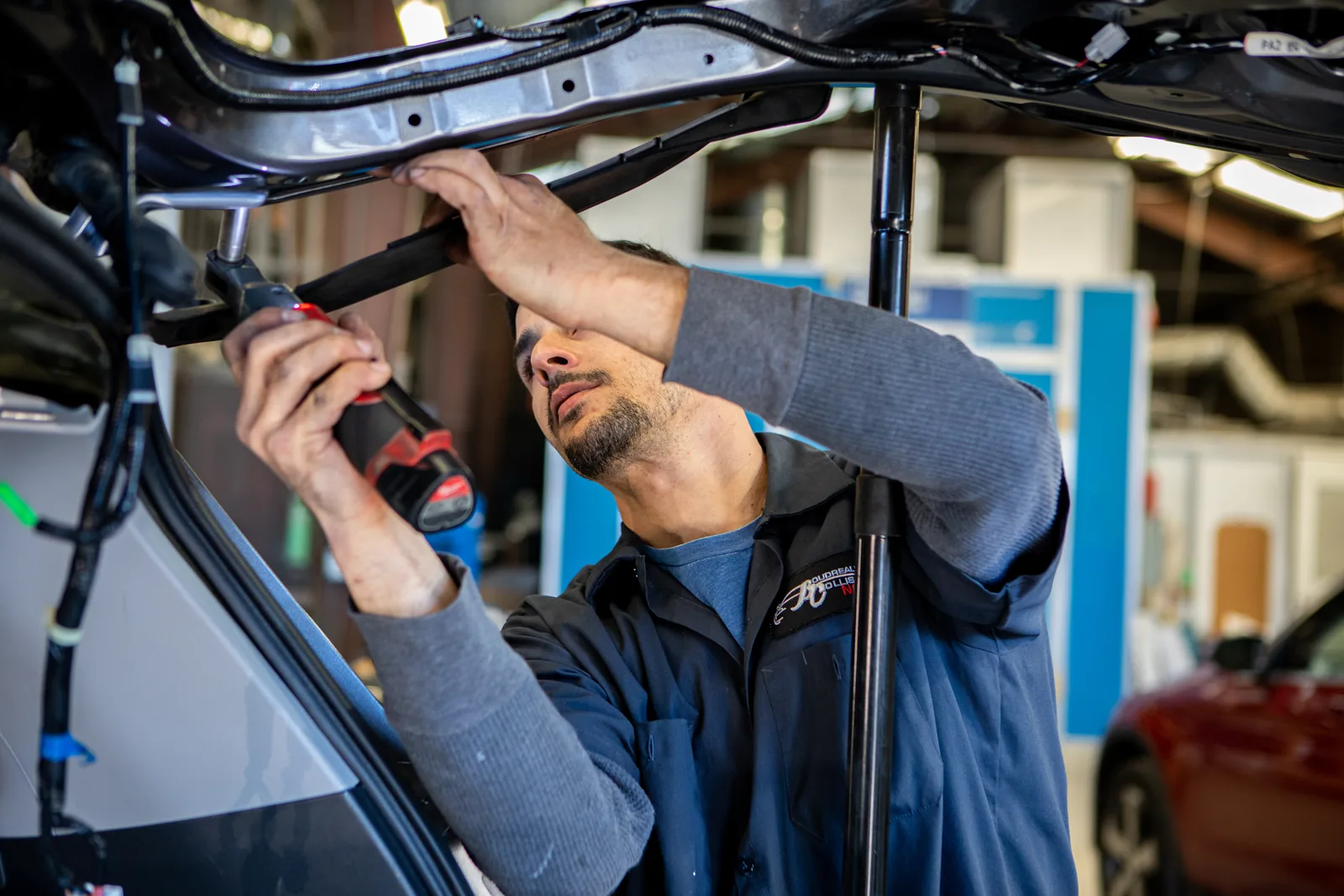
Beneath a raised vehicle

Owner-supplied photograph of a technician examining the underside of a raised vehicle.

Owner-supplied shop photograph of a technician beneath a raised vehicle. Alignment readings, physical findings and any related setup should be explained in the records for your own repair.

Questions before your next step

An impact can affect wheel geometry, steering or suspension components. The actual damage and applicable repair procedures determine whether alignment belongs in the plan. Tell the shop about pulling, an off-center steering wheel, unusual tire contact or other changes after the collision.

No. Damaged parts, tire conditions, structural changes or other faults may need attention before alignment can address the relevant geometry. An inspection is needed to determine the cause. Do not assume that a quick adjustment can resolve every symptom following an impact.

Alignment capability is available at the New Orleans operation. Ask which shop should inspect your vehicle and how the required work will be arranged. This does not establish every location’s equipment or promise that all alignment and suspension services are available as standalone work.

Discuss collision-related inspection and repair needs with the team. Standalone maintenance services and availability should be confirmed with the shop before booking. Describe why you need the service, including whether an impact occurred, so the team can advise on the appropriate next step.

Report steering changes, pulling, vibration, tire or wheel damage, leaks and unusual noises. Explain which wheel or area was struck and whether the vehicle can move normally. If there are safety concerns, ask about transport rather than driving to the shop solely to obtain an alignment.

An alignment report provides information about wheel geometry; structural measuring addresses a different part of the assessment. The repair plan may call for both. Ask what inspections are appropriate for the impact rather than treating one report as a complete evaluation of the vehicle.

Boudreaux’s uses OEM structural and suspension parts under its stated parts policy. The team should explain the relevant replacement decisions for your repair. Insurance coverage, availability and other parts questions still need to be discussed; this policy does not guarantee insurer payment for every proposed operation.

An adjustment cannot necessarily compensate for a bent, broken or otherwise damaged component. Inspection determines which repairs are needed before the geometry can be evaluated appropriately. Ask the shop to explain the sequence and the evidence supporting any proposed replacement.

Some vehicles and repair operations call for additional procedures involving steering-angle information or driver-assistance systems. The relevant manufacturer instructions determine what applies. Ask how these requirements will be included and documented rather than assuming alignment alone completes every related task.

Coverage depends on the policy, claim and documented repair requirements. Boudreaux’s can communicate relevant information and supplements with the insurer where applicable. Ask what the estimate includes and whether any operation is awaiting approval; payment cannot be guaranteed by a website service description.

Contact the repairing shop and describe the symptom, when it occurs and any new warnings or tire changes. Follow the shop’s guidance about inspection and driving. Do not ignore a new safety concern or assume the cause can be diagnosed from an online description alone.

Provide your vehicle details, the impact location, steering symptoms and any existing estimate or alignment report. Choose your preferred shop and a reachable contact method. The team can confirm the correct intake step and determine which inspection or repair operations apply.

Been in a collision?

Choose the shop that’s most convenient for you and start the process.