
Illustration: TIG Welding and Collision Repair Decisions
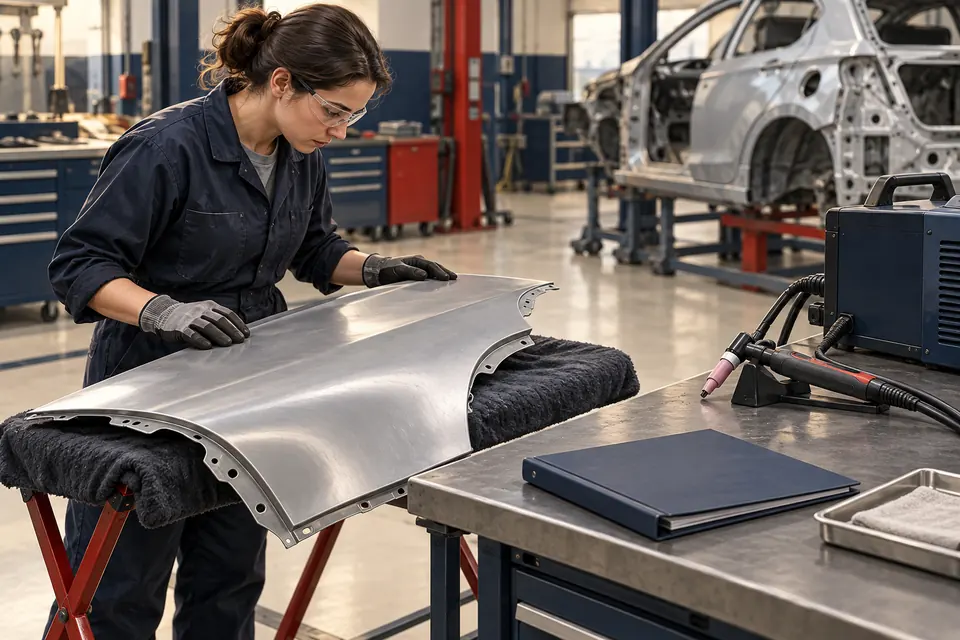
Generated educational illustration: tig process suitability discussion. Not an actual customer repair, diagnostic result, staff member or Boudreaux’s facility.
Is TIG welding automatically the best collision-repair method?
TIG is a welding process with specific uses and equipment requirements. Its availability does not mean it is the approved method for every damaged collision component.
The decision belongs to the material and vehicle procedure, not to a universal preference for one type of weld. Ask whether the manufacturer allows the proposed joint and which method it specifies. Do not infer a shop’s specialized TIG capability from this educational explanation.
How This Fits Into the Repair Plan
Ask which instruction supports the actual component and method. Confirm the performing or coordinating team and relevant completion information without relying on a universal process ranking.
Related Repair Guidance
A process description is different from a vehicle requirement
TIG is commonly associated with gas-tungsten-arc welding. Its process category should be distinguished from the applicable repair instruction for a specific vehicle and component. A name or general reputation does not establish that it is permitted or required for every collision operation.
Ask which actual component, material and proposed work are under discussion. An outer panel, reinforcement and adjoining structure can have different requirements. A process used on another application is not automatically the supported method for the part in your estimate.
The damage findings and replacement scope also matter. Ask what supports repair or replacement and which joining arrangement follows. A part listing or photograph cannot independently authorize every partial operation or joint location.
Do not attempt welding or select generic settings to test suitability. This owner education page explains the questions to ask, while the actual technical operation needs the applicable information and supported arrangement.
For the broader method comparison, read Collision Welding and Vehicle-Specific Joining Methods. To understand another process label alongside the applicable vehicle requirements, use MIG/MAG Welding in Collision Repair. Keep the actual component and supported operation clear when comparing these topics.
Avoid universal process rankings
A process should not be selected solely because it sounds more precise, familiar or convenient. Ask which vehicle-specific instruction supports the proposed method. Equipment availability and broad process preferences do not replace the actual component requirements.
If a different joining arrangement is proposed, clarify why and what instruction permits it. MIG/MAG, TIG, resistance spot welding, bonding and mechanical attachments should not be treated as universally interchangeable labels. The supported scope follows the actual work rather than a general ranking of names.
Access, preparation and disturbed protection can affect the operation. Ask which related work is included and what remains provisional until assessment. A main panel or welding line may not describe every concealed treatment, attachment or finish operation.
If the method or supplied component changes, request the dated revision and applicable reason. Keep the component, material and supported-operation descriptions clear. A new total without that explanation can leave the actual decision difficult to review.
Ask about the actual capability and final record
Discuss the relevant operation with the selected Boudreaux’s team. A page about TIG does not establish a specific equipment inventory or promise that every method is performed at both shops. Ask which team will perform or coordinate the supported work for the identified vehicle.
At handover, ask which joining and related operations were completed and what relevant verification or explanation is available. A finished exterior cannot independently document every concealed joint. The result should be understood according to the actual component and permitted method.
Where insurance is involved, separate technical requirements from claim review. Ask the shop about supported work and the insurer about its actual decision. Approval or payment does not determine a universally preferred welding process.
For a later concern, record the area and circumstances and contact the repairing team before alterations. A process label alone does not diagnose the symptom. Keep the final scope and relevant records together so the follow-up uses the actual operation.
Questions About TIG Welding and Collision Repair Decisions
Technical Reference
I-CAR: factory construction and repair procedures. Manufacturer requirements for the exact vehicle control the repair method. A reference link does not imply Boudreaux’s certification or affiliation.