
BOUDREAUX’S COLLISION · REPAIR EDUCATION
Required Inspections After a Collision
Inspection requirements depend on the vehicle and impact. The visible damaged panel may not be the only area that needs assessment, particularly when loads reached suspension, structure, electronics or restraint-related components.
Illustration: Required Inspections After a Collision
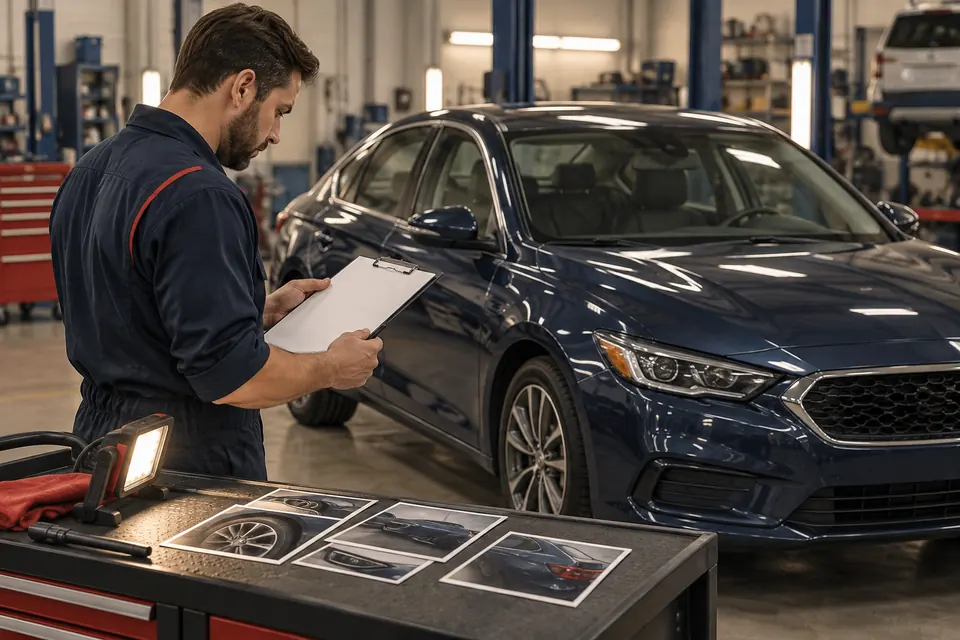
Generated educational illustration: inspection purpose findings plan. Not an actual customer repair, diagnostic result, staff member or Boudreaux’s facility.
Does an inspection requirement mean a part must be replaced?
Inspection requirements depend on the vehicle and impact. The visible damaged panel may not be the only area that needs assessment, particularly when loads reached suspension, structure, electronics or restraint-related components.
A required inspection is not the same as an assumption that the part is damaged. It is a way to establish its condition using the applicable criteria. Ask what triggered the inspection and what findings determine whether repair, replacement or further testing is needed.
How This Fits Into the Repair Plan
Name the inspection purpose and distinguish proposed assessment from a completed finding. Ask which result supports retaining, repairing, replacing or further evaluating the actual component.
Related Repair Guidance
Identify why an inspection applies
An inspection can be required by the actual vehicle information, event or proposed operation even when a part looks undamaged. Ask which component and requirement the plan identifies. A normal exterior appearance is not a universal substitute for the applicable assessment.
Describe the collision history and any warning, changed closure, handling concern or visible leak. Mention earlier conditions and repairs. The observations help direct assessment without independently establishing every affected component or inspection requirement.
Vehicle identity and fitted equipment matter. A checklist for another model should not automatically be treated as the complete inventory for yours. Ask which actual information supports the relevant inspections and what remains provisional until identification or access.
Do not dismantle unfamiliar components to establish their condition for an online estimate. Safe photographs and a clear history are useful, while authorized access and supported inspection belong in the actual repair plan.
Related reading: OEM Position Statements vs Repair Procedures and Vehicle Intake Before Collision Repair.
Distinguish inspection from the resulting operation
A required inspection and a confirmed replacement are different stages of the decision. Ask what finding will determine the supported next operation. The presence of an inspection line does not necessarily establish that every inspected part is damaged.
Electronic information, physical inspection, measurement and applicable setup can answer different questions. Ask which evidence supports each relevant conclusion. A no-code scan should not be expanded into proof of every physical component’s condition.
If access is needed, clarify the authorization and which question it resolves. A preliminary estimate can identify an open inspection without settling the final scope. Request the expected update point rather than assuming the first visible estimate describes every operation.
When a finding changes the proposal, ask for the dated revision and explanation. Identify whether the change comes from confirmed damage, a replacement instruction or another applicable requirement. Keep those reasons distinct so the new scope is understandable.
Use completion records with an explained purpose
At pickup, ask which relevant inspections were completed and what their findings established. If the result led to repair, replacement or another operation, ask how that decision is reflected in the final scope. An unexplained checked-off label may need clarification.
If a limitation remains, ask what next step resolves it and whether follow-up is needed. An unassessed area should not silently be treated as confirmed sound merely because another result was complete.
Where insurance is involved, separate the technical inspection and finding from claim review and payment responsibility. Ask the shop about the supported work and the insurer about its actual decision. Clarify any open approval before a changed operation proceeds.
For a later concern, record the location, timing and conditions and contact Boudreaux’s before alterations or resets. The relevant initial and completed records can support the next assessment without guessing from a generic inspection list.
Questions About Required Inspections After a Collision
Technical Reference
I-CAR Repairability Technical Support. Manufacturer requirements for the exact vehicle control the repair method. A reference link does not imply Boudreaux’s certification or affiliation.