
Illustration: Rear-Ended While Parked? A Repair Intake Checklist
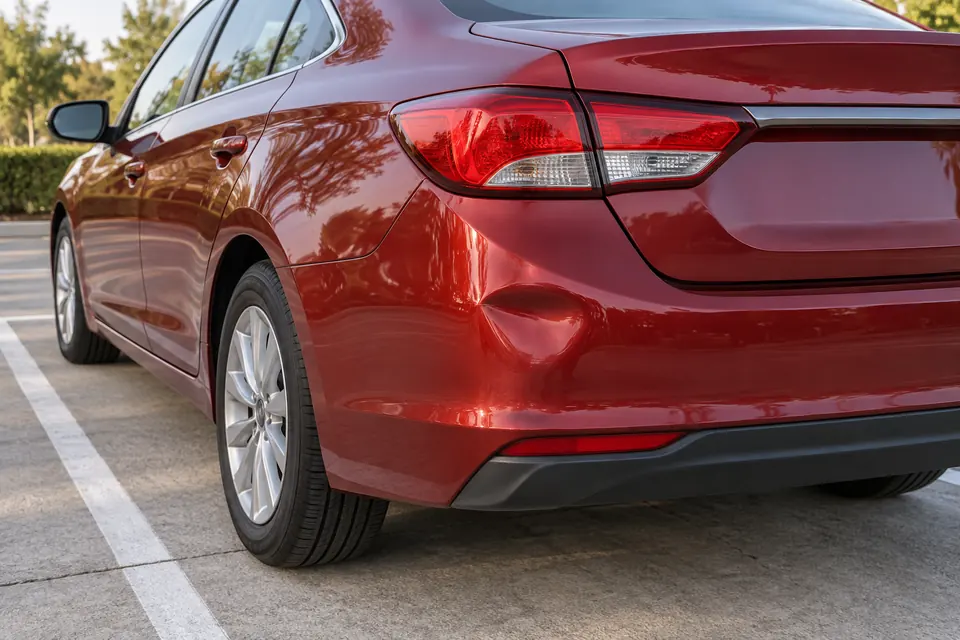
Generated educational illustration: parked rear impact. Not an actual customer repair, diagnostic result, staff member or Boudreaux’s facility.
Owner checklist
By Boudreaux’s Collision · · 8 minute read
A parked car can have more than a scraped bumper after a rear impact. Record what changed around the trunk, lamps and bumper before requesting an inspection. Photos help start the conversation, but they cannot establish the condition of the reinforcement or structure behind the cover.
What the symptom does—and does not—tell you
Parked does not mean protected from hidden damage. The impact can move through the cover into an absorber, reinforcement, attachments or rear body panel. A trunk that now needs extra force to close, a shifted lamp or an uneven gap gives the shop useful information about where to look. Those observations are clues, not a diagnosis. A cracked cover and a damaged reinforcement also require different repair decisions. Avoid pushing components back into place just to improve the photographs; that can obscure their current condition.
Three useful details to collect
- Photograph the whole rear, both corners and the bumper-to-body gaps from a safe position.
- Record whether the trunk, liftgate, tail lamps or parking alerts behave differently.
- Provide earlier rear-body repairs and accessories such as a hitch if known.
How to discuss the next step
At intake, tell the shop the vehicle was stationary, which corner was struck, and whether it was pushed into another object. Describe new closing problems, warning messages, unusual sounds or moisture separately. Ask whether the initial inspection includes access behind the bumper and what additional authorization is needed for disassembly. If the damaged area is close to sensors or wiring, ask how vehicle-specific checks will be determined. Request an explanation of which findings support repair or replacement rather than assuming the visible scratch sets the entire scope.
Record what happened while the car was parked
- Original contact: Identify the struck rear area and what you actually know about the contacting object.
- Secondary contact: Say whether the vehicle was pushed into another object, or whether that part of the sequence is unknown.
- Later movement: Describe any tow or move after the event so later photographs are understood in context.
Related reading: Rear bumper damage and access behind the cover.
Use the first observation as the review reference
Keep a brief dated note of the trunk, lamp or alert change with the original images. When the shop explains the proposed scope, ask which finding addresses that observation and which item remains subject to access. At handoff, return to any reported closing or warning concern instead of checking only the newly finished bumper.
Choose New Orleans or Luling
New Orleans shop · 2150 Earhart Boulevard, New Orleans, LA 70113 · (504) 309-3092
Luling shop · 101 4th Street, Luling, LA 70070 · (985) 331-0707
Request an estimate conversation or contact your preferred shop. Confirm the vehicle-specific service arrangement and any transport needs directly.
Related services and detailed guides
Vehicle-specific information
Repair requirements should follow the applicable manufacturer information. For technical context, consult I-CAR’s Repairability Technical Support resources. These resources support informed questions; they are not a substitute for a qualified assessment of your vehicle.
Build a clear before-and-after account
A useful intake note can be short and specific: the vehicle was parked, the left rear corner was struck, the trunk now takes extra force to close, and the parking alert changed afterward. That description gives the team separate observations to investigate. It is more useful than deciding in advance that the vehicle needs only a new bumper cover or that a warning must come from one particular sensor.
Record any earlier rear-body damage you know about, but distinguish it from the new impact. If the vehicle was moved after the collision, say how it was moved and whether another object was involved. Keep the timeline, photos and existing estimate together. You do not need to measure the body yourself or remove trim to make the request useful.
At the first repair discussion, ask which parts can be inspected without disassembly and which questions remain open. If access is needed, clarify the next authorization step. A preliminary estimate, an insurer decision and permission to begin repair are separate parts of the conversation. The selected shop can explain the relevant process for your vehicle, including any changes supported by later findings.