
Illustration: Post-Repair Diagnostic Verification
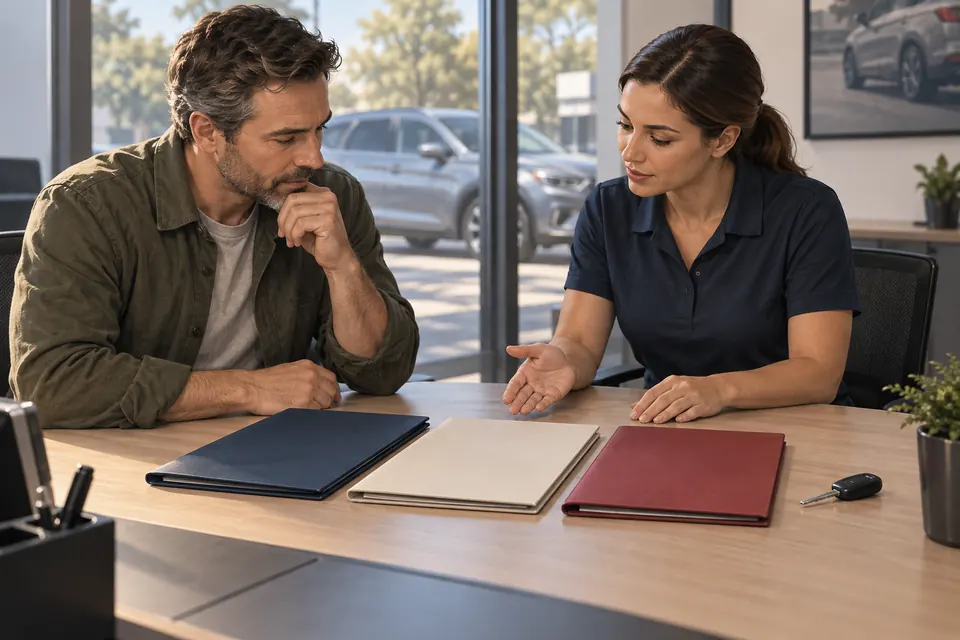
Generated educational illustration: verification records purpose review. Not an actual customer repair, diagnostic result, staff member or Boudreaux’s facility.
Is clearing codes the same as verifying a repair?
Post-repair verification reviews diagnostic information after affected systems are reassembled and required setup operations are completed. Remaining or new faults need interpretation rather than simply erasing the report.
Some systems reveal faults only after specified operating conditions or checks. Scanning and calibration answer different questions, and neither replaces every physical inspection. Ask what was verified, what reports were retained and whether any limitation or unrelated condition remains.
How This Fits Into the Repair Plan
Identify each completion record’s purpose, stage, coverage and remaining limitation. Ask how the relevant correction, setup and physical checks are represented instead of relying only on a cleared-code summary.
Related Repair Guidance
Understand the purpose of the final diagnostic record
Post-repair diagnostic work helps assess relevant electronic findings after the supported repair operations. Ask what the specific record is intended to verify and which systems it covers. A final report should be understood in relation to the vehicle and completed work rather than simply filed as proof that everything is finished.
The stage matters. An initial scan, an in-process finding and a completed verification result can contain different information. Ask which stage the report represents so an earlier record is not mistaken for the final repair result.
The presence or absence of reported codes is one part of the explanation. Ask whether relevant systems were accessed and whether a limitation or unresolved finding remains. An unaccessed system does not provide the same evidence as an accessed system with a reported result.
Share any warning or function concern still present at handover. Do not assume it is irrelevant because a summary says no faults. The observation and report need to be considered together under the applicable information.
If a required operation was performed or coordinated separately, ask how its relevant result is connected to the final repair record. The owner should be able to distinguish the operation from the general scan summary. A completion conversation is clearer when each supplied record identifies its purpose instead of relying on one universal diagnostic label.
Related reading: How Diagnostics Support Repair Planning and ADAS Calibration Documentation.
Do not collapse different completion requirements into one scan
A diagnostic scan and calibration or initialization are different operations. Ask which applicable requirements followed from the vehicle and actual repair. A successful scan does not independently document every required setup or calibration task.
Physical inspection, structural measurement, alignment and diagnostic verification also answer different questions. Ask which relevant checks apply to the scope and what each establishes. A clear electronic report should not be treated as proof that every physical component or dimension was inspected.
If a remaining finding is earlier or unrelated to the collision, ask how it is identified and what next step is proposed. Do not erase its distinction by assuming all discovered information belongs to one approved repair scope. Clarify authorization and any claim question where needed.
If additional work changes the plan, request the dated revision and the reason. Ask whether the change concerns diagnosis, correction, setup or final verification. These descriptions make the completed scope easier to understand than a single unexplained diagnostic line.
Keep an understandable completion record
Ask which relevant report and explanation are available for the final work. Vehicle identity, stage, covered systems and result help make the record useful. A printout without context can be difficult to connect to the operation it is meant to support.
Discuss any remaining concern before pickup is treated as an unqualified completion conversation. An unresolved warning, unavailable function or uncertain result should be explained rather than hidden behind a general statement that codes were cleared.
If a new concern appears later, record the message or function, timing and circumstances and contact the repairing shop. Do not repeatedly reset the vehicle before discussing it. The original final record and the new observation can then be considered separately.
Boudreaux’s can review the actual repair record and discuss the relevant next assessment. Keep the final estimate, available diagnostic results and specific instructions together. The useful conclusion identifies what was checked, what the result establishes and whether any follow-up remains.
Questions About Post-Repair Diagnostic Verification
Technical Reference
I-CAR: strategy-based diagnostics in collision repair. Manufacturer requirements for the exact vehicle control the repair method. A reference link does not imply Boudreaux’s certification or affiliation.