
From the Boudreaux’s archive
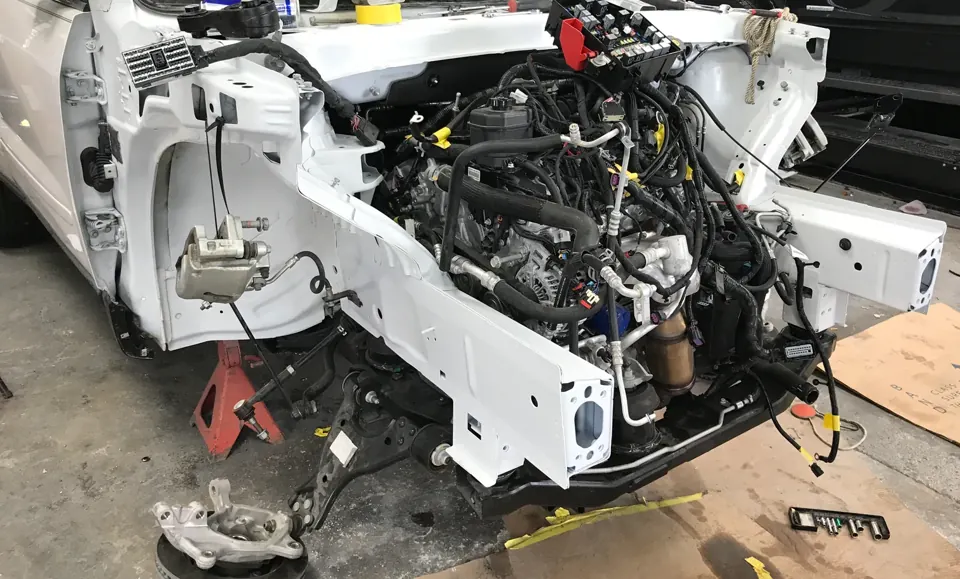
Owner-supplied GMC archive photograph with outer front panels removed. This is access context for discussing inner areas, not a diagnosis of apron damage or a permitted repair method.
Can a fender hide inner-apron damage?
The inner apron is part of the structure behind the front outer body panels. Damage can affect mounting areas and relationships between the front structure, suspension and nearby components.
Removing or repairing an outer fender may reveal distortion that photographs did not show. Visual inspection and dimensional checks answer different questions. The correct repair depends on the specific apron construction and allowed procedure, rather than a universal pulling or replacement method.
How This Fits Into the Repair Plan
Separate the inner apron from the removable outer fender and adjoining mechanical areas. Ask which access, condition findings and relevant dimensions establish the component-level plan.
Related Repair Guidance
Separate the apron from the visible front panels
The inner apron is discussed as part of the area behind the outer front panels. Ask the estimator to identify the actual component and side involved rather than using front-end damage as a complete description. An outer fender and an inner apron can be close together while presenting different assessment and repair questions.
Describe where the impact occurred and any changed relationship between the hood, fender, lamp or wheel area. These observations guide inspection without proving which concealed component moved. Take overall photographs from a safe position and explain any area that cannot be seen without access.
Earlier repairs in the front corner matter to the history. Share known panel replacement, rust, modifications or earlier impact work, and distinguish that information from the new collision. A finish that looks original does not independently establish the condition or history beneath the outer panels.
Ask what the first inspection can establish with the adjoining parts installed. If the apron or its attachments remain concealed, the estimate should explain the access or measurement needed before the scope becomes final. Do not remove panels yourself merely to obtain a photograph for an online request.
Related reading: Frame Rail Damage: Measuring Before Repair Decisions and Front-End Collision Repair.
Understand the component-level proposal
Boudreaux’s uses OEM parts for structural and suspension components. Clarify the identified structural lines and any separate insurer review or payment responsibility.
A plan can include outer-panel work, inner-apron work and adjoining structural operations. Ask the shop to describe each affected component separately. A fender replacement line should not be mistaken for an explanation of every concealed front-corner finding.
Applicable vehicle information governs whether the identified apron area can be repaired or needs replacement. Ask which material, damage findings and requirements support the proposed method. A similar-looking apron on another model does not establish that the same operation is permitted.
If partial replacement is proposed, ask whether the applicable method involves sectioning or replacement at factory seams. These are different operations. Clarify the component and permitted location instead of assuming that a part can be cut wherever the visible damage ends.
Related access, attachments, disturbed protection and refinishing can affect the scope. Ask how those requirements connect to the apron operation. The main replacement-part price alone is not the complete installed repair, especially where adjoining components need their own assessment.
Keep geometry and finish questions distinct
Relevant measurement can support the assessment of the apron and adjoining areas. Ask what reference information and findings are being used, and what they establish. A corrected visible gap does not independently document the condition of concealed structural reference areas.
If additional access changes the scope, keep the dated revision and the specific new finding together. Ask whether the change concerns the apron itself, an attachment or another component. Clarify the effect on parts, related operations, verification and the next stage before relying on the original estimate.
At pickup, ask how the final work corresponds to the component descriptions and which relevant records are available. Discuss the visible fit and finish, but also raise any unresolved warning, rubbing or handling concern. An exterior before-and-after image cannot show every concealed operation.
For later follow-up, identify the exact side and symptom rather than saying the front end feels wrong. New rubbing near the wheel and a finish concern near the lamp require different questions. Boudreaux’s can discuss the actual repair record and the appropriate assessment for the concern.
Questions About Inner Apron Damage After a Front-End Collision
Technical Reference
I-CAR: sectioning and partial replacement terminology. Manufacturer requirements for the exact vehicle control the repair method. A reference link does not imply Boudreaux’s certification or affiliation.