
BOUDREAUX’S COLLISION · REPAIR EDUCATION
Connector Damage and Water Intrusion
A connector can have damage to its lock, terminals, seal or housing even when it remains plugged in. Moisture intrusion can be a separate concern from immediate electrical operation. The correct inspection and repair method depends on the circuit and component.
Illustration: Connector Damage and Water Intrusion
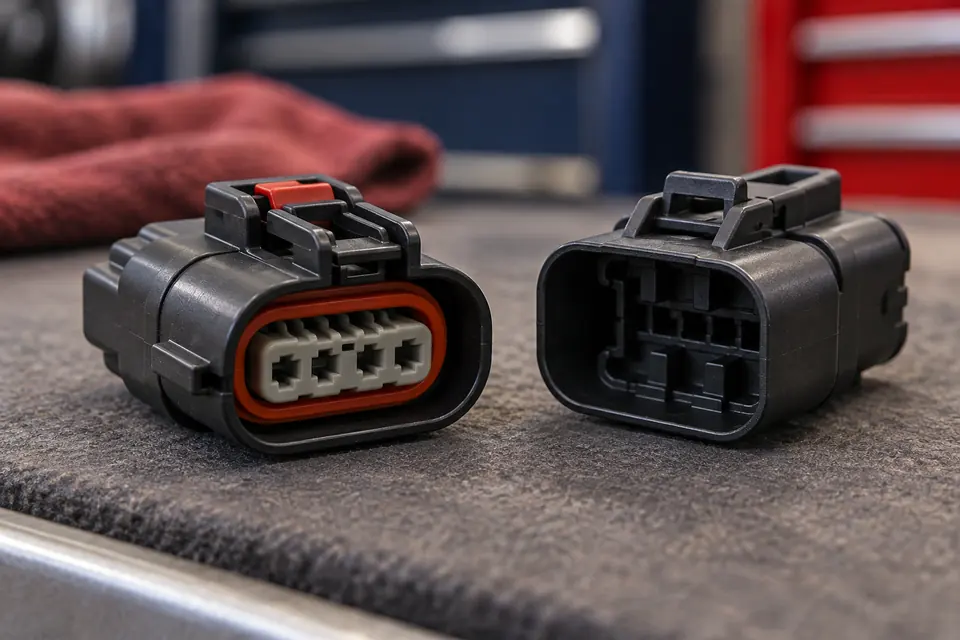
Generated educational illustration: sealed connector condition context. Not an actual customer repair, diagnostic result, staff member or Boudreaux’s facility.
What to Clarify for Your Vehicle
Tell the shop about intermittent symptoms or moisture near the repair area. Ask whether damaged connectors and seals are included in the scope. Reconnecting the plug is not automatically a complete correction when the attachment or sealing condition is affected.
A connector problem can affect communication or operation
Connectors provide electrical connections and may have locks, seals and protective features. Damage can involve the housing, terminal, attachment or sealing condition. A connector that can be pushed together is not necessarily in its required condition.
Water entry is another issue that requires assessment. Moisture near a repaired area does not automatically prove the connector caused a fault, but its location and timing are useful diagnostic context.
Preserve the observed condition
Tell the shop where water was noticed, when it appeared and which functions or warnings changed. Do not spray cleaners into connectors, force damaged locks or dismantle wiring to dry it out. Those actions can alter the condition and create additional problems.
Ask what was inspected, what repair information applies and whether the source of water entry was addressed. Replacing an electrical component without resolving an entry path may leave a related concern open. Keep the diagnosis and corrective scope together.
Example: intermittent trouble after water is noticed
An owner finds moisture near a repaired opening and later sees an electrical warning. Both observations matter, but their sequence does not independently prove which connector or component is responsible. The shop should assess the entry path and diagnostic concern instead of replacing a part based only on timing.
Document where water appeared and the conditions in which it was noticed. If the warning is intermittent, record when it occurs without deliberately soaking the vehicle to recreate it. Do not open connectors or add a cleaner before the shop can evaluate the condition.
Ask what the inspection established, whether the water source was addressed and which electrical work is proposed. If the two concerns are found unrelated, retain that explanation too. A usable record connects the observations and findings without filling gaps with assumptions. It also avoids describing a component replacement as complete resolution when a confirmed entry path remains open.
Related Guidance
Electrical function and weather protection need separate attention
A connector can carry electrical signals while its housing, seal or attachment has been damaged. Those physical features help protect and retain the connection in its intended environment. After a collision, a temporarily working function does not establish that the connector is sealed or secured appropriately for continued use.
Tell the shop if a symptom appeared after rain, a wash or another moisture exposure, but do not deliberately wet the vehicle to test it. Include the impact location and any observed damage. Water-related timing helps the repairer investigate; it does not identify a particular connector as the cause without inspection and diagnosis.
Do not open, spray, dry with heat or reconnect a damaged plug yourself. Restraint, high-voltage and other sensitive circuits require vehicle-specific precautions. Leave the component undisturbed and describe the concern to the repairer. If the vehicle also has a leak into the cabin, raise that separately so the entry path can be assessed.
Ask how the connector repair addresses the physical finding
A proposed connector operation should have a clear basis: damaged housing, terminal condition, seal damage, an affected circuit or another diagnosed finding. Ask which part is being repaired or replaced and what the manufacturer’s service information permits. Replacing a connector housing and replacing a harness are not automatically equivalent operations.
Approved connector or pigtail kits and repair methods can differ by application. Ask whether the chosen part suits the exact circuit and location. A universal terminal, sealant or cleaning treatment should not be assumed to satisfy every manufacturer requirement. The relevant procedure determines what can be restored and how it must be checked.
The source of moisture matters too. If a damaged body opening, missing shield or incorrect routing allowed exposure, addressing the connector alone may leave that related condition unresolved. Ask what the inspection found and whether the estimate also includes the affected protection or entry path. Keep these separate findings visible in the revised plan.
Make the follow-up useful without reproducing the problem
At handoff, ask how the connector condition and any related moisture path were addressed. Ask which applicable physical and electrical checks were completed and whether an intermittent symptom remains under evaluation. A cleared code is useful information, but it does not independently describe a restored seal, housing or routing arrangement.
If the problem returns, record the date and weather or use conditions you actually experienced. A safely captured dashboard message may help, but do not drive or soak the vehicle to create another example. Contact the repairer and ask how the vehicle should be returned for review.
For Boudreaux’s New Orleans or Luling intake, identify the chosen shop and explain the electrical and water-related observations as part of the collision request. Confirm the assessment arrangements. Retain the final invoice, the explanation of any connector or harness replacement and the notes about a related body leak so the follow-up conversation can address the complete finding.
I-CAR: circuit-specific connector repair information
General background does not replace applicable vehicle and product instructions for the actual operation.