
BOUDREAUX’S COLLISION · REPAIR EDUCATION
Water Leaks Around a Repaired Opening
Water entering around glass or a closure can involve seals, attachments, drainage or the opening itself. The visible wet location may not be the entry point. A leak requires assessment rather than assuming the newest visible seam is responsible.
Illustration: Water Leaks Around a Repaired Opening
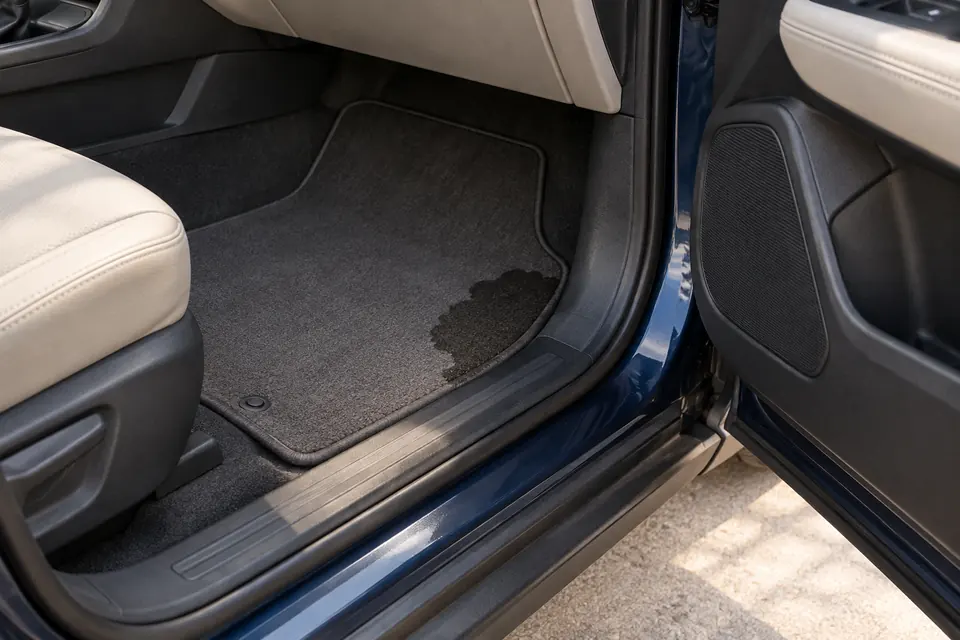
Generated educational illustration: water entry observation context. Not an actual customer repair, diagnostic result, staff member or Boudreaux’s facility.
What to Clarify for Your Vehicle
Record where and when moisture appears and contact the shop. Ask which relevant areas will be checked and avoid adding household sealants before the cause is established. Body fit, installed sealing and designed drainage are related but distinct concerns.
The point where water appears may not be its entry point
Water can travel behind trim or along an opening before becoming visible. A wet interior area after repair is important, but does not alone identify the failed seal or installation. The shop needs to assess the entry path and relevant repaired components.
Timing matters: rain, washing or another event can provide context. An owner should document the condition safely rather than flooding the vehicle to recreate it.
Report location, conditions and related work
Take a wider photograph showing the area and a close view of the visible moisture. Note when it appeared and whether there was a previous leak. Tell the shop about affected electrical functions or warning messages.
Ask whether the entry source and any resulting damage were evaluated. Applying a household sealant can conceal the condition and interfere with the proper repair. Keep the assessment and corrective work with the original repair records, especially if a follow-up visit is needed.
Example: a damp interior after rain
An owner notices moisture in the cabin after rain following a repair. The place where it becomes visible may not be the entry point. The shop needs to investigate the path and affected areas rather than assume the nearest visible seal is responsible.
Provide a wider photo locating the damp area and note when it appeared. Mention whether the vehicle had a leak before the collision. Do not repeatedly spray the opening, remove trim or apply household sealant to try to establish the cause. Those actions can alter the condition and introduce another issue.
Ask what the assessment found, which corrective work is proposed and whether resulting interior or electrical concerns require attention. If the entry source remains uncertain, that limitation should be clear. Keep the explanation with the original repair records. A follow-up can then address a defined concern instead of treating a visible wet spot as proof of a particular installation failure.
Further repair information
I-CAR: wind and water-noise assessment background
General background does not replace applicable vehicle and product instructions for the actual operation.
Related Guidance
The wet area and the entry point may be different
Water can travel along surfaces or collect away from where it entered. A wet carpet, trim edge or seat therefore helps locate a symptom but does not identify the repair by itself. Following work near a body opening, the assessment may need to consider seals, glass installation, drainage, attachments and neighboring body areas according to the vehicle’s design.
Tell the repairer when the moisture appeared: during rain, after a wash or while parked under particular conditions. Identify the first area you noticed without removing trim or reaching into a damaged opening. Include whether the symptom existed before the collision or began after delivery. That history gives the repairer a useful starting point without turning an observation into a diagnosis.
Do not deliberately soak the vehicle to gather evidence, apply sealant along a guessed entry point or block drainage openings. Those actions can change the condition before assessment and may create another problem. Arrange a review with the repairer instead.
Ask the plan to connect the finding and the correction
A useful leak explanation identifies the assessed entry path or affected component and describes the corrective operation. Replacing a weatherstrip, addressing a bonding area and adjusting an opening are different repair scopes. Ask which finding supports the proposal rather than treating the word leak repair as enough detail to compare estimates.
If the concern affects an area repaired during the collision work, provide the final invoice and the dates of the repair and first moisture observation. Ask the shop to review the concern before making assumptions about cause or responsibility. Earlier body or glass work and unrelated drainage conditions may also be relevant to assessment.
Where moisture appears near electrical components, report warnings or changed functions separately. Drying a visible surface does not establish that a connector or other affected component is suitable. Ask whether the moisture-path repair and any electrical assessment are both addressed, and whether either part of the plan remains pending.
Keep the follow-up focused on the actual conditions
Ask what applicable checks were completed after the corrective work and whether the repairer found more than one concern. A dry appearance at handoff is an observation, not an explanation of the entry path. The shop should be able to describe how the finding was resolved in plain language.
If moisture returns, record the date, weather or washing circumstances and the area first noticed. A safely taken photograph can help show the symptom. Do not leave a window open, perform a high-pressure water test or remove interior parts to prove the problem. Contact the repairer and ask how to arrange the next assessment.
For Boudreaux’s New Orleans or Luling, identify the location that handled the repair and confirm the receiving arrangement before another visit. Keep the invoice, supplied glass or seal-care instructions and follow-up notes together. A clear record helps everyone discuss the same opening and symptom without relying on a guessed entry point or an undocumented home sealing attempt.