
BOUDREAUX’S COLLISION · REPAIR EDUCATION
Mirror Assemblies After a Side Impact
An exterior mirror may contain a camera, turn signal, heater, folding motor or blind-spot display as well as the glass. The damaged assembly must match the vehicle’s actual equipment. Similar-looking mirrors can have different connectors and functions.
Illustration: Mirror Assemblies After a Side Impact
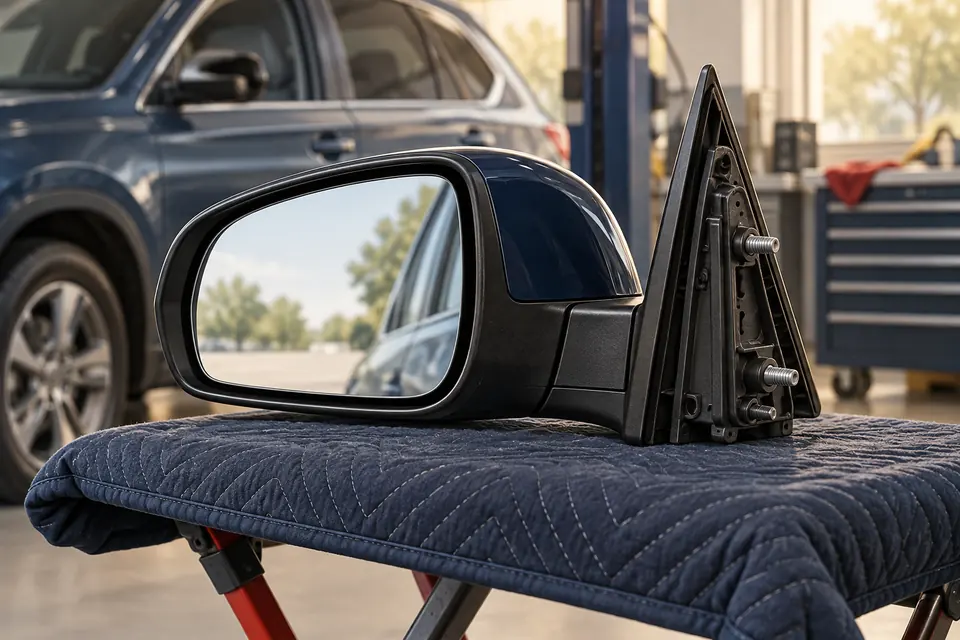
Generated educational illustration: mirror assembly and features review. Not an actual customer repair, diagnostic result, staff member or Boudreaux’s facility.
What to Clarify for Your Vehicle
Ask which mirror functions the vehicle originally had and whether replacement, installation or camera-related procedures apply. Describe any loss of adjustment, unusual movement or image problems. Confirm specific electronic work with the shop rather than assuming every mirror replacement requires the same operation.
Identify the affected functions before comparing mirror parts
A mirror assembly may combine the housing and glass with equipment such as adjustment, heating, indicators or a camera, depending on the vehicle. Two parts that look similar can therefore represent different configurations. An estimate should identify the applicable assembly rather than rely only on exterior appearance.
Report which functions changed after the impact. A damaged housing, an adjustment problem and a camera concern are different observations. Also mention damage to the door or mounting area so the assessment does not stop at the visible mirror shell.
Do not assume every mirror has the same equipment or that every replacement requires the same follow-up. The installed systems and vehicle-specific information decide the relevant tasks.
The mirror and the place it mounts deserve separate attention
A side impact can affect the assembly, its attachment or the surrounding door area. Ask which finding explains the proposed work. A replacement mirror does not, by itself, describe the condition of the mounting location.
When comparing estimates, check whether the proposed part includes the glass, housing, electronics and finish treatment relevant to your vehicle. A price difference may reflect a difference in included components rather than a different price for an identical complete assembly.
If the housing needs refinishing, ask how that fits into the installation plan. Color treatment and the electronic or mechanical functions are separate aspects of the job.
A useful example of why the equipment list matters
Imagine two outwardly similar mirrors, one with a camera and another without it. Ordering by appearance alone could miss a functional difference. That example illustrates why exact part identification matters; it does not assert that your vehicle has a camera or that a particular operation is required.
Provide the vehicle details and any equipment you know about, then let the shop confirm the configuration. If an estimate uses a broad mirror description, ask which assembly it represents and what is included.
Report any relevant warning message in its actual wording. That gives the conversation a clear observation without turning an owner’s guess into a diagnosed cause.
Questions for reassembly and follow-up
- Which mirror functions are installed on this vehicle?
- Is the attachment or surrounding door area affected?
- Which components come with the proposed assembly?
- Does the housing require refinishing?
- Which function checks or vehicle-specific procedures apply afterward?
At handoff, ask what was done and how to report a concern. If a function behaves differently afterward, describe the feature and timing. Avoid dismantling the housing to investigate.
If a camera is involved, the surround-view camera guide explains how to frame the next question.
Related Guidance
Ask about relevant function checks at handoff
Confirm which mirror functions and vehicle-specific procedures apply to the installed equipment. A camera-equipped mirror can present a different assessment question from a basic manually adjusted assembly, but this does not mean every replacement has one universal calibration requirement. Ask the shop how the applicable work was identified and how any specialist arrangement fits the repair plan.
At delivery, keep the final part description and relevant instructions with the repair record. If adjustment, folding, an indicator or an image behaves differently afterward, report that particular feature, its timing and any displayed message. Do not reset vehicle settings or dismantle the housing to isolate the cause. A precise feature report lets the shop review the concern without treating a broad statement that the mirror is broken as a diagnosis of every function inside it.