
Illustration: Damaged Sensor Brackets After a Collision
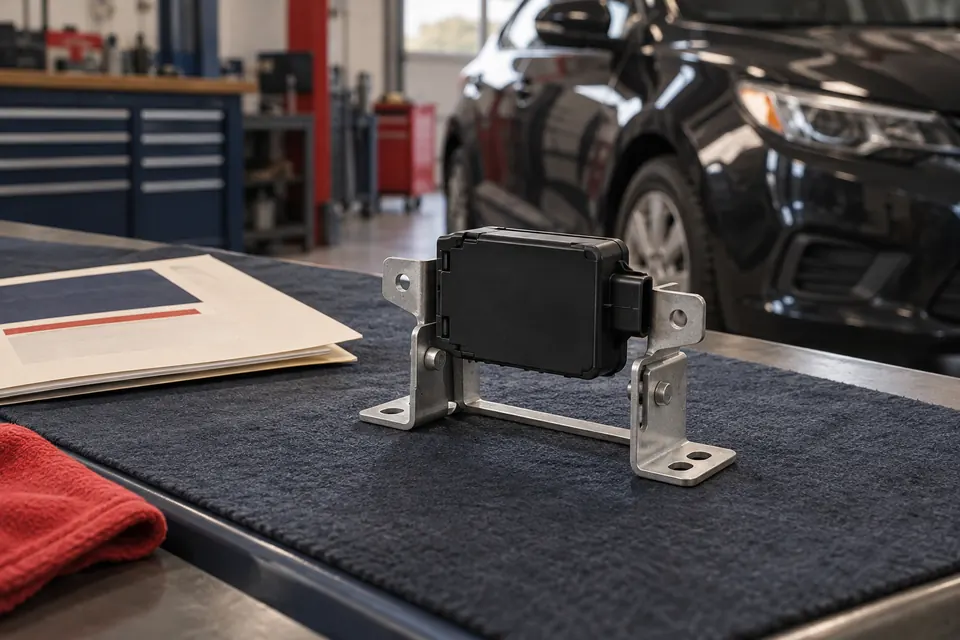
Generated educational illustration: sensor support assessment context. Not an actual customer repair, diagnostic result, staff member or Boudreaux’s facility.
Does an intact sensor mean its bracket is fine?
A bracket establishes the position of a sensor relative to the vehicle. A bent or damaged bracket can matter even when the sensor itself appears intact.
The repair information determines whether the bracket may be repaired, must be replaced or requires further setup afterward. Ask about the bracket and mounting structure as separate items. A sensor being firmly attached does not establish that its position is correct.
How This Fits Into the Repair Plan
Identify the sensor, immediate bracket and underlying support separately. Ask which findings establish physical correction and what applicable setup follows the actual mounting work.
Related Repair Guidance
Identify the bracket and the area that locates it
A sensor bracket, the sensor itself and the underlying mounting location are different components or areas. Ask which one is damaged or remains under assessment. Replacing a bracket does not independently establish the condition of every adjoining support or reference area.
Describe the impact location and any visible displacement or changed assistance behavior. These observations help the shop plan inspection without identifying a complete diagnosis. Take safe context photographs rather than trying to move the part for a clearer view.
Ask what can be established with adjoining parts installed and whether authorized access is needed. A finished exterior cover may conceal the bracket. The visible panel and concealed attachment questions should remain distinct in the preliminary estimate.
Do not bend the bracket, shift the sensor or add improvised fastening material as a test. The supported operation needs applicable vehicle information and actual findings. An owner adjustment can alter the condition that the shop needs to assess.
Related reading: Camera and Radar Mounting Position and Blind-Spot Systems After Collision Damage.
Understand replacement, installation and setup separately
Ask which findings and applicable instruction support repair or replacement of the identified bracket. A generic metal-straightening example is not permission for every sensor support. The actual component and requirements determine the supported method.
Part identity and supplied configuration matter if replacement is proposed. Ask what is included and which attachments or related pieces remain separate. A similar shape or available part is not the complete compatibility explanation.
The applicable information can create a calibration or related check from mounting work. Ask which requirement follows the actual operation. Physical correction, scanning and calibration are different tasks; an original sensor or no-code result does not independently settle them all.
Ask what must be completed before the relevant setup and verification. The sequence should follow the supported plan rather than an assumption that an electronic result can replace assessment of a damaged support.
Keep the bracket finding visible in the record
If access changes the proposal, request the dated estimate and new finding. Ask whether it concerns the immediate bracket, underlying location, sensor or required assistance operation. Keep the component names consistent so a replacement line is not mistaken for a broader completed assessment.
At pickup, ask which physical and assistance operations were completed and which relevant records are available. A restored exterior appearance and an absent warning answer different questions. Request an explanation of any limitation or follow-up.
If a source or method changes, clarify compatibility, applicable requirements and approval before proceeding. Availability alone does not establish that the installed position or supported scope is unchanged.
For a later concern, record the warning or behavior, conditions and timing and contact Boudreaux’s before resets or bracket adjustments. The actual vehicle and repair record can support a useful assessment without guessing at a universal mounting correction.
Questions About Damaged Sensor Brackets After a Collision
Technical Reference
I-CAR: collision diagnostic and calibration task definitions. Manufacturer requirements for the exact vehicle control the repair method. A reference link does not imply Boudreaux’s certification or affiliation.