
BOUDREAUX’S COLLISION · REPAIR EDUCATION
Safe Photo Angles for a Damaged Vehicle
Photos taken from several safe exterior positions can help communicate impact location and visible fit changes. They cannot reveal every hidden component or establish vehicle safety. Better documentation should never require entering traffic or approaching a hazard.
Illustration: Safe Photo Angles for a Damaged Vehicle
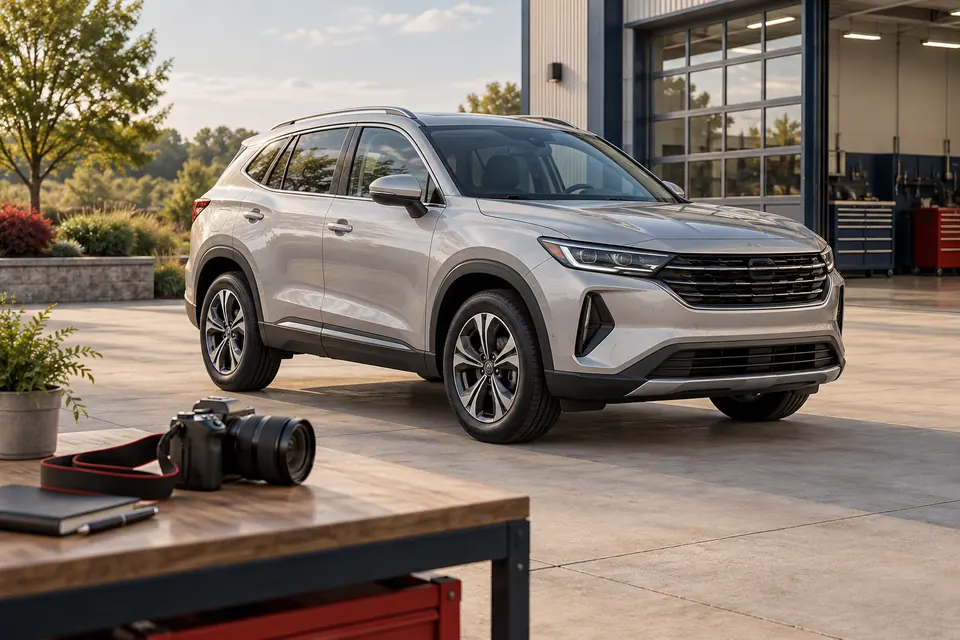
Generated educational illustration: safe exterior photo context. Not an actual customer repair, diagnostic result, staff member or Boudreaux’s facility.
What to Clarify for Your Vehicle
Take wide and closer views only from safe positions, and stop if access is unsafe. Do not crawl underneath, move loose parts or operate damaged closures for a picture. Ask the shop what additional assessment is needed after reviewing the initial information.
Start with safety and context
Take photographs only from a safe position. Do not step into traffic, crawl beneath an unstable vehicle, touch sharp damage or open a hot or leaking assembly to obtain a better image. Emergency assistance and personal safety take priority over documenting the repair.
A wider view helps locate the impact area. Closer images can then show visible damage without losing its context. Photographs supplement inspection; they cannot establish the condition of every concealed component.
Capture observations without moving damaged parts
Show the affected side, visible attachment changes and safely accessible details. If the vehicle was moved after the collision, note that fact. Avoid pulling a cover away or forcing a door open for a picture.
Share the images with a brief description of what happened and any warning or symptom observed. The shop can explain whether an in-person inspection or transport is needed. A photo estimate should not be interpreted as confirmation that the vehicle is safe to drive.
Example: a close-up would require entering traffic
The damaged side of a vehicle faces moving traffic and a close photograph would require standing in the roadway. Skip that image. Personal safety and emergency assistance are more important than obtaining a complete photo set.
From a safe position, a wider view may still locate the damage. Explain what could not be photographed. The shop can determine what further inspection is needed without asking the owner to move damaged components or enter an unsafe area.
When sharing photos, note whether they were taken before transport or after the vehicle was moved. That context helps interpretation. A limited but clearly described set is more useful than risky images presented as a complete inspection, and no photograph collection independently certifies that the vehicle can be driven.
Related Guidance
Choose safe context before choosing a close-up
A full-vehicle view can help identify the affected side and the relationship between visible damage areas. A closer view can show detail, but it should not require entering traffic, crawling underneath or reaching into a damaged opening. Safety is more important than producing a complete photo set.
From a safe standing position, identify the affected side and capture useful context without moving the vehicle simply to improve the angle. Tell the receiving shop which views you could not obtain. A description of an inaccessible area is preferable to taking a risk to show it.
Do not treat a useful photograph as a vehicle-condition assessment. A clear exterior image can still miss damage behind a cover, panel or other component. The repairer should explain what remains unknown and whether physical access or diagnosis is needed.
Use several relevant views instead of repeated images
Where conditions allow, a wider view and a clear view of the affected area serve different purposes. An alternate standing angle can clarify shape or the relationship between nearby parts. Multiple nearly identical close-ups may be less useful than one readable detail and a safe context view.
Do not pull a bumper, open a binding door or move loose pieces to expose an area for the camera. The condition should remain available for appropriate assessment. If an opening will not close or a component is hanging, describe that observation in the message rather than manipulating it.
Check lighting and readability without touching the damage. Review the image for unrelated personal information before sending it. If the photograph is unclear, explain the observation honestly; do not edit the damaged area or invent a condition that the image does not establish.
Explain what the photographs cannot establish
Give the receiving contact the vehicle information, event timing and specific concern as well as the images. A warning message, changed function or movement limitation may not be apparent in an exterior picture. Describe those observations separately and ask about the appropriate receiving or transport arrangement.
A photo-based request begins communication and can support an initial discussion. It does not confirm final price, repair scope, safe driving condition or an appointment. The actual vehicle and applicable repair requirements still need assessment.
For Boudreaux’s New Orleans or Luling, select the receiving shop and provide a reachable contact method. Use the estimate request when you have a safe opportunity, or contact the chosen shop to clarify access or transport first. Keep the original images and description as an intake record for later questions about what became visible after assessment.