
SUV side-area damage and completed exterior
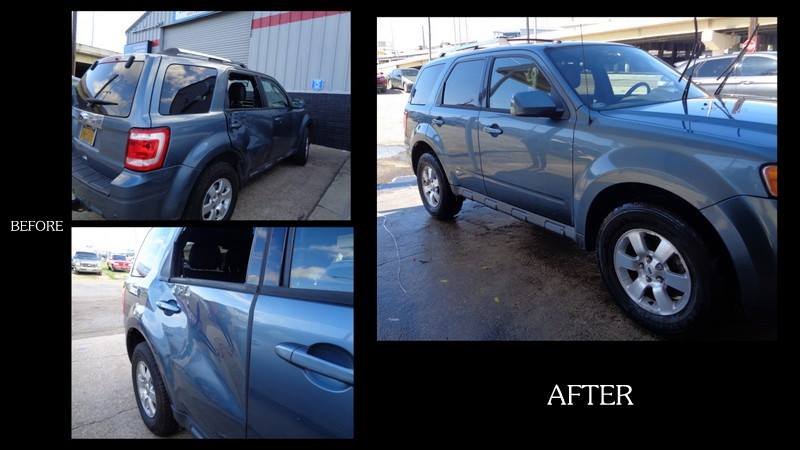
Original Boudreaux’s archive comparison: side-area damage in the before views and the completed exterior in the after view. The photographs do not establish the complete technical repair scope.
Chevrolet Equinox front-end damage and completed exterior
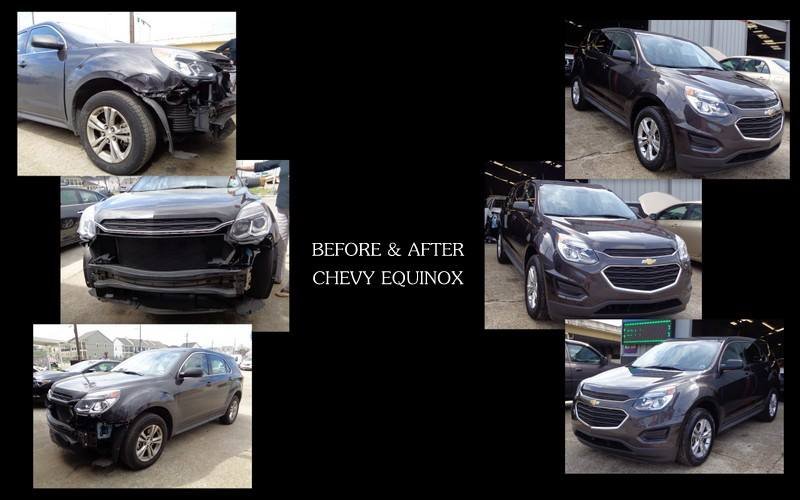
Original Boudreaux’s archive comparison: front-end damage and completed exterior views. No parts list, structural measurement, calibration result or completion time is inferred from these photographs.
GMC project: four views from the repair archive
This owner-supplied project collection provides a closer look than a single before-and-after board. The views show exterior damage, an opened front compartment, masking during refinishing and the assembled exterior. They illustrate different visible stages without identifying every operation performed.
The four views below are grouped by what they show. Source dates are noted where available; they do not establish the repair’s start date, completion date or turnaround time.
1. Visible front-corner damage
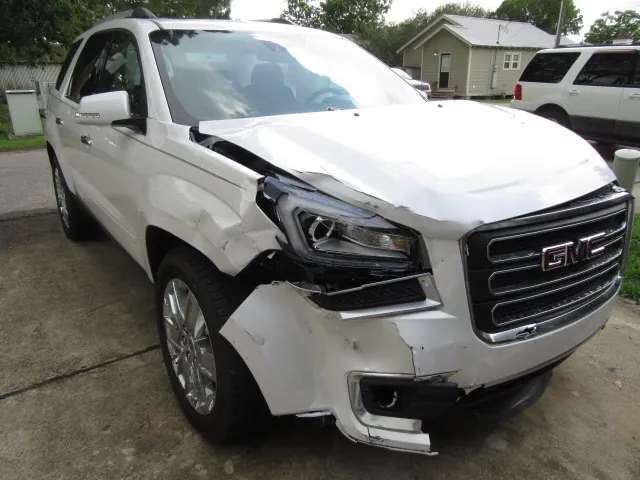
Owner-supplied GMC project archive: visible front-corner, hood and bumper-area damage. This source image has no capture date in its metadata.
2. Exposed front compartment
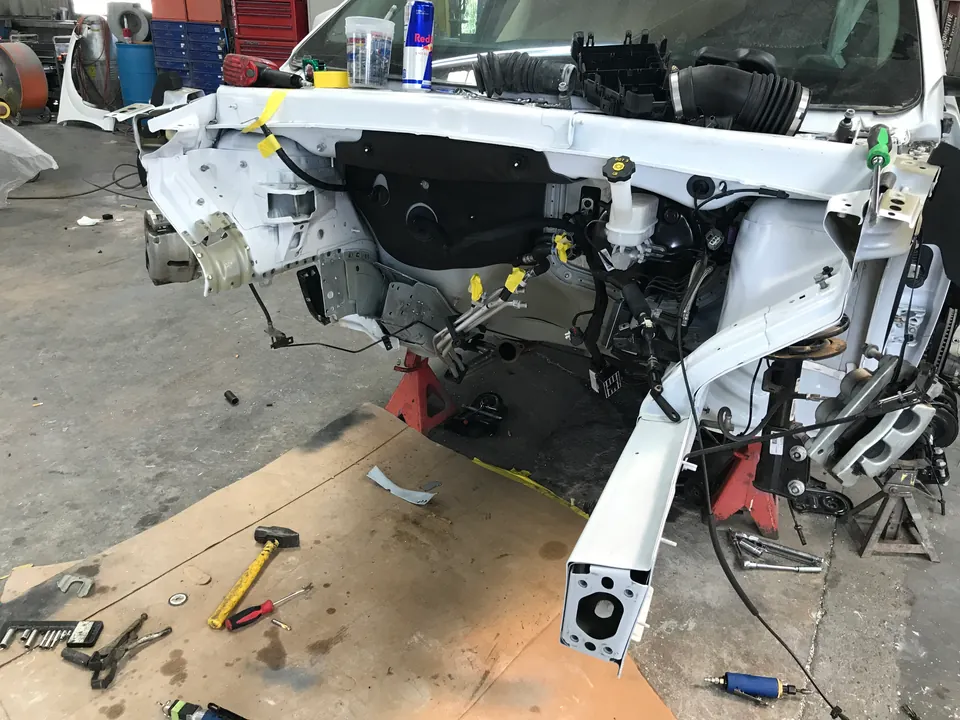
Owner-supplied GMC project archive: opened front compartment and exposed inner front areas. Source metadata is dated June 2017; the image does not establish the complete repair scope.
3. Masked refinishing view
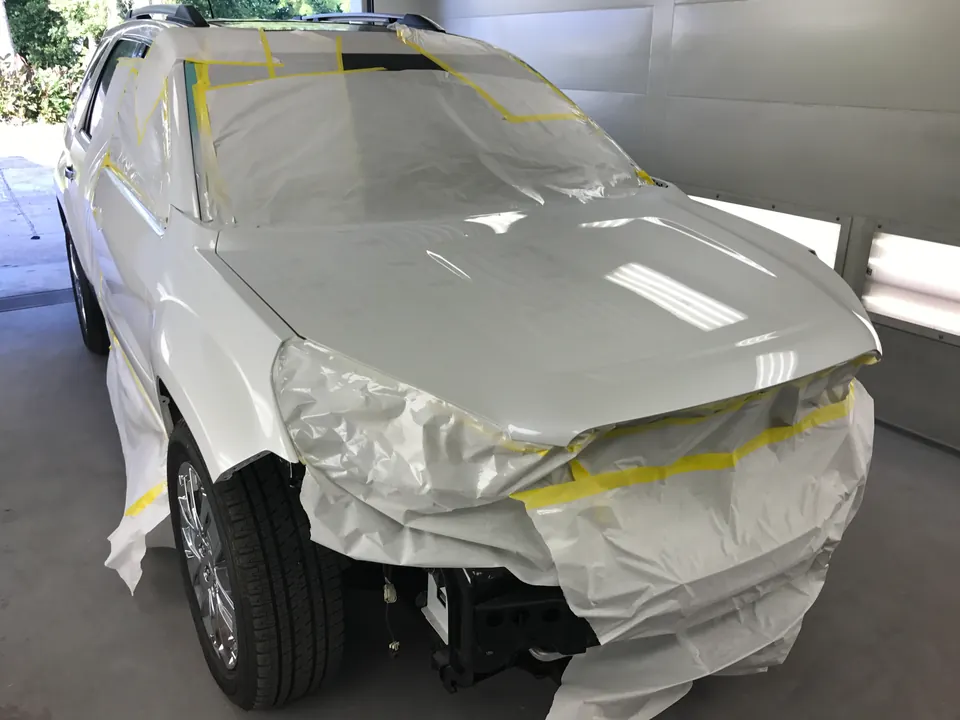
Owner-supplied GMC project archive: the vehicle with masking around the windows, openings and adjoining areas during refinishing work. Source metadata is dated July 2017.
4. Assembled exterior view
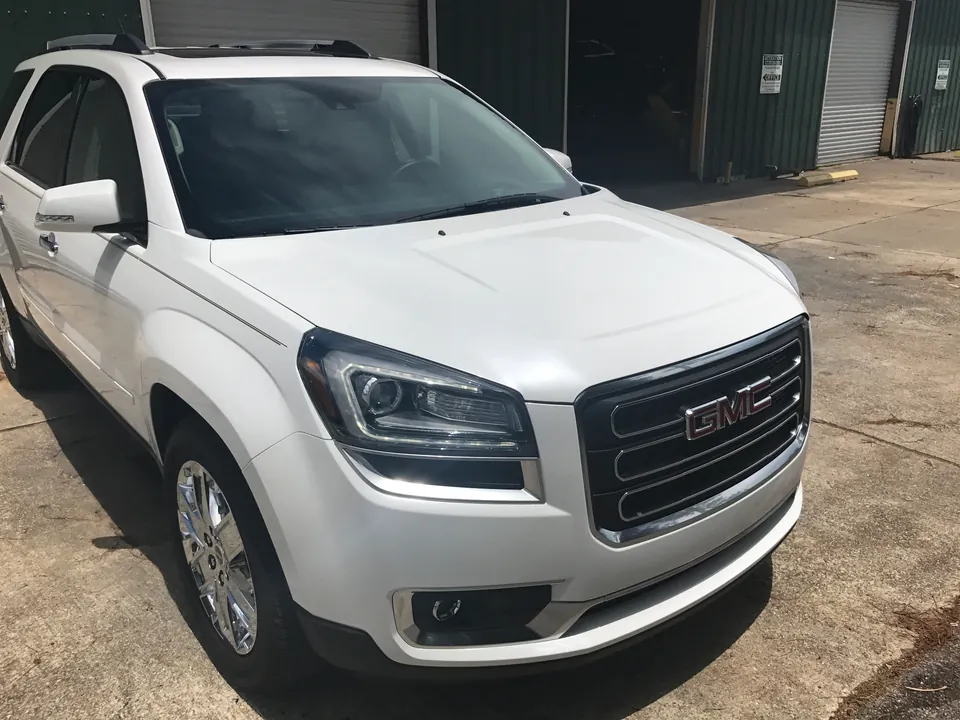
Owner-supplied GMC project archive: assembled exterior with the front lamp, grille and bumper visible. Source metadata is dated July 2017; exterior appearance does not document hidden work or completed checks.
What Makes a Repair Case Useful
A useful case record connects the vehicle and collision context to the visible damage, inspection findings, repair operations, refinishing and final result. It should distinguish confirmed facts from general educational explanation and should not publish identifying details without permission.
The Repair Story Structure
Look for a sequence that explains what was known at intake, what became clearer during inspection or teardown, what the repair plan required and how the finished result was checked. This structure helps explain why a repair can grow beyond the first visible estimate.
Use the Photo Collections With Context
What these photographs establish
The two original comparison boards show SUV side-area damage and Chevrolet Equinox front-end damage with assembled exterior views. The GMC project collection adds visible workshop stages, including opened front areas and masking. Together they give a fuller visual record while leaving technical questions to the job documentation.
To understand a particular repair, ask which finding supported each operation, what work was authorized and which completion records apply. A picture of an exposed area can show access; it does not independently establish a measurement result or the exact method used. An assembled exterior likewise does not supply a scan, calibration or alignment report.
No customer testimonial, insurance outcome or repair duration is inferred here. Use the photos to locate your questions, then ask the selected shop to connect your own vehicle’s findings with its estimate and relevant records.