
Illustration: What to Bring to a Collision Estimate
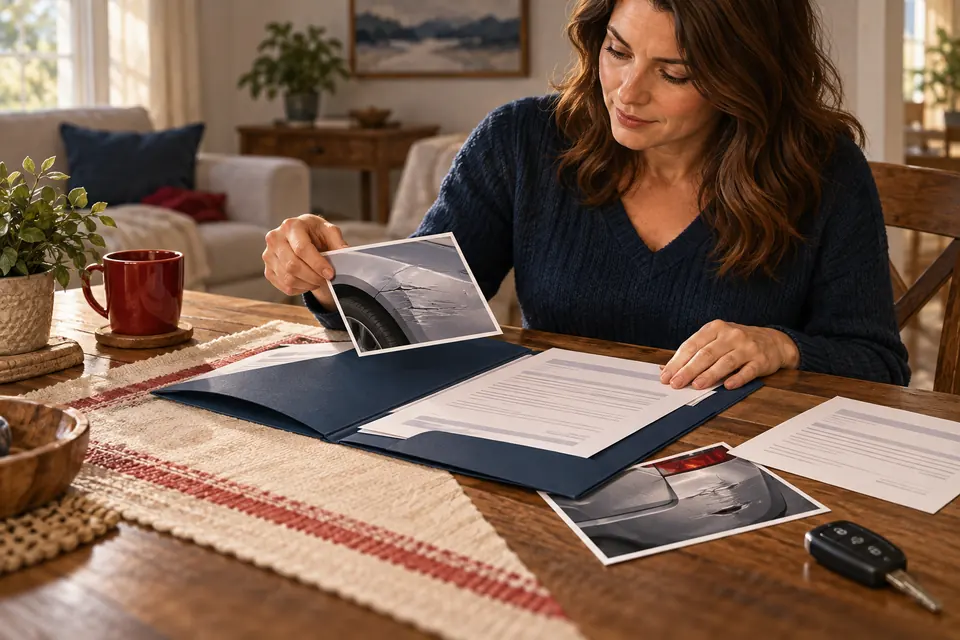
Generated educational illustration: estimate visit documents and questions. Not an actual customer repair, diagnostic result, staff member or Boudreaux’s facility.
What information helps an estimate visit?
Have your vehicle’s year, make, model and VIN, your contact information, a description of the impact and any existing estimate or claim details. Useful damage photos can help explain the starting condition.
Ask the selected shop whether other documents are needed for the visit. If the vehicle is not safe to drive, discuss transport rather than assuming an estimate requires driving it in. Information helps begin the review but does not replace inspection of hidden areas.
How This Fits Into the Repair Plan
Bring accurate vehicle identity, the current relevant estimate and safe damage observations. Identify the question you want answered and confirm the chosen visit and transport arrangement.
Related Repair Guidance
Bring information that explains the actual question
Start with the vehicle identity, preferred contact method, chosen shop and reason for the visit. Tell the team whether you want an initial assessment, an estimate explanation or a comparison of proposed operations. These are different conversations even when they concern the same collision.
If you have an estimate, keep its date and version clear. An older document may not describe the current scope. Bring the relevant copy or ask the team how to provide it so the discussion follows actual lines rather than a remembered total.
Describe the damage location and any warning, leak, closure or driving concern. Share what you observed and when it began. Earlier repairs or conditions should be distinguished from the new event rather than turned into an assumed diagnosis.
If claim information is relevant, ask what is needed for this step. A claim number can help identify the matter without establishing coverage or repair authorization. Avoid including unrelated private financial or account material.
Related reading: What Happens at an In-Person Collision Estimate and Collision Estimate Photo Guide.
Use photographs and history as context
Safe overall damage photographs can help show the relationship between components, while closer views can illustrate visible details. Keep both where available. Do not take pictures from traffic, beneath an unstable vehicle or by forcing a damaged closure.
A photograph does not establish every concealed finding or permitted method. Ask which questions require in-person assessment, authorized access, measurement or vehicle-specific research. The useful image supports the conversation without becoming a complete quote or diagnosis.
Share known modifications and earlier work that may matter to the affected area. If you do not know the history, say so. Guessing at a replaced part or coating can make the information less clear than an honest uncertainty.
Ask the shop how to provide a VIN or necessary document through the actual conversation. Avoid posting full identifiers or private papers in public reviews or social comments. A helpful estimate record does not need unnecessary public exposure.
Bring questions that make the next step clear
Ask which findings are established, what remains provisional and which action resolves the open questions. Identify the components and proposed methods you want explained. A focused question is more useful than assuming every total difference is simply a price disagreement.
When comparing estimates, check whether they include the same operations and related work. Ask about access, attachments, protection, finish and relevant verification where they belong to the proposed scope. A main-part price alone may not describe the completed repair.
Confirm the visit arrangement and appropriate transport before arrival. The information you bring does not establish that the damaged vehicle is safe to drive or that an appointment is confirmed. Discuss movement concerns with the chosen team.
Keep the current estimate and agreed next step together after the conversation. Boudreaux’s can discuss the actual vehicle and supported proposal. Ask the chosen team which documents and vehicle information are needed for this particular assessment, keeping unrelated private material out of the request.