
IMMEDIATE NEXT STEPS
Before a bumper-area assessment
- Get to a safe location if you haven’t already.
- Do not assume the vehicle is safe to drive just because it moves — if you’re unsure, arrange towing or contact your shop before driving further.
- Photograph the visible damage from a few angles.
- Start an estimate online, or contact your shop directly.
WHAT YOU MAY SEE
Visible Signs
- A scuffed, cracked, displaced or loose bumper cover
- Broken retainers, brackets or uneven fit
- Parking-sensor, radar or warning-light concerns
WHAT MAY BE HIDDEN
Not Always Obvious
- Absorbers, reinforcement and mounting points
- Wiring, sensors and sensor brackets
- Damage behind the cover that affects repair or refinish decisions
VEHICLE SYSTEMS POTENTIALLY INVOLVED
What Bumper Collision Repair Can Affect
HOW WE ASSESS IT
From What You Can See to What the Vehicle Can Prove
1
LOOK
Visible Damage
Document the obvious impact first.
2
ACCESS
Hidden Areas
Teardown can expose what installed parts conceal.
3
VERIFY
Measurements & Scans
Objective information confirms what appearance alone can’t.
INSURANCE & ESTIMATE GUIDANCE
Your Estimate May Change After Inspection
An initial estimate reflects what’s visible when it’s written. Disassembly can reveal additional documented damage that changes the repair plan.
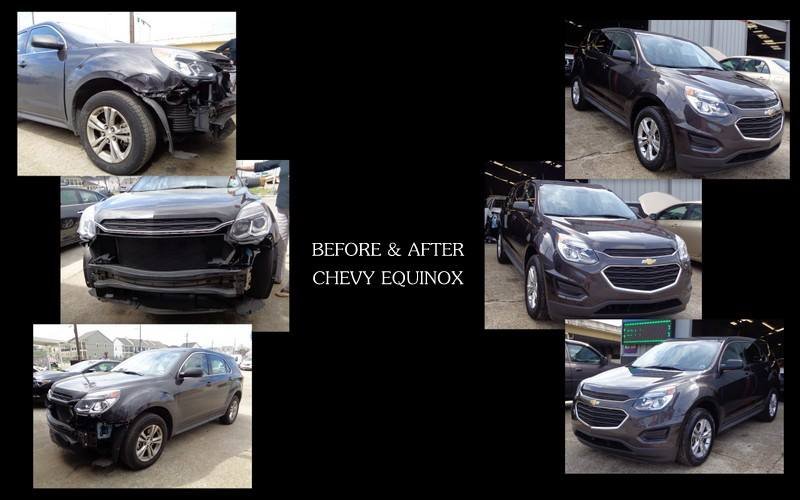
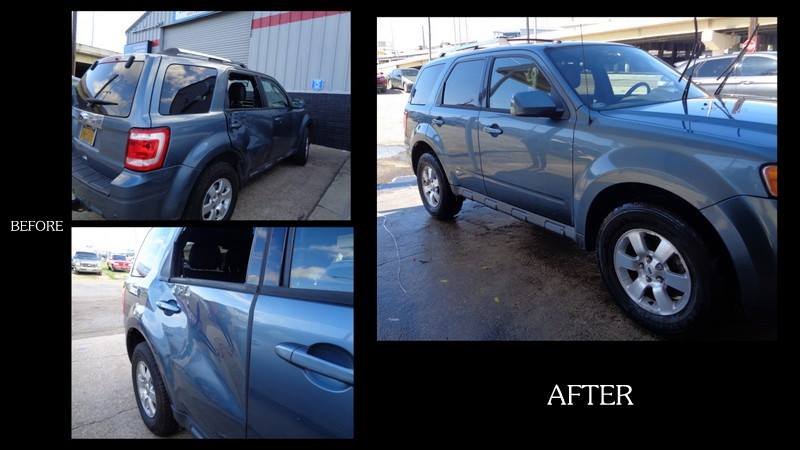
Illustration: Bumper Collision Repair
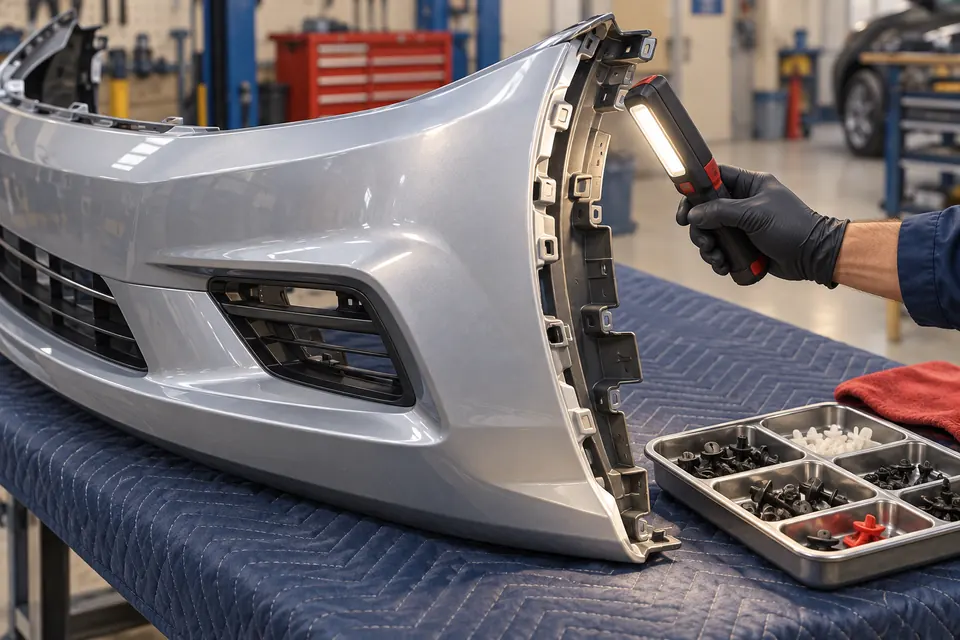
Generated educational illustration: bumper cover attachment inspection. Not an actual customer repair, diagnostic result, staff member or Boudreaux’s facility.
Identify which part of the bumper area is being discussed
The visible cover is different from the attachments and other components behind it. Start with the vehicle identity and impact description, then ask the estimator to name the actual affected items. A broad bumper-repair label does not describe every inspection or operation in the area.
Share new warnings, unusual sounds or other changes you observed and include timing. Disclose known earlier cover repairs or refinishing. This gives the assessment context without proving which concealed component failed.
Photographs can record the visible surface and its position on the vehicle. They do not establish the condition of every part behind the cover. Ask which further inspection or access will resolve a particular concern rather than assuming all adjoining items are damaged or unaffected.
Do not remove the cover, reach behind an unstable assembly or crawl under the vehicle to improve the record. Discuss the assessment and transport with the selected location when handling is uncertain.
Repairability and sensor-area requirements need their own explanation
Ask which material and applicable repair information support the proposed cover treatment. A scrape, crease or broken attachment can raise different questions. The supported method should be explained for the actual component rather than copied from a similar-looking repair.
Where radar or another system relates to the cover area, the material and refinishing requirements can matter to more than appearance. Manufacturer restrictions differ. Ask which installed system and sensor-zone information apply instead of using a generic thickness limit or repair radius from another vehicle.
For a hypothetical cover concern near a sensor-related area, the cosmetic proposal and the system requirements need to be considered together. This example does not establish that every bumper operation requires calibration or that all sensors are visible outside the cover.
Ask the shop to distinguish cover work, mounting inspection, diagnostic information and any required setup. Those tasks can have different purposes. A bumper line or a generic scan line does not independently document every required operation.
If access or research changes the plan to replacement or adds another item, request the finding or requirement behind the change. Keep the dated revision and explanation with the earlier estimate so the decision remains understandable.
Follow the assembly and verification milestones
Ask which parts are identified, ordered, received and checked. These are separate milestones, and a small related item can control the next assembly step. The arrival of the main cover does not necessarily establish that the full job is ready for pickup.
Discuss relevant finishing, installation and separate setup requirements in their sequence. If an operation is arranged with another provider, ask who coordinates it and how its completion information returns to the job record.
At pickup, refer to the concerns you reported and ask how the completed work relates to them. A finished exterior image provides visible context; the relevant records explain separate technical operations and any limitations.
If an operation remains incomplete, ask about its status and next action and discuss vehicle handling directly. Keep agreed follow-up with the final estimate or invoice rather than treating an attempted task as complete.
Boudreaux’s New Orleans and Luling teams can confirm receiving and repair arrangements for the actual vehicle. Use the selected location and estimate date when following up. An online request starts the discussion and does not establish a fixed scope, appointment or universal specialist capability.
FREQUENTLY ASKED QUESTIONS