
Illustration: Camera and Radar Mounting Position
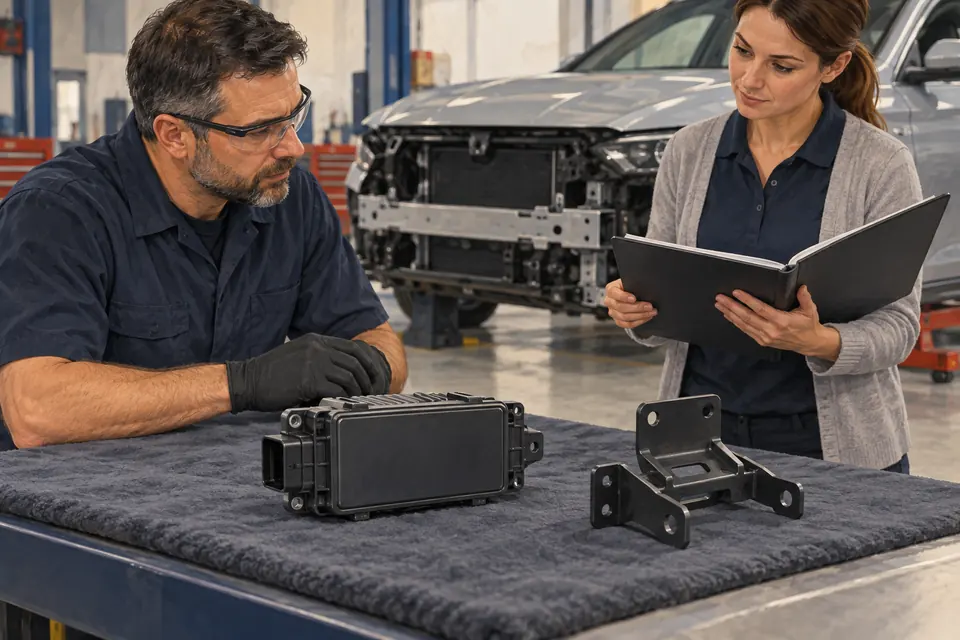
Generated educational illustration: sensor bracket component review. Not an actual customer repair, diagnostic result, staff member or Boudreaux’s facility.
Why does a sensor’s mounting position matter?
Cameras and radar depend on their specified relationship to the vehicle. Mounting condition, brackets and adjoining structure can affect that relationship.
A part may look correctly installed while its position still requires a procedural check. Repair methods near the sensor can also be restricted. Ask how the mount is assessed, whether any removal or replacement triggers setup and what manufacturer information supports the plan.
How This Fits Into the Repair Plan
Identify the sensor, housing, immediate bracket and underlying mounting location separately. Ask which findings and applicable instructions establish the physical scope and related setup.
Related Repair Guidance
Inspect the relationship between the sensor and its support
A camera or radar unit and the component that locates it on the vehicle are separate parts of the assessment. Ask whether the damage or work affects the sensor, housing, bracket or mounting area. An intact-looking sensor does not independently establish that its position is unaffected.
Describe the impact area and any changed warning or assistance behavior. The observation helps direct inspection without proving which mounting component is damaged. Mention earlier repairs, modifications or work near the relevant area if known.
Ask what can be confirmed with adjoining parts installed and what access is needed. A bumper cover or trim piece may conceal the relevant support. A photograph of the finished exterior does not show every mounting attachment or position question.
Do not bend a bracket, shift a sensor or add material to a mounting area as a test. The applicable vehicle information should guide assessment and the supported operation. An improvised adjustment can change the condition that needs to be understood.
Related reading: Damaged Sensor Brackets After a Collision and Structural Repair and ADAS Reference Geometry.
Understand why related work can create a requirement
Ask how the applicable instructions address removal, repositioning or work on the housing or mounting location. A requirement may follow from the actual operation as well as obvious sensor damage. The original unit remaining on the vehicle does not automatically establish that no further work applies.
Physical mounting condition and calibration are different questions. Ask what supports the correction of the affected area and which required setup or verification follows. A successful electronic result should not be treated as permission to leave a physically damaged support unassessed.
Scanning is also distinct from aiming or calibration. A no-code report does not independently document every required mounting or setup operation. Clarify which component and requirement each estimate line addresses.
If a replacement mounting part or related component is proposed, ask about identification, compatibility and applicable requirements. A similar shape or available part is not the complete explanation of the supported position and installation scope.
Keep mounting findings in the completed record
When access changes the proposal, request the dated revision and the finding. Ask whether it concerns the sensor, bracket, housing, underlying location or required calibration. Keep those descriptions distinct so a new total can be followed at component level.
Ask what must be completed before the relevant setup and verification. The prerequisites should follow the actual vehicle and supported operation. A generic target or alignment example from another vehicle is not the applicable procedure for yours.
At pickup, ask which mounting-area work and assistance operations were completed and which relevant records are available. A smooth exterior panel or an absent warning cannot independently describe every concealed support and completed requirement.
If a later assistance message or concern develops, record the conditions and contact Boudreaux’s before resets or mounting changes. Use the vehicle identity, repair date and actual wording. The supported next assessment follows the record and observed concern rather than a guessed adjustment.
Questions About Camera and Radar Mounting Position
Technical Reference
I-CAR: calibration terminology and methods. Manufacturer requirements for the exact vehicle control the repair method. A reference link does not imply Boudreaux’s certification or affiliation.