
BOUDREAUX’S COLLISION · REPAIR EDUCATION
Modern Vehicle Technology and Collision Repair
A modern vehicle can combine cameras, radar, parking sensors, electronic modules and other systems with the body structure. An impact can affect their mounts, wiring or reference conditions as well as visible panels.
Illustration: Modern Vehicle Technology and Collision Repair
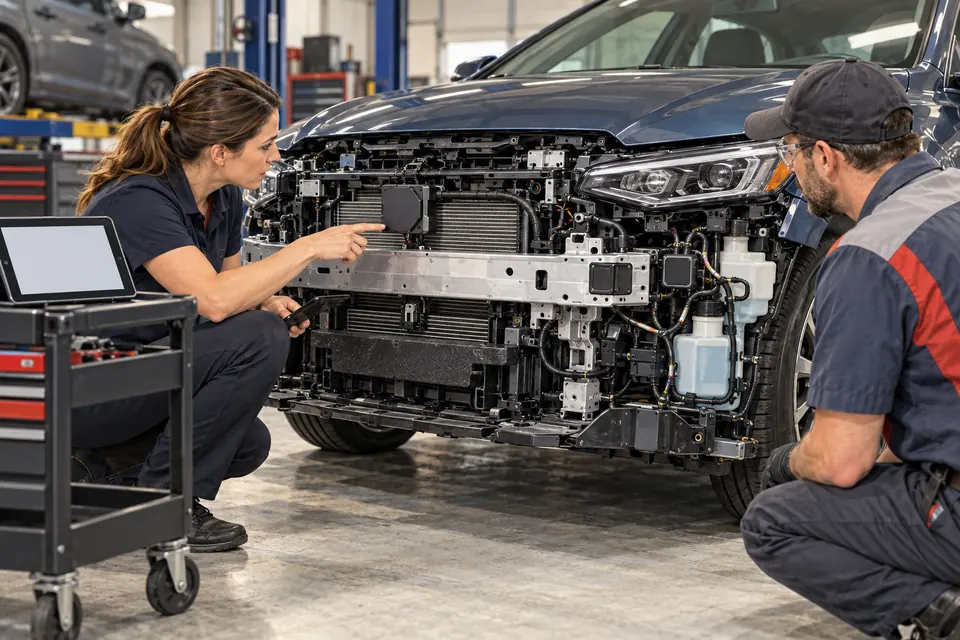
Generated educational illustration: installed vehicle systems identification. Not an actual customer repair, diagnostic result, staff member or Boudreaux’s facility.
Why can modern collision repair include electronic work?
A modern vehicle can combine cameras, radar, parking sensors, electronic modules and other systems with the body structure. An impact can affect their mounts, wiring or reference conditions as well as visible panels.
The repair plan should identify the equipment actually installed, not assume every vehicle has the same package. Scanning, diagnosis, alignment and calibration address different questions. Ask which systems intersect the damaged area and which vehicle-specific checks follow the repair.
How This Fits Into the Repair Plan
Start with the systems actually installed and the areas affected by the work. Ask what each proposed inspection, diagnostic or setup operation is intended to establish, including any evaluation that must wait for another stage.
Related Repair Guidance
Identify the equipment before discussing the operation
A model name can describe vehicles with different equipment and configurations. Provide the year, make, model and VIN and disclose known changes. When a repair concerns a system near the impact, ask the shop to identify what is actually installed rather than infer it from another vehicle of the same general type.
Cameras, radar, parking sensors and other systems can have different functions and locations. A visible sensor feature does not necessarily account for every system in an area. Ask which system the plan concerns and how its location relates to the damage or work.
Modern construction also makes component and material identification important. An outer appearance does not tell an owner every underlying material or permitted method. Ask what applicable repair information supports the identified part and operation.
For a hypothetical bumper-area concern, visible damage, a concealed attachment and a new warning could raise three separate questions. Their location may connect them, but one photograph does not establish the cause of all three. This example illustrates how a plan becomes specific rather than predicting findings on your vehicle.
Keep related technical tasks distinct
A scan retrieves supported diagnostic information. Diagnosis investigates a cause. Calibration or setup addresses a specified reference or system requirement. Physical inspection evaluates its own questions. Ask the estimator what each listed operation is intended to accomplish instead of treating several electronic labels as synonyms.
Structural measuring and alignment concern different geometry. If both appear in the plan, ask how their findings affect the relevant sequence. A collection of reports is most useful when each is connected to its purpose and repair stage.
Ask which vehicle-specific requirement makes an operation relevant. A clear dashboard does not independently settle every required setup after work, while a warning does not automatically supply a replacement-part diagnosis. The findings and applicable information need their own explanation.
If the vehicle condition limits communication or access, ask what could not be evaluated and how that question will be resolved. Missing information should be identified rather than described as a passing result. Request the next action and update point.
Discuss prerequisites and provider arrangements when an operation needs a later stage or another specialist. Clarify who coordinates it and how completion information returns to the job record. Do not assume identical brand and system coverage at both shops.
Make the technology explanation useful to the owner
Tell the shop about new messages or changes in behavior and distinguish them from earlier concerns. Record the wording and timing when available. You do not need to diagnose the system or deliberately recreate an unsafe condition to provide useful history.
When the scope changes after inspection or research, request the current dated estimate and the requirement or finding behind the change. This makes a new operation understandable rather than leaving technology as a vague explanation for every added line.
At pickup, ask how the completed operations and supplied records relate to the concerns you reported. Identify any unresolved question and agreed follow-up. A finished exterior photograph does not independently document every electronic or physical check.
If a new warning appears afterward, record the observation and contact the repairing location for guidance. Avoid clearing information or testing assistance behavior in traffic to create a demonstration. Ask about appropriate handling when operation is affected.
Boudreaux’s New Orleans and Luling teams can confirm arrangements for your vehicle. Use this page to ask about the identified system, supported method, sequence and records. An online estimate request begins the discussion; it does not establish universal capability, an appointment or complete repair authorization.
Questions About Modern Vehicle Technology and Collision Repair
Technical Reference
I-CAR: calibration terminology and methods. Manufacturer requirements for the exact vehicle control the repair method. A reference link does not imply Boudreaux’s certification or affiliation.