
QUICK ANSWER
What belongs in a structural repair plan?
The plan should identify the affected components, supported repair or replacement methods, related access and attachment work, and the checks relevant to the completed operations. Open decisions should be identified before they are treated as settled.
- Visible damage is documented first — panels, lamps, glass, wheels, leaks and warning lights.
- Hidden areas are checked once teardown allows access.
- Measurements and diagnostic information address different questions when relevant to the assessment.
- Your repair estimate reflects the findings, not just the first look.
HOW THE ASSESSMENT DEVELOPS
From What You Can See to What the Vehicle Can Prove
A collision assessment gets more specific as better information becomes available. These three stages keep the process easy to follow.

1
LOOK BEYOND THE SURFACE
Visible Damage
Document the obvious impact first: panels, lamps, bumper covers, glass, wheels, tires, leaks and warning indicators.
2
GAIN ACCESS
Hidden Areas
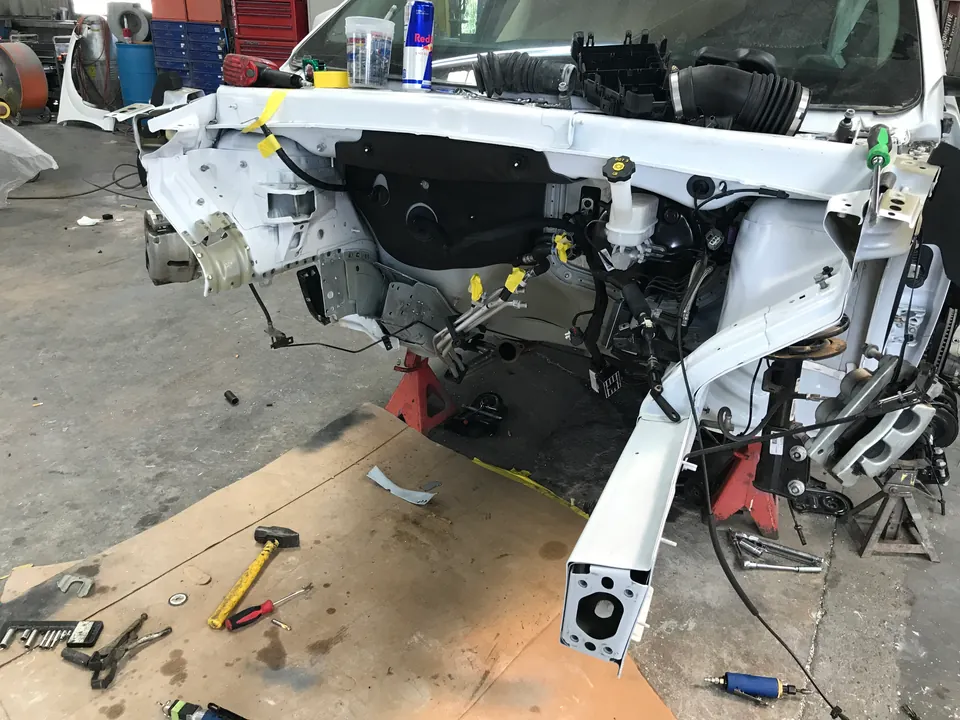
Teardown can expose reinforcement, mounts, wiring, adjacent panels and other conditions concealed by installed parts.
3
VERIFY
Objective Information
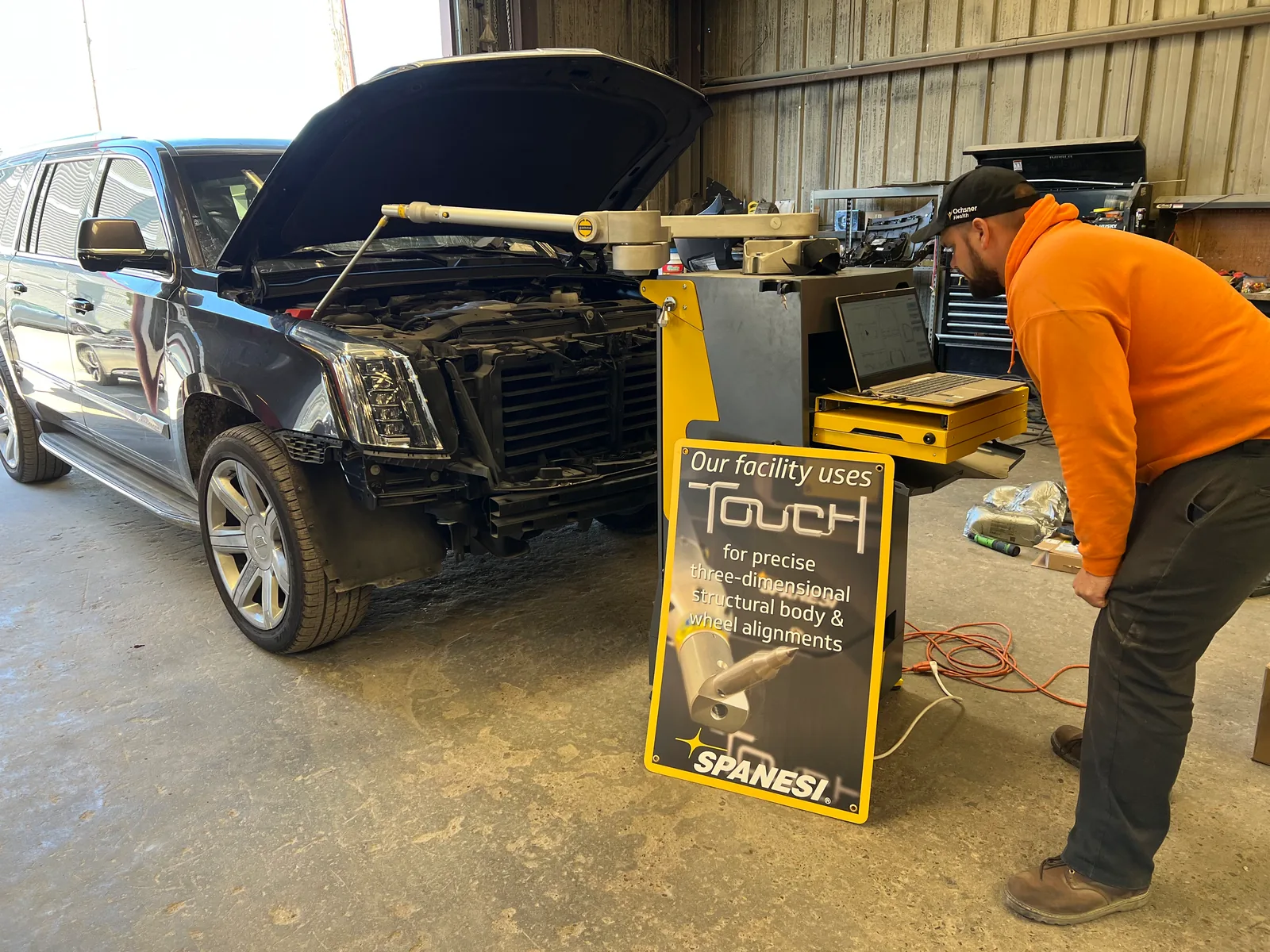
Measurements, diagnostic scans and OEM repair information answer questions that appearance alone cannot.
Illustration: Structural Repair Planning

Generated educational illustration: structural operation dependency plan. Not an actual customer repair, diagnostic result, staff member or Boudreaux’s facility.
TECHNICAL REALITY
Different Checks Answer Different Questions
Modern collision repair can involve several different kinds of information. They’re related to industry repair standards, but they are not interchangeable.
WHY IT MATTERS
What This Means for Your Vehicle
Structural repair planning follows evidence. It does not assume hidden damage, and it does not assume the first photo tells the whole story.
A useful assessment should help answer:
- What collision damage is visible?
- Which areas need better access or closer inspection?
- Which questions need measurements or diagnostic information?
- What vehicle-specific repair information applies?
- What new findings change the repair plan and estimate?
A useful plan connects the finding with the operation
Ask the estimator to explain the plan through a short chain: the identified component, the confirmed finding, the supported method and the relevant completion checks. This makes the proposed work understandable without requiring an owner to interpret every technical instruction.
The main component name does not describe all related operations. Access, attachments, adjoining areas and protection of disturbed surfaces can each matter to the proposed work. Ask how those items connect to the operation rather than assuming every additional line is unrelated or duplicated.
Use the exact vehicle identification when discussing the method. A familiar model name or an example from another repair does not establish that the same component, material and permitted procedure apply. If the plan is still awaiting research, ask which method decision is unresolved.
For a hypothetical comparison, two estimates might both name a structural replacement while describing different related operations. The shared part name is not enough to conclude that they represent identical work. Compare the supported scope and the explanation before comparing only the main line price.
Separate settled work from dependencies
A plan can include confirmed operations while still identifying an item that needs further information. Ask what is settled, what remains open and which next stage depends on the answer. This provides a more practical update than a single completion date with no explanation of the uncertainty behind it.
Parts identification and availability are separate milestones. An item being listed is not the same as being ordered, received and checked. Ask which component or related item controls the next operation and what supplier update is expected. The size of an item does not determine its importance to completing an assembly.
Where later verification depends on earlier physical work, ask the shop to explain the sequence. Measurement, alignment, diagnostic information and calibration can have different purposes. A plan should connect relevant checks to the work rather than treating every report as an interchangeable final approval.
If another provider is needed for an operation, clarify who coordinates the arrangement and how the result is added to the job record. Do not assume that a named specialist operation is performed in-house at both Boudreaux’s locations. Confirm the actual arrangement for your vehicle with the selected shop.
Use revisions to keep decisions and records aligned
When the plan changes, request the current dated estimate and the finding or requirement that changed it. Ask whether the revision affects parts, related operations, verification or the next scheduling milestone. This keeps the reason for the change connected to the work being proposed.
Discuss the authorization required before treating an updated plan as approved. Ask which decisions are yours and which documents remain under insurer review when a claim is involved. The technical proposal, your approval and the payment-review status should not be collapsed into one unexplained statement.
Keep the current version and supplied supporting information together. If an older estimate is being discussed, point out its date so a conversation about a preliminary scope does not become confused with the current plan. A concise written summary of the unresolved questions is useful for the next call.
Before pickup, ask how the completed work and relevant records relate to the final plan and whether any follow-up is agreed. For Boudreaux’s, contact the New Orleans or Luling location handling the vehicle and reference the repair date. The useful endpoint is an understandable record and next action, not a generic promise that every vehicle follows the same route.
FREQUENTLY ASKED QUESTIONS