
Illustration: Radar Calibration After a Collision
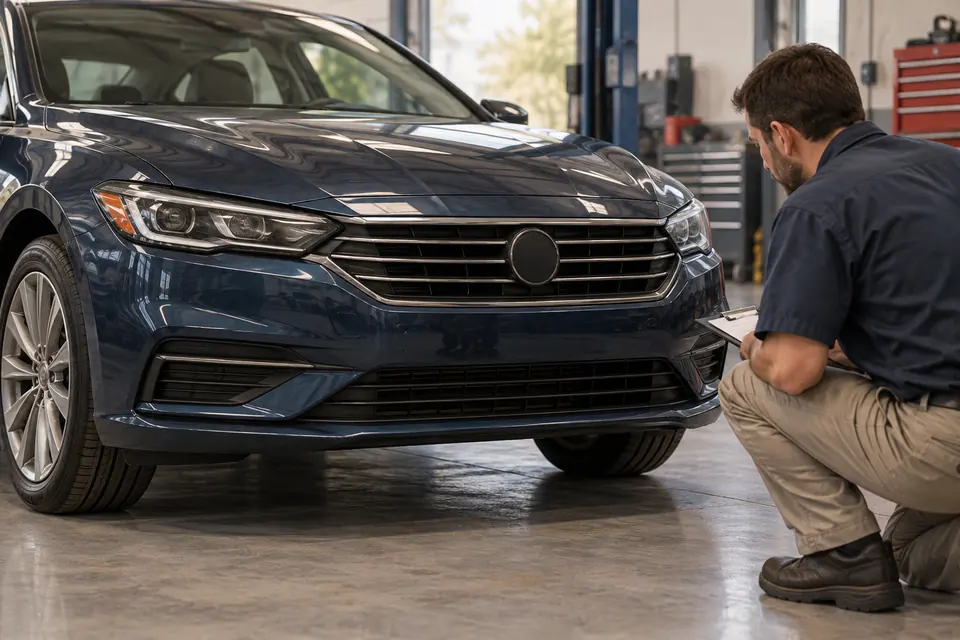
Generated educational illustration: front radar cover context. Not an actual customer repair, diagnostic result, staff member or Boudreaux’s facility.
Can bumper damage affect radar aiming?
Radar units and their brackets can be affected by damage or repairs around a bumper or mounting area. Requirements may include inspection, aiming or calibration under the vehicle maker’s instructions.
Replacing a bumper cover does not answer every question about the radar behind it. Mounting condition and materials in its path can matter. Ask which sensor is involved, what mounting checks are required and whether the repair process changes its reference position.
How This Fits Into the Repair Plan
Identify the radar, support and related exterior area. Keep physical condition, the requirement created by the work and the relevant completion record distinct in the estimate.
Related Repair Guidance
Identify the radar and its relevant area
A radar-related requirement needs the actual fitted component and vehicle identity. Ask which system and unit are under discussion rather than treating all radar functions as one universal arrangement. Front and other assistance-system descriptions can involve different components and requirements.
Describe the impact area, warnings and functions that changed. Mention earlier concerns or modifications near relevant surfaces. These observations help direct assessment without proving that the radar unit itself is internally damaged.
Ask whether the sensor, bracket, housing or related mounting area is affected by damage or the proposed operation. An exterior cover can limit what is visible at the first estimate. Clarify what is confirmed and what authorized access is needed to settle the remaining question.
Do not reposition the unit, bend a bracket or add material around the area to test a theory. The applicable vehicle information should guide the actual assessment. An improvised change can obscure the original condition or create another concern.
Related reading: Camera and Radar Mounting Position and Why Calibration Requirements Vary by Vehicle.
Separate component condition from calibration requirements
A radar can need physical assessment while the repair operation creates a separate calibration or setup question. Ask which finding or vehicle-specific instruction supports each relevant line. The absence of obvious unit damage does not independently settle every requirement tied to related work.
Scanning and calibration are different operations. Ask what electronic information is available and which separate requirement follows the actual repair. A no-code summary should not be treated as a complete record of aiming or every mounting-area condition.
If a replacement or altered part source is proposed, ask how identity, compatibility and the applicable requirements are addressed. A similar housing or available component does not establish the complete supported installation and setup scope.
Ask what prerequisites must be completed before the relevant operation and how the result is assessed. The method should follow the actual instruction, not a target or driving example copied from another fitted system.
Keep the radar proposal reviewable
If access or research changes the plan, request the dated revision and explanation. Ask whether it concerns the sensor, support, related panel, required calibration or verification. These distinctions make the scope clearer than one broad radar-repair charge.
Where insurance is involved, separate the technical requirement from claim review and payment responsibility. Ask the shop about the supported work and the insurer about its actual decision. Clarify any open authorization before changed work proceeds.
At pickup, ask which radar and related operations were completed and what relevant records are supplied. A finished cover, an absent message and a calibration result answer different questions. Ask what each establishes and whether a limitation remains.
If a later concern appears, record the warning or function, conditions and timing and contact Boudreaux’s before resets or mounting changes. The actual vehicle and repair record can support a useful next assessment without guessing at a universal adjustment.
Questions About Radar Calibration After a Collision
Technical Reference
I-CAR: bumper-cover repair with ADAS. Manufacturer requirements for the exact vehicle control the repair method. A reference link does not imply Boudreaux’s certification or affiliation.