
Illustration: Small Collisions and Sensor-Related Repairs
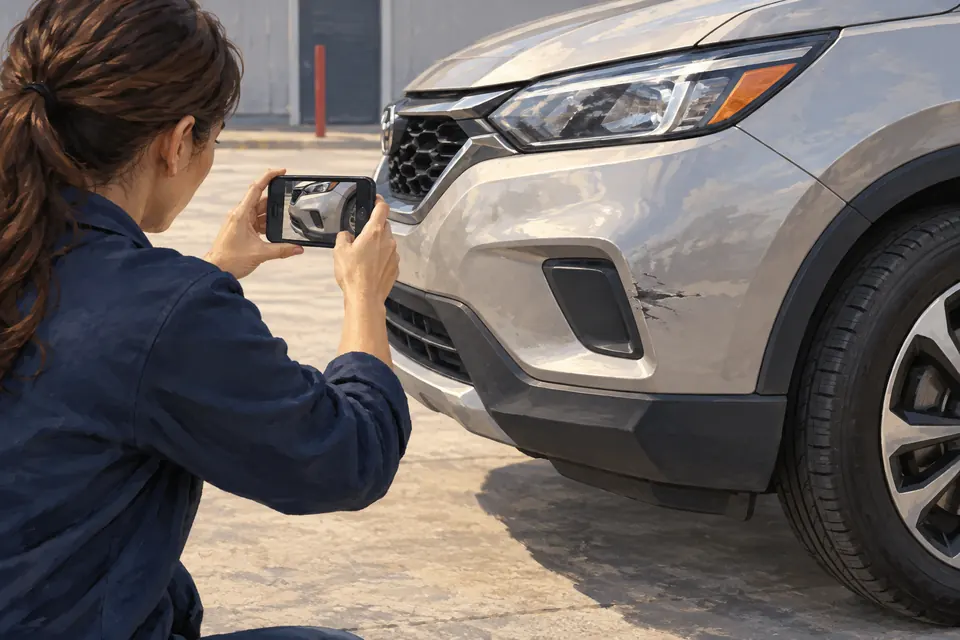
Generated educational illustration: small bumper contact assessment. Not an actual customer repair, diagnostic result, staff member or Boudreaux’s facility.
Can a small bumper impact affect assistance systems?
A low-speed or small-looking impact can reach a sensor mount or change the condition of materials near a sensor. The visible size of the dent does not determine every electronic or calibration requirement.
Inspection should identify the actual equipment, affected area and repair operation. The correct conclusion may be that no calibration is required, or that specific checks are necessary. Ask what evidence and procedure support that conclusion rather than judging by appearance alone.
How This Fits Into the Repair Plan
Identify the actual contact area, fitted equipment and established findings. Explain each proposed sensor-related line through damage, the operation or its applicable requirement rather than exterior size alone.
Related Repair Guidance
Visible size is different from system involvement
A small visible mark describes exterior appearance, not every sensor or mounting question. Ask which fitted assistance components and relevant areas are near the contact or proposed operation. The aim is an appropriate assessment, not an assumption that every scrape needs identical additional work.
Describe where contact occurred and any changed message or function. Mention earlier warnings, accessories or modifications around the area. These observations guide inspection without proving that the collision caused a particular electronic fault.
Some relevant areas may be behind a cover, trim or another component. Ask what can be confirmed initially and whether additional authorized access is needed. A close-up photograph of the surface cannot establish the condition of every concealed support.
Do not push, bend or reposition a sensor area to see whether the assistance function changes. Preserve the actual condition and discuss the supported assessment. An improvised adjustment can create a different concern or obscure the original finding.
Related reading: Camera and Radar Mounting Position and Minor vs Major Collision Damage: Why Appearance Can Mislead.
Follow the applicable requirements for the actual operation
Ask how the identified vehicle’s information addresses the proposed repair work. Requirements can concern components, mounting areas or specified related operations. The same everyday description of a small collision does not establish identical scope on every vehicle.
Physical sensor condition, bracket condition, scanning and calibration are different questions. Ask which findings and requirements support each relevant task. A broad sensor-repair charge should be understandable at component and operation level.
The absence of a warning or code should not replace the applicable requirements review. Ask what the scan reached and which separate operation is required by the actual work. A normal dashboard is useful information without being universal proof of every mounting or setup condition.
If the initial scope changes after access or research, request the dated revision and explanation. Ask whether the new item concerns damage, the repair operation or a vehicle-specific requirement. Keep those distinctions clear rather than describing every addition as unexpected hidden damage.
Compare small-impact estimates by scope
Two similar-looking marks can involve different vehicles, fitted equipment or findings. Compare the detailed component and operation descriptions before treating the totals as prices for identical work. The visible size alone is not a complete repair comparison.
Where insurance is involved, distinguish the supported technical operation from claim review. Ask the shop about the requirement and the insurer about its actual decision. Clarify any open authorization or payment question before relying on the first estimate.
At pickup, ask what relevant physical and assistance operations were completed and which records are available. A finished cover and an absent warning answer different questions. Request an explanation of any remaining limitation or follow-up.
For a later concern, record the message or function, timing and circumstances and contact Boudreaux’s before resets or deliberate tests. The actual repair record helps discuss the next assessment without assuming that a small exterior mark settled every technical question.
Questions About Small Collisions and Sensor-Related Repairs
Technical Reference
I-CAR: calibration terminology and methods. Manufacturer requirements for the exact vehicle control the repair method. A reference link does not imply Boudreaux’s certification or affiliation.