
Illustration: Recycled or Used Collision Parts
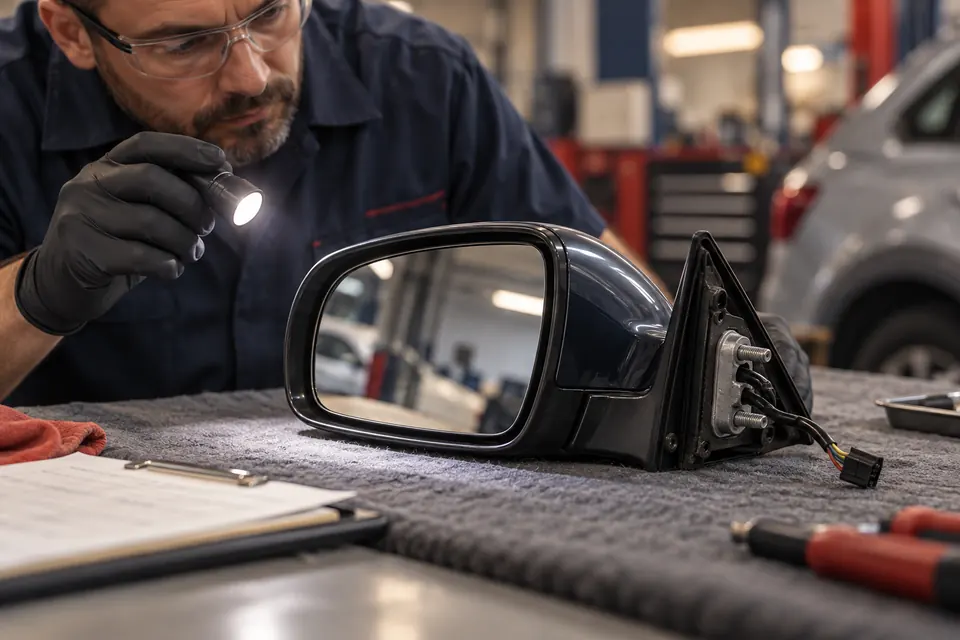
Generated educational illustration: used component condition inspection. Not an actual customer repair, diagnostic result, staff member or Boudreaux’s facility.
Are recycled parts suitable for every repair?
Recycled parts come from another vehicle. Their suitability depends on the component, condition, matching application and applicable repair requirements.
Prior damage, corrosion, attachments and included components may need evaluation. Some parts have restrictions on reuse. Ask what is being supplied, which condition checks apply and whether the manufacturer permits its use; “used” is not a complete description of compatibility.
How This Fits Into the Repair Plan
Compare the delivered used component with the proposed application and supplied condition. Ask which relevant removal, attachment and installation requirements support the actual scope before treating a listing as an approval.
Related Repair Guidance
Distinguish original source from used condition
A recycled or used component has a condition and history question in addition to its source category. Ask what exact part is proposed, what is known about it and how compatibility with the actual vehicle is established. A manufacturer-related origin does not make used condition disappear from the discussion.
The supplied configuration matters. A used assembly may include several pieces, while the supported installed scope may involve different operations. Ask what is included and what remains separate rather than assuming the part listing is the complete repair plan.
The condition of relevant attachments, surfaces and components needs assessment. Ask what findings support suitability for the proposed work and what remains provisional until inspection. A photograph or availability statement alone is not the complete explanation.
Applicable vehicle information can restrict or determine the supported use and operation for particular components. Ask which instruction applies rather than adopting a universal rule that every used part is acceptable or every used part is prohibited.
Related reading: Parts Authorization and Insurance Repair Planning and OEM Collision Parts: What the Term Means.
Consider removal, installation and related requirements
A component removed from another vehicle may present preparation or attachment questions that differ from a newly supplied part. Ask how the proposed part and installation can meet the applicable requirements. The donor description alone is not the procedure for installing it.
Where an assembly or joined component is proposed, ask how access and adjoining requirements are addressed. This page does not authorize disassembly, sectioning or reuse of every donor assembly. The supported method needs the identified part and applicable information.
If fitted equipment or a mounting role is relevant, ask about compatibility and any required setup or verification. Source, physical condition and assistance operations are different questions. A used component that looks similar does not independently settle them all.
If availability or condition changes the proposal, request the dated revision and explanation. Ask whether the new scope changes the component, source, related operations or approval. Keep the actual approved description with the estimate.
Compare the complete proposal and final record
A lower main part price does not establish a lower equivalent-scope installed repair. Ask about supported access, preparation, attachments, protection, refinishing and relevant checks. Compare the complete operation descriptions before treating two estimates as identical work.
Boudreaux’s uses OEM parts for structural and suspension components. Ask how that policy maps to the identified estimate lines and discuss any unresolved claim or payment responsibility separately.
Where insurance is involved, separate the technical proposal from claim review and payment responsibility. Ask the shop about supported suitability and the insurer about its actual decision. Clarify unresolved authorization before a changed component is used.
At pickup, ask how the final parts description matches the approved scope and which relevant records or terms are available. A completed exterior image does not establish every aspect of source, history or concealed installation.
For a later concern, record the location and circumstances and contact Boudreaux’s before changing the area. The observation needs assessment rather than an assumption that the used condition or source category alone identifies the cause.
Questions About Recycled or Used Collision Parts
Technical Reference
I-CAR Repairability Technical Support. Manufacturer requirements for the exact vehicle control the repair method. A reference link does not imply Boudreaux’s certification or affiliation.
Compare the complete proposal
Separate the part price from inspection, installation, refinishing and other work. If another part type is offered, compare the actual specification and requirements. Keep the final description with the repair records rather than assuming that every used component is either unsuitable or equivalent.