
Repair Planning Starts With the Vehicle
A responsible repair plan considers the vehicle, the impact and the applicable repair information. The first visible estimate is a starting point; inspection and teardown may reveal operations that were not visible at intake.
Explore the Repair Services
Support Around the Repair
Find help by the problem you are facing
Repair terminology is not always the easiest place to start. Use the concern that brought you here, then follow the relevant service and owner guide.
For an urgent transport question, use accident recovery guidance and call the selected shop. For research, browse Repair Education. For your own vehicle, request an estimate conversation.
Choose the service that answers your repair question
The service list is a starting point, not a menu of operations every vehicle automatically needs. Begin with the damage and the questions it raises. A broken lamp, a wheel that moved in an impact and a dented outer panel can call for different assessment paths. The repair plan should connect each proposed operation to the affected component, installed equipment or vehicle-specific requirement.
For damaged panels, bumpers or a changed body opening, start with collision and auto body repair. For finish damage, color matching or refinishing after a part is repaired, use paint and refinishing. If you are unsure which category applies, describe what changed in your estimate request; you do not need to diagnose the vehicle first.
Some repair questions involve more than one category. Replacing a bumper cover can require attention to brackets, hidden absorbers, refinishing and equipment behind the cover. A useful estimate separates those tasks so you can understand why each appears.
Body repair, structural checks and electronics answer different questions
Body repair addresses damaged exterior and body components. Structural assessment asks whether reference dimensions or load-carrying areas were affected. Wheel alignment concerns wheel geometry. Diagnostics investigates electronic information and symptoms. Calibration concerns the specified reference or setup of applicable sensors. Completing one task does not automatically answer all the others.
For example, a wheel alignment printout and a body measurement report describe different conditions. A diagnostic scan can reveal information worth investigating without showing the condition of a hidden bumper mounting point. Ask which finding supports the next step and how the result will be documented.
The required combination depends on the vehicle and damage. Avoid assuming that a small-looking impact needs no investigation, or that every collision requires every specialized service. New Orleans shop resources are described on its location page; confirm the exact operation and arrangement with the shop you select.
From first contact to a workable repair plan
- Describe the concern. Provide the year, make, model, impact area and symptoms that began afterward. Note anything that existed before the collision.
- Arrange assessment. Photos help start a conversation, but access to the vehicle may be needed before hidden damage or a complete scope can be established.
- Review the proposed work. Ask what is confirmed, what remains conditional and which parts or procedures affect the plan.
- Clarify authorization and updates. Agree on the next step and how changes will be communicated. An insurance payment decision is separate from permission to perform work.
- Review the handoff. Ask what records, completed checks and care guidance apply when the vehicle is ready.
For a fuller explanation of the sequence, visit the collision repair process guide. For a current insurer estimate, start with insurance and estimate guidance.
Choose a real shop before arranging delivery
Boudreaux’s Collision has shops in New Orleans and Luling. Select the location that fits your route, then confirm the receiving plan. A service-area name is not an additional office, and the fact that two shops share a brand does not establish identical specialized equipment at both addresses.
Call New Orleans at 504-309-3092 or Luling at 985-331-0707. If your vehicle may need transport, explain that before choosing a drop-off time. For an online starting point, request an estimate and identify your preferred shop. Ask about the exact vehicle and operation rather than relying on a general service label.
Questions before your next step
Inside a service bay
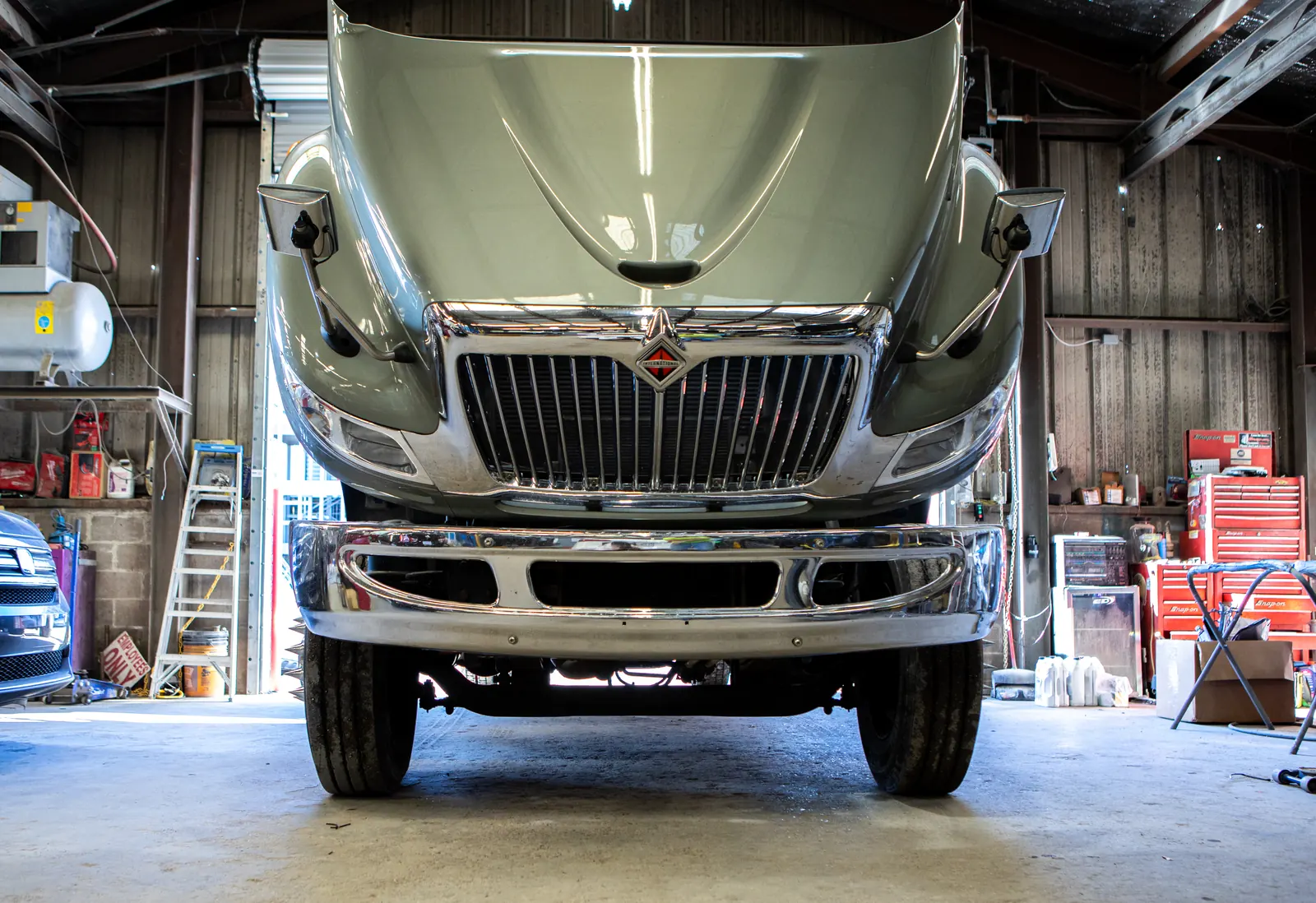
Owner-supplied shop photograph of a vehicle raised in a service bay. Contact the selected location about the intake and service arrangement for your vehicle.