
BOUDREAUX’S COLLISION · REPAIR EDUCATION
Calibration Work Area Requirements
Static calibration can require specified space, target placement, level conditions and lighting or background considerations. Requirements vary by system. An open-looking work area does not by itself prove that the required setup is available.
Illustration: Calibration Work Area Requirements
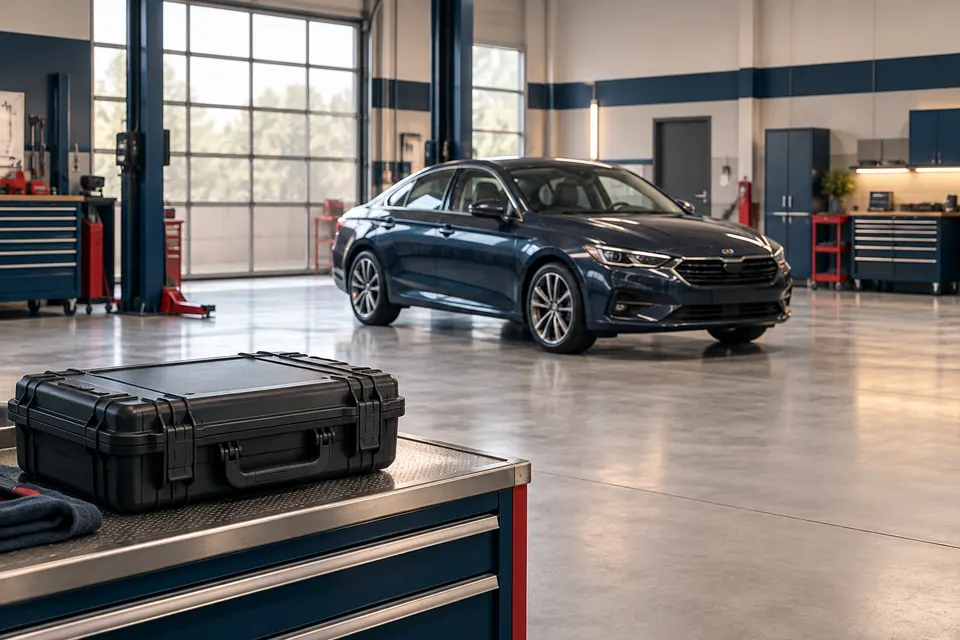
Generated educational illustration: calibration workspace planning. Not an actual customer repair, diagnostic result, staff member or Boudreaux’s facility.
What to Clarify for Your Vehicle
Ask how the selected procedure’s conditions will be met and whether an outside provider is involved. Do not infer universal in-house calibration capability from an equipment photo. The selected shop should explain the arrangement for the actual vehicle and repair.
The workspace can be a procedural requirement
A static calibration may require a defined work area, floor condition, target position or surroundings. Requirements vary by vehicle and system. Having calibration equipment is not enough if the procedure’s workspace conditions are not satisfied.
Targets and reference positions need to be established under the applicable instructions. A visually convenient spot in a shop is not automatically a suitable calibration area, and owners should not try to reproduce a target arrangement from online photos.
Ask about completion and documented limitations
The useful owner question is whether the required procedure was completed successfully, not whether every shop uses the same room layout. Some systems use different methods, including dynamic procedures or a combination of steps.
If work is performed by another provider, request the result as part of the final repair records. If the procedure could not be completed, the limitation and next step should be clear. A photograph of equipment beside the vehicle does not, by itself, demonstrate a successful calibration.
Example: equipment present, procedure not yet complete
A photograph shows targets near the vehicle in a workshop. It establishes that equipment was present at that moment, but cannot by itself establish correct target positioning, vehicle preparation or a successful result. Those are procedural facts that need the relevant record.
If the work area is unsuitable for a required step, the next action may involve a different area or provider. That logistics decision should be explained without implying that every calibration must use the same setup. The vehicle and system determine the requirements.
Ask which procedure was performed and how completion was documented. If another provider handled it, request the available result with the final repair documents. If the record says attempted or incomplete, clarify the unresolved condition before accepting a broad statement that the system was checked. The practical distinction is between having access to a tool and completing the required work under its prescribed conditions.
Further repair information
I-CAR: calibration preparation and environment
General background does not replace the applicable vehicle information, owner’s manual or procedure for the actual operation.
Related Guidance
Make preparation and completion traceable across providers
If transport to another provider is part of the arrangement, ask how timing, authorization and the result are coordinated. An appointment scheduled at a suitable facility is a milestone, not a completed procedure. Ask when the next meaningful update will be available and which requirements remain before the vehicle returns.
If the operation cannot complete, request the finding and next step rather than assume the room or equipment is the cause. Physical prerequisites, system condition and other factors may need review. The record should explain the actual status and any additional decision. An owner should not select a replacement sensor based on a failed attempt alone.
At handoff, retain the available result and ask about any unresolved requirement. A picture of targets beside the car is not a substitute for the relevant completion record. If a feature concern appears later, provide its wording and ordinary conditions instead of conducting an unsafe test to judge the calibration.