
From the Boudreaux’s archive
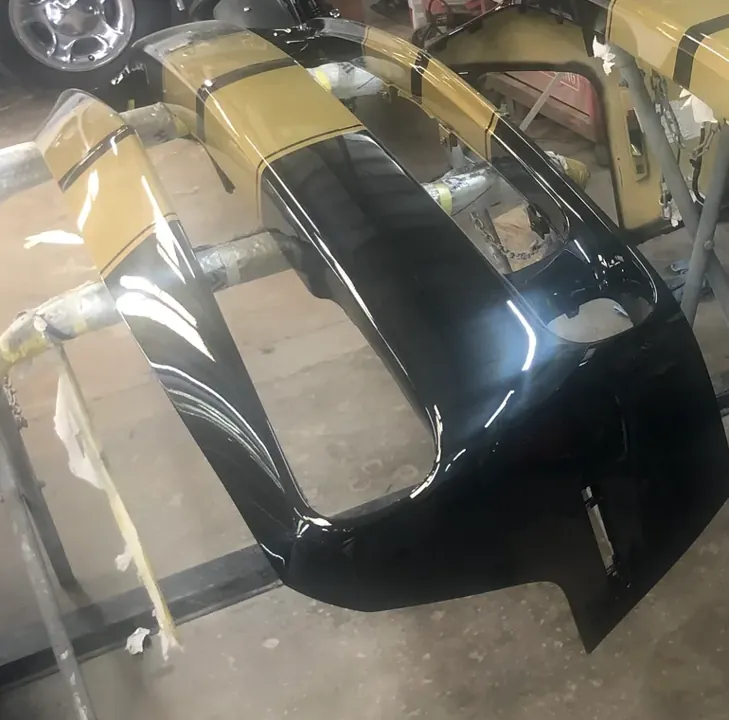
Owner-supplied archive view cropped to a detached bumper cover. The visible cover is separate from hidden supports and fitted-system questions; the image does not establish substrate repairability, sensor restrictions or a completed result.
Can a cracked plastic bumper always be repaired?
Plastic bumper-cover repair depends on the material, damaged area and any manufacturer restrictions. A repair near a radar or sensor zone may have requirements that differ from a repair elsewhere on the cover.
The visible cover is only one part of the bumper system. Absorbers, reinforcements, brackets and sensors behind it may also require inspection. Ask whether the proposed material and refinishing work are permitted in that location and whether any hidden parts are affected.
How This Fits Into the Repair Plan
Identify the cover separately from supports and fitted equipment. Establish the actual substrate, damage area and applicable repair or coating restrictions before settling the operation.
Related Repair Guidance
Identify the cover and the affected related parts
A plastic bumper cover and the components behind or attached to it are different parts of the assessment. Ask which actual part the estimate describes. Visible cover damage should not be treated as a complete diagnosis of every support or fitted system.
Describe the impact location, loose or displaced areas and any changed warning or function. Mention earlier repair or accessories if known. These observations help inspection without establishing a universal repairability decision.
Material and construction information matter to the proposed cover operation. Ask what findings and applicable requirements support repair or replacement. A small crack or scrape is not a universal rule that every cover can be repaired the same way.
Do not heat, glue or trim the cover to test repairability or create driving clearance. If movement or secure attachment is uncertain, discuss appropriate transport before moving the vehicle. An improvised exterior change does not establish the condition of the area behind it.
Related reading: Bumper Collision Repair and Parking Sensors After a Collision.
Understand repairability near fitted-system areas
If sensors or other equipment are associated with the cover area, ask which vehicle-specific repair restrictions, coating requirements and supported material operations apply to the identified bumper and sensing area.
Physical cover condition, mounting support and assistance setup are different questions. Ask what each relevant finding establishes and which operation addresses it. A no-code result does not independently explain every attachment or permissible substrate repair.
If replacement is proposed, clarify the supplied configuration and related pieces. A cover price alone may not include all attachments, preparation, fitting, refinishing or relevant checks. Compare the complete installed scope.
If a source or method changes, request the dated revision and reason. Ask how compatibility, applicable requirements and related operations are addressed. Availability or similar appearance does not automatically make the supported scope identical.
Follow the cover and related work through completion
At pickup, ask which cover and adjoining operations were completed and which relevant records are available. Visible fit and finish can be reviewed without treating them as proof of every concealed support or assistance requirement.
Discuss any remaining loose area, rubbing, warning or unavailable function with the shop. These observations can need different assessments. Do not ignore a movement concern because the paint appears complete.
Where insurance is involved, distinguish the technical proposal from claim review and payment responsibility. Ask the shop about the supported operation and the insurer about its actual decision. Clarify any unresolved approval before changed work proceeds.
For a later concern, record the location and circumstances and contact Boudreaux’s before cover alterations or resets. The actual repair record helps distinguish substrate, attachment and fitted-system questions in the next assessment.
Questions About Plastic Bumper Repair and Replacement
Technical Reference
I-CAR: bumper-cover repair with ADAS. Manufacturer requirements for the exact vehicle control the repair method. A reference link does not imply Boudreaux’s certification or affiliation.