
From the Boudreaux’s archive
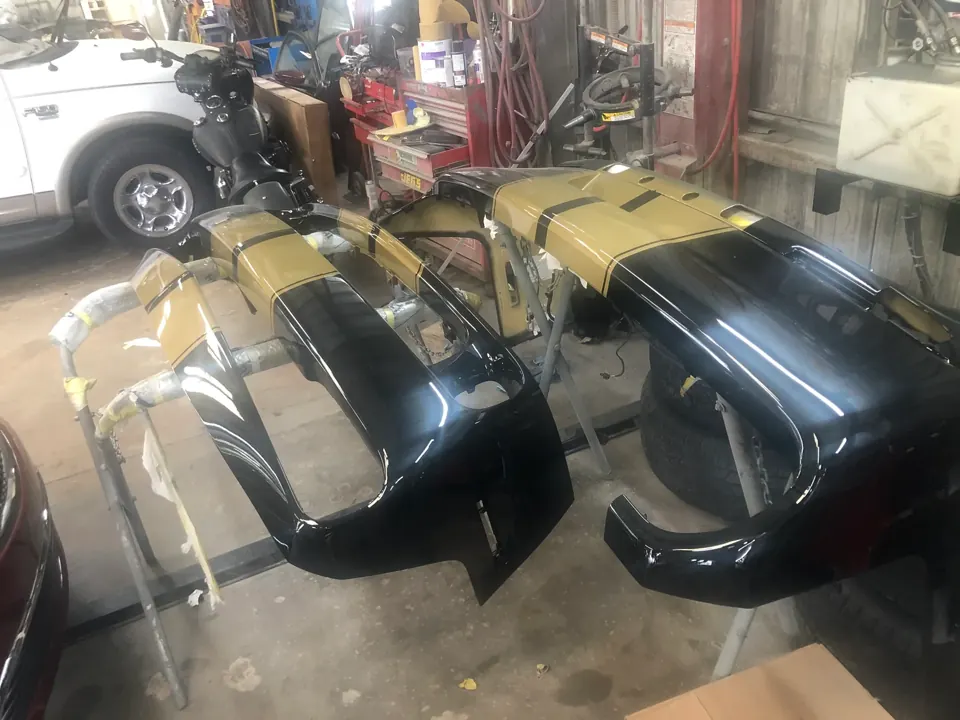
Owner-supplied archive view of detached refinished exterior components. It illustrates component-level finish context; it does not identify repaired versus replacement condition, substrate preparation or every coating operation.
Does a replacement panel arrive ready for final paint?
A repaired panel and a new replacement panel can start with different surface conditions. The preparation and coating work must suit the substrate and the selected refinish system.
Repair areas may need shaping and undercoat work; replacements may have transport damage, coatings or areas requiring preparation. Both still need color evaluation and an appropriate finish boundary. Ask which preparation is included instead of comparing only the color-application line item.
How This Fits Into the Repair Plan
Identify the actual starting surface and supplied part configuration. Compare preparation, protection, color evaluation and relevant coverage as part of the installed operation, rather than the color line alone.
Related Repair Guidance
Compare the starting surfaces
A repaired existing panel and a replacement panel can arrive at refinishing with different surface conditions. Ask what preparation applies to each in your estimate. Both need a supported finish plan, but the fact that both receive color does not mean every preceding operation is identical.
For an existing panel, the shop needs to understand the repair area and any relevant earlier coating condition. Tell the estimator about known paintwork, corrosion or products applied to the surface. Distinguish those facts from guesses based only on the panel’s appearance.
For a replacement, ask what supplied coating or configuration is involved and which preparation the applicable information requires. A part that arrives coated should not be assumed to be the same as a completed refinished panel ready for installation or delivery.
Material and finish type matter to the scope. Ask which requirements fit the identified surface rather than borrowing advice from a different substrate or vehicle. A similarly colored plastic and metal panel can still present different preparation questions.
Ask whether the supplied replacement includes the surfaces and pieces assumed in the estimate. An assembly description and the planned refinish area are different questions. Clarify any separate preparation or finish operation on relevant edges or supplied pieces so the final scope follows the actual part configuration rather than a broad replacement-panel label.
Related reading: Surface Preparation Before Collision Refinishing and Automotive Paint Matching After Collision Repair.
Read the installed operation rather than the main line alone
A complete proposal can include access, removal, fitting, preparation, protection and finish work. Ask how these operations connect to the repaired or replacement panel. A bare part price is not directly comparable to a completed installed repair.
Color identification and matching are further questions. Ask how the paint code, actual vehicle finish and relevant adjoining surfaces are considered. The code is useful information, but it does not independently establish that every supplied formula or sample will look identical on the vehicle.
If blending or adjoining-panel work is proposed, ask which surface and layer are involved. Color blending and clearcoat application are different operations. Keep the explanation specific enough to understand why the scope extends beyond the visibly damaged spot.
Protection on relevant edges, concealed surfaces or disturbed areas should be discussed separately from exterior appearance. Ask how applicable requirements are included. A glossy replacement panel cannot independently document every treatment beneath or behind the visible surface.
Follow changes and care instructions
If preparation reveals a condition that changes the plan, request the specific finding and revised estimate. Ask whether it relates to earlier coatings, the current repair or the supplied replacement. Keep those explanations distinct so the revised operation can be understood.
If a part source changes, clarify the configuration, compatibility and any effect on preparation or related work. Availability alone does not establish that the installed scope is unchanged. Keep the approved part description with the current estimate.
At handover, ask which panels were repaired or replaced and which refinish operations were completed. Discuss visible fit and finish and request the relevant care guidance. Instructions should follow the actual products and work rather than a universal online waiting period.
For a later finish concern, identify the panel and repair date and contact the shop before altering the surface. The distinction between repaired and replaced material can help the discussion, but it does not diagnose the cause by itself. Boudreaux’s can review the actual record and arrange the appropriate assessment.
Questions About Refinishing Repaired vs Replacement Panels
Technical Reference
PPG: identifying a refinish color formula. Manufacturer requirements for the exact vehicle control the repair method. A reference link does not imply Boudreaux’s certification or affiliation.