
BOUDREAUX’S COLLISION · REPAIR EDUCATION
Rear Body Panel Damage After a Rear-End Collision
The rear body panel can connect the rear opening with adjoining panels and help support closures, lamps or bumper-related attachments. Rear-impact repair should also consider the trunk or cargo floor and surrounding structure.
From the Boudreaux’s archive
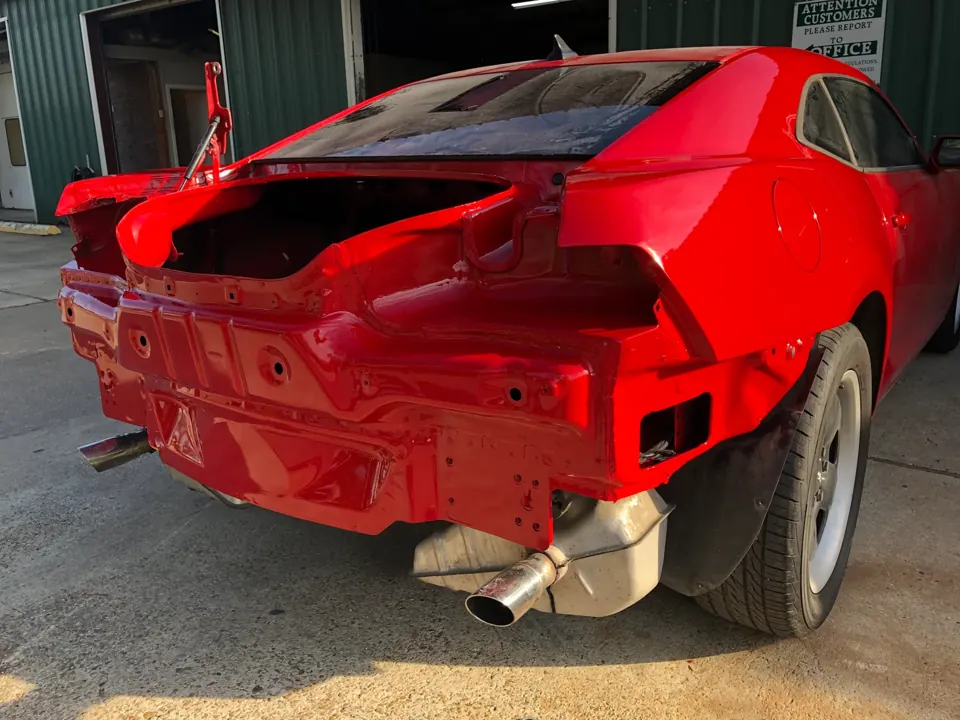
Owner-supplied archive view showing the rear body panel and adjoining opening with exterior components absent. This is visible access context, not a dimensional report, joining-method record or completed closure check.
What can be damaged behind a rear bumper?
The rear body panel can connect the rear opening with adjoining panels and help support closures, lamps or bumper-related attachments. Rear-impact repair should also consider the trunk or cargo floor and surrounding structure.
An outer bumper cover may conceal distortion behind it. Inspection may need access from inside the cargo area as well as behind removed parts. Closure fit, sealing and corrosion protection are separate considerations from making the outside look repaired.
How This Fits Into the Repair Plan
Separate the rear panel from the closure, cargo floor and fitted equipment. Ask what access and relevant checks establish for each component instead of treating a bumper view as the whole assessment.
Related Repair Guidance
Separate the rear panel from the closure and floor
Boudreaux’s uses OEM parts for structural and suspension components. Clarify the actual structural or suspension lines and any separate insurer review or payment responsibility.
The rear body panel, trunk lid or liftgate, rear floor and adjoining components are different parts of the assessment. Ask which exact component the estimate identifies. A broad rear-end damage description does not establish that each nearby area has the same condition or repair method.
Describe the impact location and any changed closure operation, cargo-area gap, warning or moisture concern. Include earlier rear repairs if known. These observations help the shop direct its inspection without proving which concealed component caused the change.
The bumper exterior can conceal another view of the rear area. Ask what is confirmed with adjoining parts installed and whether additional authorized access is required. A bumper that appears displaced does not independently identify the rear panel’s condition.
Safe overall photographs can show the relationship between the bumper, closure and adjoining panels. Do not force a binding lid or remove unstable parts to reveal more damage. If the vehicle cannot securely close or its driving condition is uncertain, discuss appropriate transport before arrival.
Related reading: Rear-End Collision Repair and Liftgate and Trunk Repair After a Collision.
Understand rear-panel replacement and related work
Ask which findings and applicable vehicle information support repair or replacement of the rear body panel. The supplied part configuration and installed scope should be clear. A part listing alone is not a complete explanation of the permitted operation.
If partial replacement is proposed, ask whether the applicable method involves sectioning or replacement at factory seams. These terms describe different operations. The instruction should support the identified component and location rather than a generic plan to remove only the visible damaged area.
Related work can involve access, attachments, protection, refinishing and adjoining components. Ask what is included and what depends on further findings. The main rear-panel price should not be compared with a complete installed estimate as if both describe the same scope.
If fitted sensors, cameras or their mounting areas are affected, ask which applicable requirements follow from the actual work. Closure operation, exterior appearance and driver-assistance checks answer different questions. The plan should identify the relevant operations rather than assume one result proves all of them.
Keep cargo-area and verification questions traceable
Relevant geometry and adjoining-area assessment may help explain the supported plan. Ask which reference information and findings are used and what remains provisional. A repaired closure gap cannot independently establish every rear structural dimension or concealed attachment condition.
When access reveals another issue, request the dated revision and the finding that changes the scope. Ask whether it concerns the rear panel, floor, closure, mounting area or fitted equipment. Clarify the effect on parts, related operations, verification and approval.
At pickup, ask which rear-panel and adjoining operations were completed and what relevant records are supplied. Discuss visible fit and finish as well as any unresolved closure, warning or water concern. A before-and-after photograph cannot explain every seam or concealed treatment.
For a later moisture or noise issue, record when it appears and the observed area. Contact Boudreaux’s before applying sealant or altering cargo trim. Water visible inside the rear compartment does not identify its entry path, so the actual concern needs assessment against the repair record.
Questions About Rear Body Panel Damage After a Rear-End Collision
Technical Reference
I-CAR Repairability Technical Support. Manufacturer requirements for the exact vehicle control the repair method. A reference link does not imply Boudreaux’s certification or affiliation.