
Illustration: Roof Collision Damage and Repair Planning
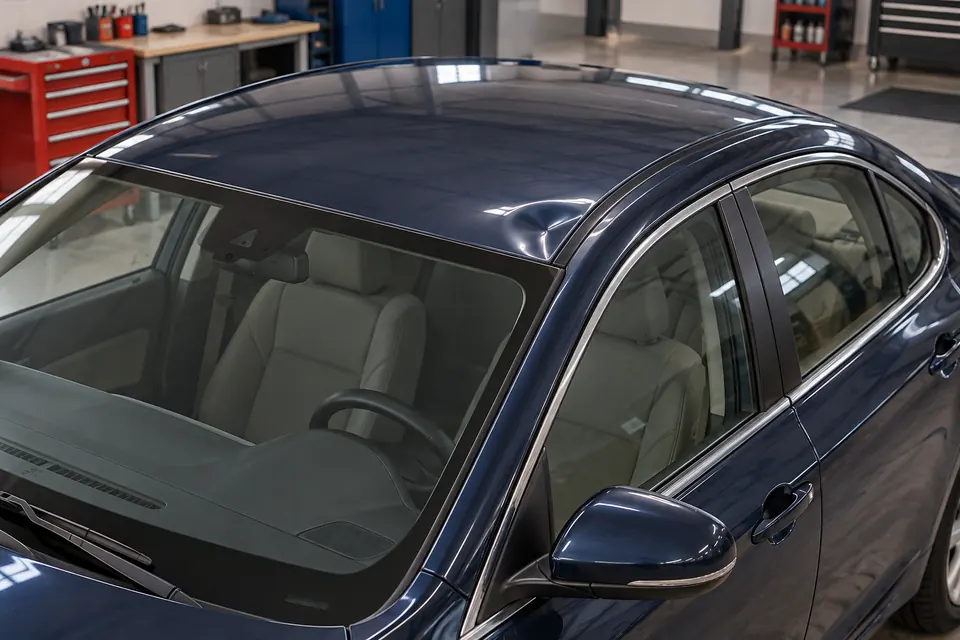
Generated educational illustration: roof panel adjoining opening review. Not an actual customer repair, diagnostic result, staff member or Boudreaux’s facility.
Is roof damage always cosmetic?
A damaged roof can involve the outer panel, rails, pillars, reinforcements, sunroof opening or interior restraint components. The depth and location of damage matter more than the label “roof dent.”
Roof replacement can involve significant joining and corrosion-protection work. Manufacturer information determines permitted repair or replacement methods. Water sealing and any glass or sunroof work are separate checks; an exterior photograph cannot establish all of those requirements.
How This Fits Into the Repair Plan
Identify the roof surface and any affected rail, pillar, glass opening or fitted item. Ask which access and applicable information establish the method, then clarify protection, sealing and relevant verification.
Related Repair Guidance
Establish the extent beyond the visible roof skin
The roof surface is connected to a larger area that includes rails, pillars and window openings. Ask which parts are being assessed. A visible dent does not by itself identify whether the issue is limited to the skin or involves another component.
Describe the event and location: a falling object, contact near a roof edge or collision-related movement can give different starting questions. Share the history without assigning a repair method. If a rollover or a severe impact occurred, say so explicitly rather than describing only the visible dent.
Mention changed door or glass-opening behavior, roof equipment concerns and any water entry noticed after the event. These observations help the shop identify areas for inspection, but they do not establish the exact source or extent of damage.
Take exterior photos only from a safe position. Do not climb onto a damaged vehicle, remove a headliner or disturb broken glass to reveal more of the roof. The shop can explain what access is required and obtain authorization for the relevant assessment.
Related reading: Pillar Damage After a Side Impact and OEM Procedures vs Certification.
Understand the proposed roof operation
A skin repair, roof-panel replacement and work on adjoining structure are different proposals. Ask for the actual component descriptions and the findings that support each operation. The term “roof repair” should not conceal a separate question about a rail, pillar or opening.
Applicable construction and repair information determine the permitted method. Ask which vehicle-specific requirements govern the work rather than assuming that any dent can be pulled or any damaged area can be cut out. A repair on another model is not permission to use the same approach on yours.
Depending on the vehicle and scope, access may involve glass, interior trim or fitted roof equipment. Ask which related operations are included and how they connect to the main repair. A replacement-panel price alone does not describe all the work necessary to install and finish it.
Where glass or bonded areas are affected, ask which installation, preparation and release requirements apply. Do not infer that a finished paint surface establishes the condition of the glass installation or the completion of required supporting operations.
Follow sealing and fit questions through the repair
Disturbed protection and sealing need a clear place in the plan. Ask how the applicable requirements for seams, coatings and enclosed or adjoining areas are addressed. These matters are different from selecting the exterior color or judging the paint gloss.
If access reveals additional roof-area damage, request the revised estimate and the finding behind the change. Ask whether it affects the component, method, related work or verification. Clarify the next stage and any changed approval or claim-review question before relying on the initial scope.
At pickup, ask what roof and adjoining operations were completed and which relevant checks are documented. Discuss the visible fit and finish and any concern with fitted equipment or interior trim. Do not conduct an improvised hose or road test as a substitute for the shop’s supported assessment.
If moisture or a new noise appears later, record when it occurs and the area where it is observed. The visible location of water may differ from its entry point. Contact Boudreaux’s before removing trim or applying sealant so the concern can be assessed against the actual repair record.