
BOUDREAUX’S COLLISION · REPAIR EDUCATION
Rocker Panel Repair: Outer Damage and Hidden Structure
The rocker runs below the doors. A dent in its outer cover or skin does not establish whether the inner reinforcement is damaged. The repair plan should distinguish cosmetic outer-panel work from structural work.
Illustration: Rocker Panel Repair: Outer Damage and Hidden Structure
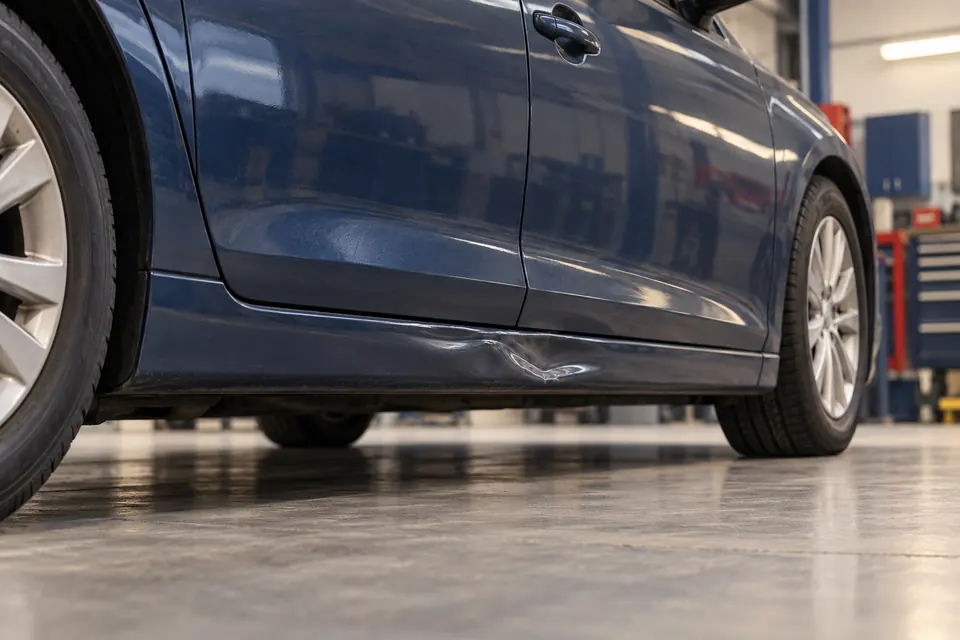
Generated educational illustration: outer rocker door opening context. Not an actual customer repair, diagnostic result, staff member or Boudreaux’s facility.
Is every rocker-panel dent structural damage?
The rocker runs below the doors. A dent in its outer cover or skin does not establish whether the inner reinforcement is damaged. The repair plan should distinguish cosmetic outer-panel work from structural work.
Crushed seams, changed door gaps or damage extending into the floor or pillar call for closer investigation. Plastic trim can conceal the metal underneath. A sectioning decision must come from the correct repair information, not from the visible length of the dent.
How This Fits Into the Repair Plan
Distinguish the visible outer rocker from concealed reinforcement and adjoining areas. Ask which access, permitted method and protective operations apply to each identified layer.
Related Repair Guidance
Identify which layer is damaged
The rocker area runs below the door openings, but a description such as “the sill is dented” does not identify every affected component. The visible outer panel, concealed reinforcement and adjoining floor or pillar areas need to be distinguished. Ask the estimator to name the part being discussed and explain whether the current assessment reaches the layers behind it.
Describe how the contact happened. A parking-block scrape beneath a door, an impact from another vehicle and damage around a lifting point give different starting information. That history helps the inspection; it does not establish a repair method by itself. Include the side of the vehicle and whether the doors behaved differently afterward.
A door that still closes is useful information, but it is not a measurement of the rocker reinforcement. Likewise, a scraped plastic cover may conceal the metal beneath it. Ask what access or measurement is needed before a visible dent is classified as an outer-panel repair.
If an earlier repair or rust was present, disclose it. The shop needs to separate the recent impact from pre-existing conditions and explain how those findings affect the supported scope. Do not grind away coatings, remove trim or attempt to pull the area before that assessment.
Related reading: Structural Rocker Damage vs Outer Rocker Dents and Panel Repair vs Replacement.
Understand the proposed rocker operation
Boudreaux’s uses OEM parts for structural and suspension components. Discuss any applicable structural lines with the shop and any unresolved coverage responsibility separately. A repair, complete replacement and partial replacement are different proposals. Ask which specific component and vehicle information support the chosen operation. Outer-panel instructions should not be assumed to authorize cutting a reinforcement underneath. Even similar model names can have different construction or applicable procedures.
If a partial replacement is proposed, ask whether the applicable instruction describes sectioning at a specified location or replacement at factory seams. These terms are not interchangeable. The useful explanation identifies the permitted method for your vehicle rather than a generic statement that only the damaged portion will be removed.
Access can involve adjoining trim or panels. Ask how the estimate accounts for the related work, attachment requirements and protection of concealed areas. The main rocker line may not describe everything required to complete the operation. Clarify any item that remains provisional until disassembly.
Refinishing and corrosion protection deserve separate explanations. Visible paint is only one part of the finished area. Ask how the applicable requirements for seams, enclosed surfaces and disturbed coatings are included in the plan. An attractive outer surface cannot independently document treatment behind it.
Track findings and follow-up
If access reveals another damaged layer, request the revised estimate and the finding that caused the change. Ask whether it changes the component, method, related operations or verification. Keep the current estimate with the earlier version so the change can be followed rather than remembered from a conversation.
Where insurance is involved, distinguish the supported repair operation from the insurer’s review of payment. A claim decision does not identify the material or authorize a sectioning location. Ask the shop about the technical scope and the insurer about the claim decision, then clarify any unresolved responsibility before approval.
At pickup, ask what rocker work was completed and what relevant documentation is available. Review any concerns about door operation, trim fit or the visible finish with the shop. Avoid interpreting a photograph of another rocker repair as proof that yours required the same operation.
If a new noise, water concern or visible change develops later, record when it appeared and the affected area. Contact the repairing shop for an appropriate inspection before modifying the seam or trim. Boudreaux’s teams in New Orleans and Luling can discuss your actual vehicle and the records for its repair.