
Illustration: Blind-Spot Systems After Collision Damage
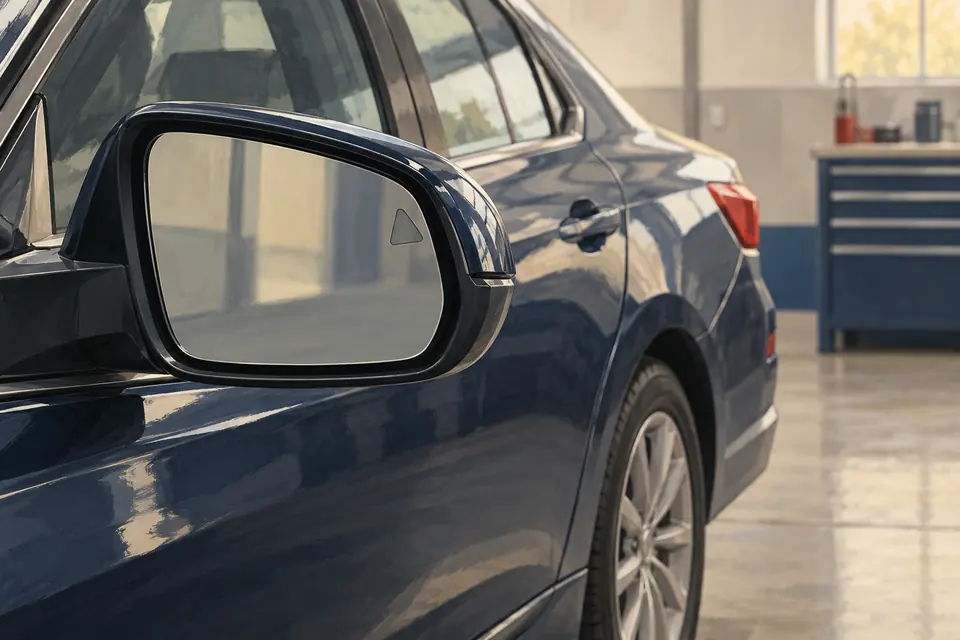
Generated educational illustration: blind spot mirror rear context. Not an actual customer repair, diagnostic result, staff member or Boudreaux’s facility.
Can rear-bumper damage affect blind-spot monitoring?
Blind-spot systems can use sensors near rear body or bumper areas. An impact or repair in those areas can affect the sensor, its mounting or nearby materials.
The system’s warning behavior is not a substitute for the applicable inspection or calibration requirements. Equipment varies between vehicles that look alike. Ask which system is installed, whether affected parts were removed or replaced and what verification the procedure requires.
How This Fits Into the Repair Plan
Name the affected side, sensing area and displayed indication. Ask how applicable panel restrictions, support condition and any required setup are addressed for the fitted system.
Related Repair Guidance
Identify the sensing area and the displayed indicator
A blind-spot assistance system can involve sensing components and displayed indicators that serve different roles. Ask which fitted parts apply to your vehicle. An indicator in a mirror does not, by itself, identify the location or condition of every sensor associated with the function.
Describe the impact side and any warning, unexpected indication or unavailable function after the event. Mention earlier concerns and known accessories or modifications. The observation helps define the assessment without proving a particular sensor is damaged.
Ask whether the collision or proposed work affects a sensing area, bracket, housing or related exterior component. A finished surface can conceal relevant mounting questions. Clarify what is established initially and what needs further authorized access or research.
Do not deliberately change lanes near another vehicle to test the system. An improvised assistance test is not the supported diagnostic procedure. Describe what happened during normal use and let the applicable information guide assessment.
If an estimate describes both a mirror indication and work near a sensing area, ask which component and operation each line addresses. They can serve different roles within the fitted system. Keep the observed behavior, relevant finding and supported correction connected in the scope. A working indicator should not silently be treated as proof of every concealed support or setup requirement, while a sensing-area result should not be mistaken for an explanation of every mirror operation.
Related reading: Damaged Sensor Brackets After a Collision and Small Collisions and Sensor-Related Repairs.
Understand related panel and mounting requirements
Applicable requirements can depend on the actual sensor arrangement and repair work near it. Ask which vehicle-specific information governs the proposed operation. Advice about another bumper or mirror configuration should not be transferred solely because both vehicles have blind-spot assistance.
Physical support condition, sensing-area repairability and calibration or setup are different questions. Ask which findings and instructions support each relevant operation. A successful electronic result does not independently explain every concealed mounting or related panel condition.
If refinishing or panel work is proposed near a relevant area, ask which applicable restrictions or requirements are considered. Repair distances, coating limits and material restrictions should not be generalized across systems. The actual instruction should establish what applies.
Scanning is another separate operation. A no-code report is useful information without being universal proof that all mounting and setup requirements are complete. Ask about relevant coverage and any limitation that remains.
Review the blind-spot scope and record
If access or requirements research changes the proposal, request the dated revision and explanation. Ask whether the change concerns a sensor, indicator, bracket, sensing-area work or setup. Keep the component descriptions consistent so different tasks are not hidden under one broad feature label.
At pickup, ask which relevant physical and assistance operations were completed and which records are available. A working mirror indicator and an explained calibration or setup result can answer different questions. Ask what each establishes for the actual vehicle.
If an unexpected indication or warning appears later, record the side, conditions and timing and contact Boudreaux’s before resets or component changes. Do not recreate an unsafe lane-change situation to collect more observations.
Where insurance is involved, separate the supported technical requirement from claim review. Clarify the operation with the shop and the actual payment or approval question with the insurer. A claim line does not replace the vehicle-specific method.
Questions About Blind-Spot Systems After Collision Damage
Technical Reference
I-CAR: blind-spot sensor calibration considerations. Manufacturer requirements for the exact vehicle control the repair method. A reference link does not imply Boudreaux’s certification or affiliation.