
BOUDREAUX’S COLLISION · REPAIR EDUCATION
Forward Camera Calibration After Collision Repair
A forward camera’s relationship to the vehicle and road can be affected by changes to its mounting, windshield area or vehicle geometry. Calibration requirements come from the procedure for the exact vehicle and operation.
Illustration: Forward Camera Calibration After Collision Repair
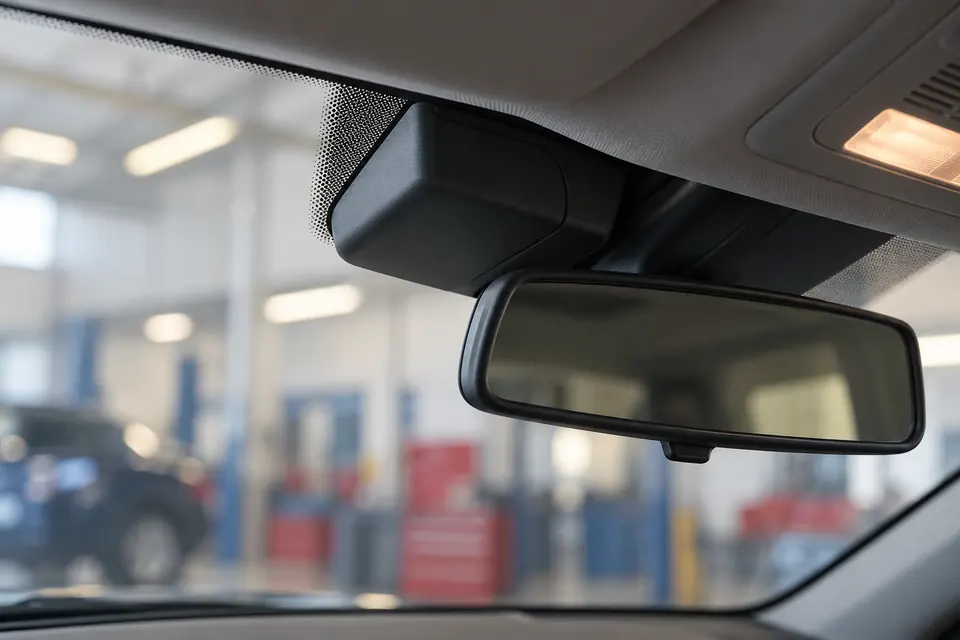
Generated educational illustration: forward camera windshield mount context. Not an actual customer repair, diagnostic result, staff member or Boudreaux’s facility.
Does a working camera still need calibration?
A forward camera’s relationship to the vehicle and road can be affected by changes to its mounting, windshield area or vehicle geometry. Calibration requirements come from the procedure for the exact vehicle and operation.
The required method may be static, dynamic or a combination. A camera that powers on is not automatically correctly aimed. Ask what triggered calibration, which prerequisites apply and what documents confirm completion; confirm the service arrangement for the identified vehicle with the selected location.
How This Fits Into the Repair Plan
Identify the camera, the operation creating the requirement and the applicable prerequisites. Confirm the actual service arrangement and relevant completion record with the receiving location.
Related Repair Guidance
Identify the camera rather than relying on a feature name
A forward camera can be associated with more than one driver-assistance function, depending on the vehicle. Ask which fitted component and system the estimate identifies. A lane-related or collision-warning label alone may not describe every function connected to the actual camera.
Describe warning messages, unavailable features and changes noticed after the event. Mention earlier concerns and known modifications. The history helps define the assessment without proving that the camera itself is damaged or that every connected function has the same issue.
Ask whether the collision or work affects the camera, housing, bracket, glass or another relevant mounting area. These questions should be distinguished. The original camera remaining in the vehicle does not automatically establish that related removal or position changes create no requirement.
Do not move the camera or deliberately trigger assistance responses to test it. The applicable information should guide assessment and calibration. An improvised drive or sensor adjustment is not the supported procedure for the fitted system.
Related reading: Static ADAS Calibration: What It Involves and Dynamic ADAS Calibration: More Than a Test Drive.
Understand why calibration is proposed and how the method is chosen
Ask which vehicle-specific instruction connects the actual repair operation to the camera requirement. The reason should be identifiable rather than a blanket statement that every vehicle has cameras. A requirement reference explains why work applies; it is different from a record of completed calibration.
Static and dynamic methods follow different applicable procedures. Some fitted arrangements can involve more than one requirement. Ask which method and prerequisites the actual instruction specifies rather than selecting an approach from another vehicle’s example.
Scanning is also separate from calibration. A no-code report can provide useful electronic information without documenting every camera-aiming operation. Ask which relevant result supports each task and whether any system-access limitation remains.
Physical mounting condition should not be treated as the same question as the calibration outcome. Ask what findings support any bracket, glass or related correction and what must be completed before the relevant setup. The supported plan should connect those dependencies clearly.
Keep the camera result connected to the final scope
If identification, access or research changes the plan, request the dated revision and explanation. Ask whether it changes the component, mounting work, method, prerequisites or verification. Keep those distinctions with the estimate instead of treating every camera-related charge as one task.
At pickup, ask which camera operation was completed and which relevant record is available. Vehicle identity, system and purpose make the result useful. A generic scan receipt or road-test statement should not silently be treated as documentation of a different operation.
Discuss any remaining warning or unavailable connected function with the shop. Ask what was checked and whether a limitation or follow-up remains. The dashboard appearance is one observation, not a complete account of all required camera work.
For a later concern, record the message, conditions and timing and contact Boudreaux’s before resets or deliberate assistance tests. The actual repair record helps discuss the appropriate assessment without assuming every camera symptom has the same cause.
Questions About Forward Camera Calibration After Collision Repair
Technical Reference
I-CAR: forward-camera calibration requirements. Manufacturer requirements for the exact vehicle control the repair method. A reference link does not imply Boudreaux’s certification or affiliation.