
Illustration: Pearl and Tri-Coat Paint Matching
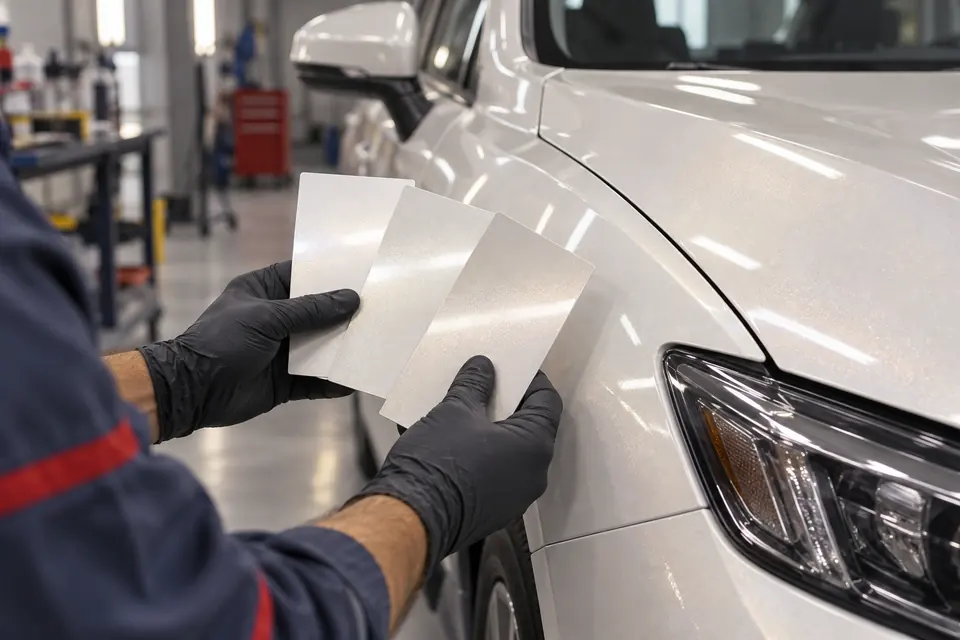
Generated educational illustration: pearl layered finish sample review. Not an actual customer repair, diagnostic result, staff member or Boudreaux’s facility.
Why is tri-coat paint more complex to match?
A tri-coat finish can use a ground color, an effect layer and clearcoat. The appearance depends on the layers and their application, so matching can be more involved than selecting one formula.
A spray-out helps compare the proposed finish with the vehicle. Effect appearance and blending needs can differ from a simple solid color. Ask how the existing finish will be evaluated and which coating system applies; the name of a color alone does not establish the full refinishing process.
How This Fits Into the Repair Plan
Separate the color comparison from the panel scope: which layered finish is being evaluated, how the sample supports that choice and where the proposed color and finishing operations extend.
Related Repair Guidance
The paint code starts the search; the vehicle supplies the comparison
Give the shop the paint code if you have it, but also provide the vehicle itself for assessment and disclose earlier refinishing. A code helps identify the color family and starting information. It does not replace comparison with the existing finish on the vehicle being repaired.
Pearl and special-effect finishes can look different as viewing angle and lighting change. A phone photograph taken from one position can be useful for identifying a concern, but it is not a reliable substitute for a direct color assessment. Explain where you notice a difference instead of relying on one screen image to settle it.
If a panel has been refinished before, tell the estimator which area was involved and share any records. An earlier repair may be relevant to the current comparison and scope. If the history is uncertain, say so; guessing that every panel still has its original finish can create confusion during the color discussion.
Ask what the current plan includes for color evaluation. Product guidance, formula selection and a physical sample can each contribute to that work. The purpose is a repair plan based on the actual finish and the coating system being used, rather than a promise that a color name alone guarantees the result.
Why a sample matters with a layered finish
A tri-coat discussion involves the relationship between the underlying color and a translucent effect layer, followed by the specified clear finish. Those layers contribute to the appearance together. The number of stages is not a universal instruction for how every pearl color is repaired; the identified coating system and color information control the process.
A sprayout sample lets the refinisher assess a proposed color before treating the vehicle panel. See PPG’s sprayout-card background for one manufacturer’s evaluation guidance, not a statement of the paint system used on your vehicle. For relevant layered colors, a letdown sample can help compare the effect of the middle layer. These are evaluation tools, not simply extra paint on the vehicle. Ask how the sample supports the color decision and whether further adjustment is needed.
For a hypothetical example, two samples can share a starting color family while presenting a different effect when compared beside the vehicle. That comparison can inform the proposed approach. It does not mean an owner should prescribe a coat count from an online guide. The actual product information and professional evaluation remain part of the process.
Keep formula evaluation, application and repair-area planning distinct. A useful sample supports the color choice, while the plan must still identify the panels and operations involved. If an estimate changes after color evaluation, ask which part of the plan changed and what the additional work is intended to accomplish.
Review the color and repair boundaries together
Ask the estimator to identify the damaged panel, any proposed adjacent blend area and the finishing boundary. These are different aspects of the scope. A small damaged spot does not necessarily mean every required coating operation can remain confined to the same small footprint.
When comparing estimates, check whether they describe the same layered finish and panel scope. A lower total may reflect a different set of operations rather than the same work at a different price. Request an explanation of unfamiliar entries before treating the estimates as interchangeable.
At pickup, discuss any specific appearance concern with the shop and identify the panel, angle and lighting in which you noticed it. Inspect the repair with the team rather than trying to resolve a comparison solely from compressed phone images. Keep the final repair documentation and any agreed follow-up together.
Boudreaux’s can discuss the refinishing plan at the location handling the vehicle. This guide explains owner questions about layered colors; it does not announce an unconfirmed paint-system inventory, promise a universal formula or provide spray instructions. Confirm the actual finish and operations proposed for your vehicle.
Questions About Pearl and Tri-Coat Paint Matching
Technical Reference
PPG: identifying a refinish color formula. Manufacturer requirements for the exact vehicle control the repair method. A reference link does not imply Boudreaux’s certification or affiliation.