
BOUDREAUX’S COLLISION · REPAIR EDUCATION
Wheel Runout and Bent-Wheel Assessment
Runout describes variation in a rotating wheel or related assembly under a specified measurement. It can help evaluate a wheel concern, but the test setup and component being measured matter. A vibration is a symptom, not a direct measurement of wheel damage.
Illustration: Wheel Runout and Bent-Wheel Assessment
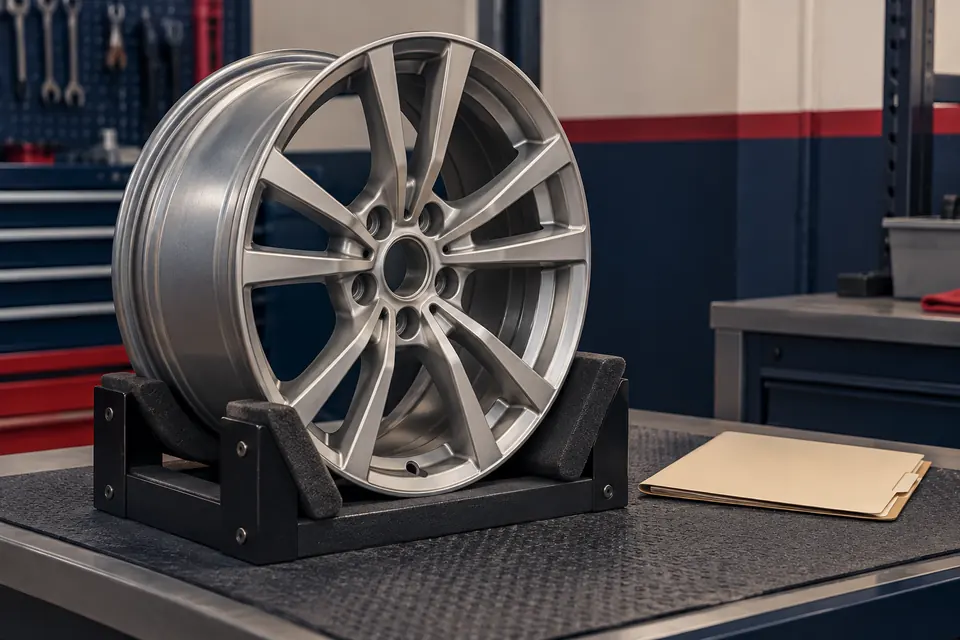
Generated educational illustration: wheel shape and balance discussion. Not an actual customer repair, diagnostic result, staff member or Boudreaux’s facility.
What to Clarify for Your Vehicle
Ask how the wheel condition is established and whether the tire, hub or surrounding components also need assessment. Do not assume every vibration can be corrected by balancing. Confirm the relevant repair or replacement decision before further use.
Runout is a measured condition
Wheel runout concerns variation as the wheel rotates. A wheel can have an impact-related shape concern that is not obvious in a parked photograph. Measurement and inspection are more reliable than assuming a wheel is undamaged because it still holds a tire.
Vibration does not automatically mean the wheel is bent. Tire condition, balance and other assembly concerns may also need assessment. The diagnosis should connect the symptom to the inspected condition.
Repairability depends on the actual wheel and guidance
Ask how the wheel was assessed and what information supports repair or replacement. A universal promise that any bent wheel can be straightened would be inappropriate. Cosmetic refinishing and a shape or integrity concern are different scopes.
If a replacement is proposed, confirm the relevant fitment and specifications. Report persistent vibration after delivery with its circumstances, without driving a damaged vehicle solely to recreate it. Keep the assessment and final part description with the repair records.
Example: vibration with little visible wheel damage
An owner notices vibration after an impact even though the wheel’s outer face has only a small mark. Appearance alone cannot establish its shape or condition. The repairer may need measurement and inspection of the wheel and tire assembly before identifying the cause.
A proposal to balance the assembly and a proposal to replace a damaged wheel address different findings. Ask which condition supports each operation. A wheel’s cosmetic appearance should not be used to conclude that it can be repaired or that no shape concern exists.
Provide the timing of the symptom and relevant previous wheel or tire work. Avoid driving faster to make the vibration more obvious. At delivery, retain the assessment and final part information. If vibration remains, request further evaluation with a specific description. This makes the discussion about the observed condition and evidence, rather than an assumption that every post-impact vibration is a balance problem or every marked wheel must be replaced.
Further repair information
Manufacturer example: Rivian wheel-repair restrictions
General background and manufacturer examples do not replace current applicable information for the actual vehicle and operation.
Related Guidance
Balance and shape answer different questions
Wheel balance concerns the distribution of mass in a rotating wheel-and-tire assembly. Runout concerns variation as the assembly rotates. A wheel can therefore require examination for shape or mounting problems even when someone has attempted to balance it. The terms describe different observations and should not be used interchangeably in a repair discussion.
After a collision, report any new vibration and the affected corner without making a test drive to find a particular speed. A vibration can also come from tire damage, mounting conditions or other components. Ask what was actually measured, whether the tire and wheel were assessed separately, and which result supports the proposed repair.
A parked photograph may show an obvious bend, crack or scrape, but it cannot provide a complete rotating measurement. An estimate based on photographs can identify a concern and plan further inspection. It should not be presented as proof that a marked wheel is structurally serviceable.
Cosmetic wheel work is a separate repair decision
Refinishing a scuffed wheel changes its appearance. It does not by itself resolve distortion, cracking or damage to a mounting area. If a proposal says wheel repair, ask whether that means cosmetic refinishing, an approved structural operation, or replacement. The name alone is too broad to compare two estimates accurately.
Not every damaged wheel is a candidate for straightening or welding. The vehicle and wheel manufacturer’s instructions, the material and the actual damage govern the decision. Ask whether the proposed method is permitted for that wheel. A claim that a specialist can repair any bend is not a substitute for an applicable requirement.
Related hardware and contact surfaces also matter. The repair plan may need to address a damaged fastener, mounting surface or neighboring hub component. Ask the shop to connect those findings to the impact rather than assuming every vibration belongs to the rim. Keep any measurement explanation with the estimate revision.
Ask for an understandable handoff explanation
At delivery, ask which wheel was repaired or replaced and which tire and mounting concerns were resolved. If a runout measurement informed the decision, request an explanation of the result and the applicable limit or requirement. A numerical reading is useful only when its meaning for that particular assembly is clear.
A balance receipt is not a complete collision repair record. Keep the repair invoice and the explanation of any additional suspension, hub or alignment work together. If a vibration remains, report it before accepting an assumption that it is normal after wheel repair. Ask whether further assessment or transport is needed.
When arranging intake with Boudreaux’s, identify New Orleans or Luling and explain that the concern follows a collision or wheel impact. Confirm the selected shop’s assessment arrangements. If the vehicle also pulls or its steering position changed, the repair education library can help you prepare separate questions about geometry without diagnosing the cause yourself.