
Illustration: Fluid Leaks After a Collision
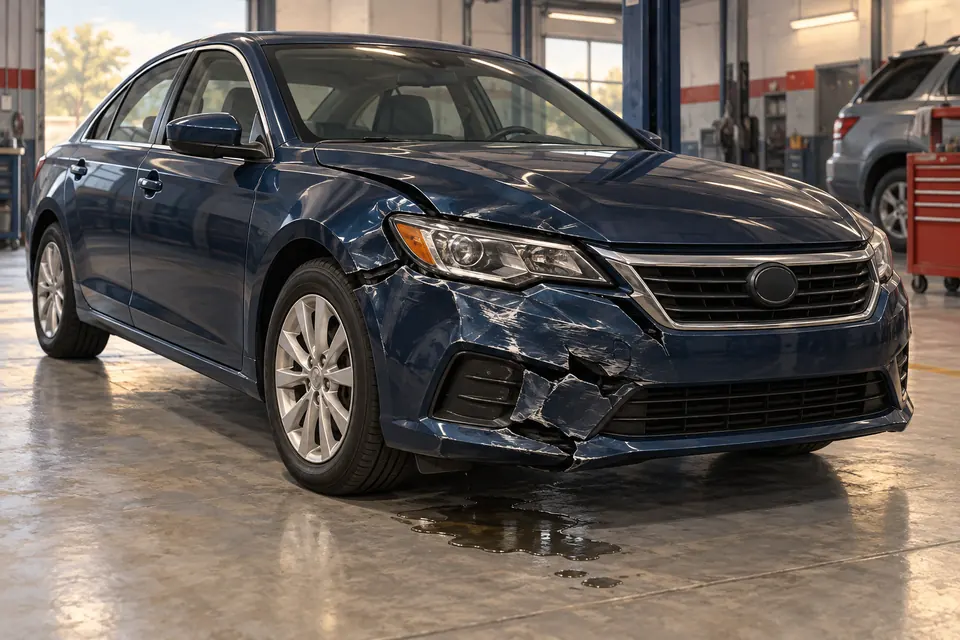
Generated educational illustration: post collision fluid observation. Not an actual customer repair, diagnostic result, staff member or Boudreaux’s facility.
Can I keep driving with a new leak after a crash?
A new fluid leak after a crash is a reason to stop and have the vehicle evaluated before continuing to drive. The fluid’s color or location alone may not identify the damaged component.
Do not touch unknown fluids or approach a vehicle with smoke, fire or other immediate hazards; use emergency assistance when needed. Once safe, describe where the leak is seen and arrange the appropriate transport. Inspection determines whether cooling, brake, steering or other areas are involved.
How This Fits Into the Repair Plan
Report the leak’s observed location, timing, warnings and earlier history from a safe position. Appropriate assessment must identify the system and concern before further driving or a repair decision.
Related Repair Guidance
Report the observation without handling the fluid
A fluid leak after a collision needs the actual location, timing and vehicle context described. Tell the team where fluid is observed and whether a warning or other change appeared. A broad leak label or fluid color alone does not establish a complete diagnosis or driving-condition assessment.
Do not handle unfamiliar fluids, reach beneath an unstable vehicle or run the engine simply to produce more evidence. Take photographs only from a safe position and explain access limits. If movement or driving condition is uncertain, discuss appropriate transport before moving the vehicle.
Mention earlier leaks, recent work or known concerns and distinguish them from new observations. The timing helps the assessment without proving that every fluid condition belongs to the collision or comes from one component.
If immediate danger requires emergency assistance, use emergency services first and follow their instructions. The repair shop and website request are separate from the response to an active emergency.
Related reading: When to Tow After an Accident and Collision-Related Mechanical Damage.
Keep the leak question separate from exterior work
A visible body-panel operation does not automatically explain a fluid-related concern. Ask which component or system is under assessment and what findings support the proposed correction. A surface photo cannot identify every concealed mechanical condition.
Relevant physical inspection and electronic information can have different purposes. Ask what each assessment establishes and which question remains open. A no-code summary should not silently become proof that every leak or physical component is sound.
If access or further investigation is needed, clarify the purpose and authorization. A preliminary estimate can identify a question without settling the final operation. Ask what action resolves it and when an update is expected.
Applicable vehicle information should guide the supported method and relevant checks. Do not transfer advice from another vehicle or try a generic product to hide the symptom before assessment. The actual concern and findings determine the next step.
Follow the identified concern through the record
If investigation changes the proposal, request the dated revision and reason. Ask whether it concerns a newly identified component, earlier condition, related operation or verification. Keep the explanation with the estimate so a new total is understandable.
Where insurance is involved, distinguish technical findings from claim review. Ask the shop about the supported operation and the insurer about its actual decision. A leak observed after impact does not independently settle every cause or payment responsibility.
At pickup, ask which relevant correction and checks were completed and which records or instructions are available. Discuss any remaining warning or observation with the team rather than treating a finished exterior as the entire result.
For a later concern, record its timing, conditions and observed area and contact Boudreaux’s before deliberate testing or alterations. The actual record helps distinguish a new observation from the completed operation without guessing from color or location alone.