
Illustration: A Bumper Dragging After a Crash
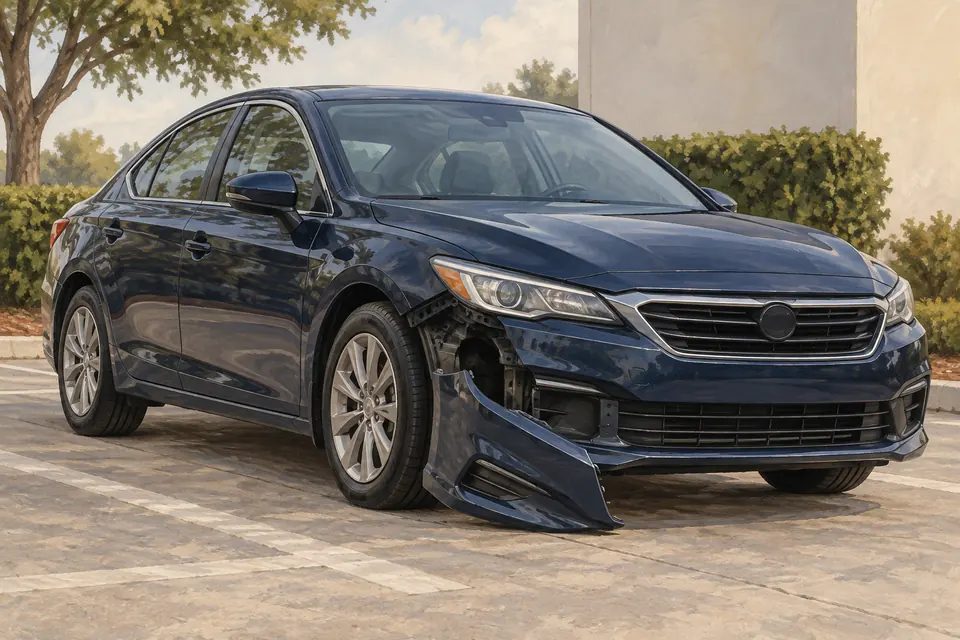
Generated educational illustration: loose bumper transport context. Not an actual customer repair, diagnostic result, staff member or Boudreaux’s facility.
Should I drive with a dragging bumper?
A dragging or loose bumper part can detach, contact a tire or interfere with other components. Do not assume the vehicle is safe because it still moves.
Avoid crawling under an unstable vehicle or improvising a repair near traffic. From a safe position, document the visible condition and discuss towing or transport. The bumper cover and hidden absorbers, reinforcements or mounts may need different inspections.
How This Fits Into the Repair Plan
Describe the loose area and nearby tire or component concern without reshaping or testing it. Discuss appropriate transport and receiving before the actual assessment establishes the affected parts.
Related Repair Guidance
Describe the loose area without trying to reshape it
A bumper area dragging or hanging after a collision needs the actual component and movement concern identified. Tell the team where it is loose and whether it appears to contact the ground, a tire or another part. The observation helps assessment without establishing the entire repair method.
Do not pull, trim or force the damaged area into place as a substitute for assessing the vehicle. An improvised exterior change can conceal a finding or leave another movement concern unresolved. If condition is uncertain, discuss appropriate transport before moving it.
A plastic cover and the attachments, supports or fitted equipment behind it are different questions. Ask what is confirmed and what needs authorized access. A surface photograph does not independently establish every concealed component’s condition.
Take photographs only from a safe position. Do not crawl beneath unstable damaged parts or stand in traffic for a closer view. Explain unavailable access and let the supported plan identify the relevant assessment.
Related reading: When to Tow After an Accident and Is a Vehicle Safe to Drive After an Accident?.
Confirm movement and receiving before dispatch
Tell the receiving shop about the loose or dragging area before transport is arranged. Mention related wheel clearance, steering, rolling or closure concerns. These details help discuss the actual arrival plan rather than assume every damaged vehicle can be moved in the same way.
Confirm the chosen shop name, exact address, acceptance and receiving instructions. New Orleans and Luling are separate destinations. A map pin or online request does not establish permission to leave the vehicle without an arrangement.
Confirm the actual transport provider, relevant instructions and any charge or responsibility question with the responsible parties. This guide does not promise free towing, a universal receiving window or a particular operator’s availability.
If emergency assistance is needed because of immediate danger, use emergency services first. A repair-arrival conversation is a separate next step and should not be treated as a substitute for scene assistance.
Understand the cover and attachment scope
Ask which actual component and findings support repair or replacement. The loose visible area should not automatically be treated as a complete diagnosis of every support, reinforcement or fitted-system question behind it.
If further access changes the proposal, request the dated revision and reason. Ask whether it concerns the cover, attachment, adjoining component, applicable assistance operation or verification. Keep the explanation with the current estimate.
At pickup, discuss any remaining loose area, rubbing, warning or other concern with the shop. Ask which relevant physical and related operations were completed and what records are available. Visible paint alone cannot document every attachment or concealed finding.
For a later concern, record the location and circumstances and contact Boudreaux’s before alterations or resets. The actual record helps distinguish cover, support and fitted-system questions in the next assessment.