
Illustration: Primer and Undercoats in Collision Refinishing
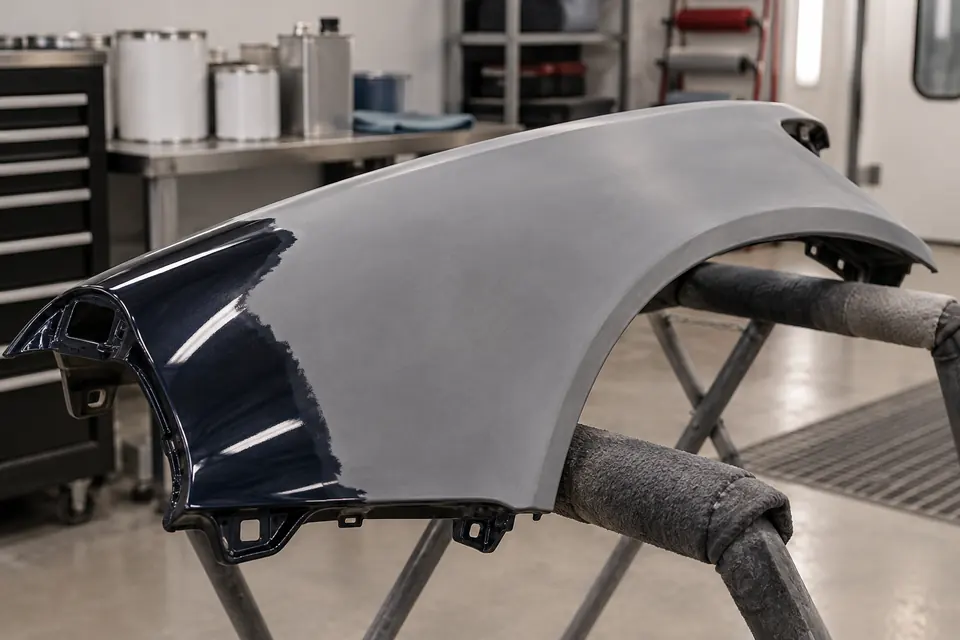
Generated educational illustration: prepared panel undercoat context. Not an actual customer repair, diagnostic result, staff member or Boudreaux’s facility.
Is primer just an optional layer under the color?
Primer and other undercoats prepare and protect the substrate and support the selected paint system. Different materials and repaired surfaces can require different products or steps.
Undercoat compatibility, surface condition and application affect the finish above them. A colored topcoat does not replace required substrate protection. Ask which undercoat system applies to the repaired or replacement panel and how exposed areas will be protected.
How This Fits Into the Repair Plan
Identify the starting surface and the role of each preparation or undercoat operation. The applicable product-system information should support compatibility and sequencing for that actual panel.
Related Repair Guidance
Identify the surface beneath the color
Primer and undercoat descriptions concern layers beneath the visible finish. Ask which surface and operation are being discussed: an existing repaired area, bare metal, a supplied replacement panel or another substrate. Those starting conditions can require different preparation and product-system decisions.
The term primer can be used broadly in an estimate conversation. Ask the shop to explain the intended role of the relevant product or operation rather than assuming every undercoat performs every task. A color layer and a protective or preparatory layer answer different questions in the plan.
A replacement panel may arrive with a coating, but that fact alone does not establish that it is ready for color application. Ask how its condition and applicable preparation requirements are assessed. The supplied finish and the completed refinish system should not be treated as identical stages.
Tell the shop about earlier paintwork, corrosion or a product previously applied to the area. Identify what you know without guessing at the coating chemistry. Earlier conditions can matter to the assessment, and a photograph of a smooth exterior cannot establish every underlying layer.
Related reading: Surface Preparation Before Collision Refinishing and Basecoat and Clearcoat: Different Layers, Different Jobs.
Understand preparation as part of the scope
Ask which applicable vehicle and paint-system information governs preparation and refinishing. The supported products and process need to fit the identified surface. An instruction for another material or finish should not be transferred simply because both areas need color.
Access and related operations may affect which surfaces are treated. Ask what is included for the repaired area, edges, adjoining work and relevant protection. A main paint line may not explain every preparatory operation needed before the visible finish is applied.
If substrate condition changes after access or preparation, ask for the specific finding and revised scope. An earlier coating issue and new collision damage should be distinguished where appropriate. Clarify what operation addresses each instead of treating every discovered condition as the same repair question.
Product instructions and the repair plan determine the relevant timing between operations. Do not request an improvised shortcut because the undercoat is not visible at pickup. The owner’s useful question is how the supported preparation is represented and completed, rather than selecting products or application steps.
Keep finish appearance and underlying work distinct
At handover, ask what preparation and refinish operations were completed and which relevant care instructions apply. The exterior appearance is useful to review, but it cannot independently document every undercoat, concealed treatment or substrate decision.
If a later finish concern appears, record its location, timing and circumstances and contact the repairing shop before polishing, scraping or applying another coating. Altering the surface can obscure what needs assessment. A visible change does not by itself identify which layer caused it.
Ask the shop about the applicable follow-up or warranty terms for the actual work. Clarify those terms directly; a coating concern needs assessment of the actual surface. Keep the final estimate and any relevant instructions together for a clearer follow-up conversation.
Questions About Primer and Undercoats in Collision Refinishing
Technical Reference
PPG: primer sealer application. Use the applicable vehicle information and selected product-system instructions for the actual surface. This reference does not identify Boudreaux’s paint brand, warranty or affiliation.