
BOUDREAUX’S COLLISION · REPAIR EDUCATION
Quarter Panel Repair After a Collision
A quarter panel is usually joined to the body rather than simply bolted on like many front fenders. Repair versus replacement depends on metal damage, access, nearby structure and the vehicle maker’s allowed repair methods.
From the Boudreaux’s archive
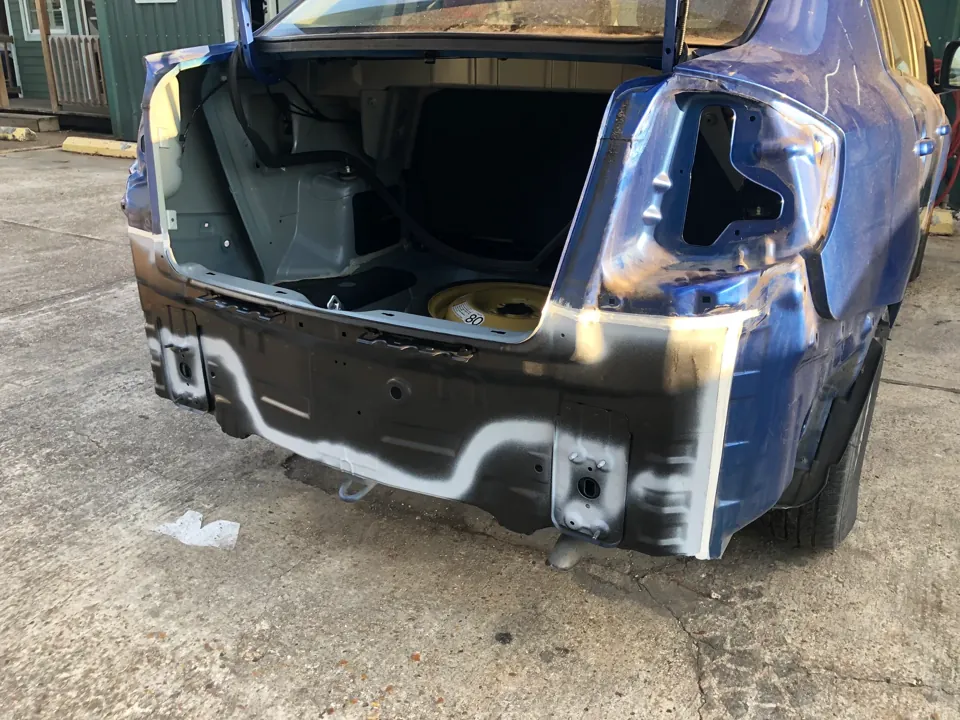
Owner-supplied rear-quarter archive view. It shows the relationship between visible quarter-area surfaces and adjoining exposed areas, without establishing material, a permitted joining method or the scope for another vehicle.
Can a quarter panel be repaired instead of replaced?
A quarter panel is usually joined to the body rather than simply bolted on like many front fenders. Repair versus replacement depends on metal damage, access, nearby structure and the vehicle maker’s allowed repair methods.
A crease near a wheel opening can involve an outer skin, an inner wheelhouse or both. Replacement may disturb factory joints, seam sealer and corrosion protection; it is more than removing a dent. Ask which layers are affected and how the attachments and protection will be restored.
How This Fits Into the Repair Plan
Name the outer quarter area and each relevant adjoining layer. Ask which findings and applicable operation support the chosen repair, joining method and complete installed scope.
Related Repair Guidance
Identify the outer panel and adjoining areas
A quarter-panel description can concern the visible outer surface while adjoining inner areas present different questions. Ask which actual component and layer the estimate identifies. The exterior dent does not independently establish the condition of every reinforcement, opening or attachment behind it.
Describe the impact location and any changed gap, closure, wheel-clearance or moisture concern. Mention earlier repairs or corrosion where known. These observations help direct assessment without proving the complete repair method or assigning every condition to the new collision.
Ask what can be established with adjoining parts installed and what requires authorized access. A close-up photograph can omit the relationship between the outer panel and surrounding areas. Safe overall views and a clear history can support the initial conversation.
Do not remove trim, force closures or alter the damaged area to reveal more for an online request. The actual vehicle and applicable information should guide supported access and assessment.
Related reading: Panel Repair vs Replacement and Structural Sectioning: When a Partial Replacement Is Allowed.
Understand repair, complete replacement and partial work
Ask which findings and requirements support repairing the panel or replacing an identified component. Material, construction and actual damage matter. A similar-looking dent or another repair image is not permission for the same method on your vehicle.
If partial replacement is proposed, ask whether the applicable operation is sectioning or replacement at factory seams. These are different methods. The instruction needs to support the actual component and location rather than a generic plan to remove only the visible damaged portion.
The supplied part configuration and installed scope are different questions. Ask what is included and which adjoining pieces or operations remain separate. A catalog assembly does not independently authorize every separation or joining arrangement.
Access, attachments, protection, refinishing and relevant checks can affect the complete proposal. Ask how they connect to the main panel operation. A replacement-part price alone should not be compared with a completed installed scope as if both describe identical work.
Follow the component-level decision through completion
If access changes the proposal, request the dated revision and finding. Ask whether it changes the outer panel, adjoining structure, supplied configuration, method or verification. Keep those descriptions clear so the new scope is understandable beyond the total.
If a part source changes, clarify condition, compatibility and applicable requirements before approval. Availability or original source alone does not establish every installation question, especially where a supplied assembly includes several related pieces.
At pickup, ask which quarter-area and adjoining operations were completed and which relevant records are available. Visible fit and finish can be reviewed without treating appearance as proof of every concealed joining or protective treatment.
For a later concern, record the location, timing and conditions and contact Boudreaux’s before altering trim, coatings or seams. The actual repair record helps distinguish panel, opening and protection questions in the next assessment.
Where insurance is involved, separate technical work from claim review and responsibility. Ask the shop about the supported operation and the insurer about its actual decision. A source or payment label does not identify the permitted joining method. Keep the dated scope and relevant authorization clear before a changed proposal proceeds.