
Illustration: An Off-Center Steering Wheel After a Crash
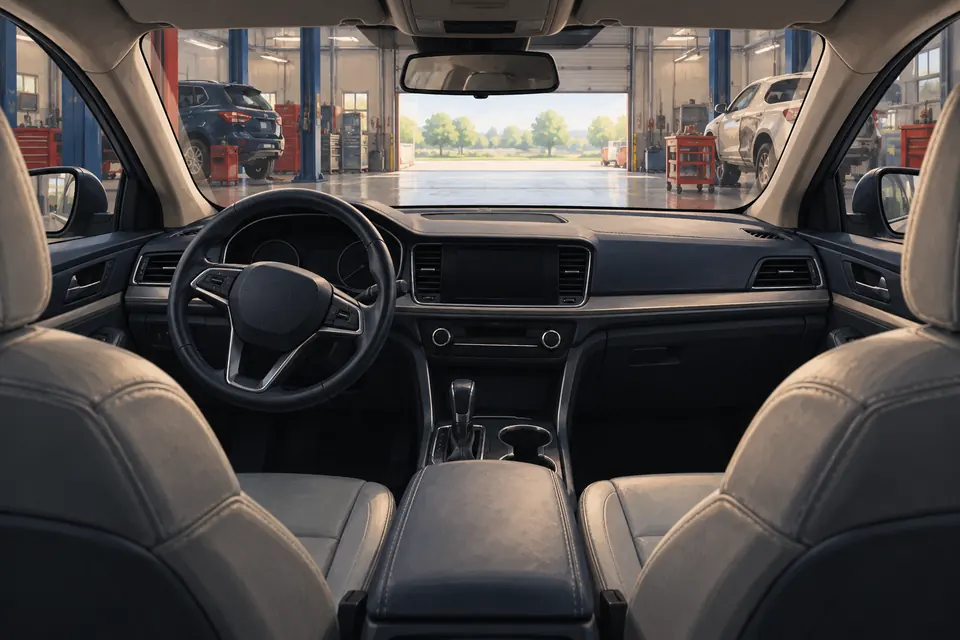
Generated educational illustration: stationary steering wheel position context. Not an actual customer repair, diagnostic result, staff member or Boudreaux’s facility.
Can the steering wheel simply be recentered?
An off-center steering wheel can indicate changed wheel geometry or another steering or suspension concern. Repositioning the steering wheel alone does not establish the cause.
The repair plan should consider physical damage, alignment and any vehicle-specific steering-angle setup requirements. These are different checks. Tell the shop what changed after the accident and ask which results support the correction.
How This Fits Into the Repair Plan
Treat the visible steering-wheel position as an observation. Ask which physical, geometry and applicable setup results explain the correction and any remaining concern.
Related Repair Guidance
Treat the changed position as an observation
An off-center steering-wheel position after a crash should be described with the vehicle and history. Tell the team when it changed and whether another handling or warning concern appeared. The visible position does not independently establish one damaged part or a universal correction.
Mention earlier alignment, tire, wheel or steering work and known modifications. Distinguish what existed before the event from new observations. If the history is uncertain, state that instead of assuming the wheel was previously perfect or identifying a cause from memory alone.
Do not adjust, reposition or alter unfamiliar steering components to make the wheel look centered. A visual change is not the supported diagnosis or completion result. The actual vehicle information and established findings should guide the operation.
If the driving or movement condition is uncertain, discuss appropriate transport before moving the vehicle. Do not drive deliberately to collect more steering-position or handling symptoms.
Related reading: Steering Damage After a Collision and Wheel Alignment and ADAS Calibration.
Separate appearance, geometry and component condition
Steering-wheel appearance, relevant wheel geometry and physical steering or suspension condition are different questions. Ask what each assessment establishes. A centered-looking wheel should not silently become proof that every collision-related component or mounting area is sound.
If alignment is proposed, ask how it connects to the established findings and actual scope. An adjustment should not be treated as the complete diagnosis of every steering-position concern without the relevant physical and vehicle-specific assessment.
If a setup or steering-angle-related requirement follows the actual work, ask which applicable operation is proposed. Scanning, initialization, calibration and physical repair are different tasks. A no-code summary does not independently document every requirement.
If a mounting or structural question remains open, keep it described separately from the visible steering-wheel position. Ask which access, measurement or research resolves it before the plan is treated as final.
Keep the completed steering-position explanation clear
If further findings change the proposal, request the dated revision and reason. Ask whether it changes components, mounting work, alignment, setup or relevant verification. Keep the explanation with the estimate so the scope can be reviewed beyond the total.
At pickup, discuss the normal position and any remaining handling, warning or operation concern with the shop. Ask which relevant work and records support the completed result. One visible change should not obscure another unresolved question.
If a later concern appears, record the conditions and timing and contact Boudreaux’s before resets or adjustments. The actual repair record helps discuss the next assessment without treating a short steering-position label as a complete diagnosis.
Where insurance is involved, separate technical scope from claim review. Ask the shop about supported work and the insurer about its actual decision. Clarify unresolved authorization or responsibility before a changed operation proceeds.
Questions About An Off-Center Steering Wheel After a Crash
Review the cause and completion checks
Ask what inspection explained the symptom and which operations were needed. If alignment and sensor work apply, distinguish them. At pickup, report a remaining off-center wheel or warning promptly rather than accepting a generic statement that the steering was reset.
Technical Reference
I-CAR: steering-angle sensor considerations. The actual vehicle requirements govern the work; this reference does not establish business certification or a specific repair result.