
From the GMC repair archive
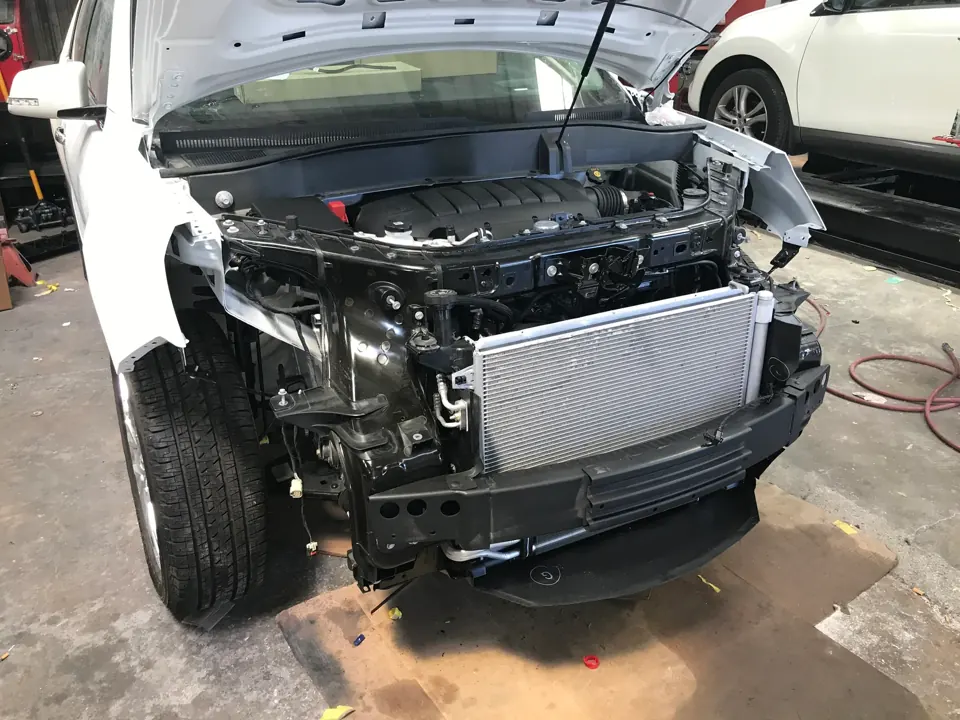
Owner-supplied GMC archive photo showing front-end disassembly and visible component access. It does not establish a wiring fault, diagnostic finding, repair method or completed electronic verification.
Can damaged wiring cause electronic problems after a crash?
An electronic problem after a crash can originate in damaged wiring, connectors, power supply, sensors or module communication. The visible body damage may not reveal those conditions.
Inspection and vehicle-specific tests help identify a cause before replacing components. Intermittent faults can require more information than one scan captures. Describe symptoms and timing, and ask how the diagnosis distinguishes an impact-related issue from an existing condition.
How This Fits Into the Repair Plan
Connect the electronic symptom with the physical and diagnostic findings. Clarify any wiring, component and required setup work separately rather than treating every message as a failed module.
Related Repair Guidance
Connect the observed fault to the actual vehicle
An electronic concern can be a warning, an unavailable function, diagnostic information or a behavior that changed after impact. Identify which observation you have. These descriptions help assessment without proving that one particular electronic component is damaged.
Share the vehicle identity, fitted equipment and known history. Earlier faults, modifications or recent work can matter to the discussion. Distinguish what happened before the collision from what you observed afterward rather than treating every new report as confirmed collision causation.
The impact location is useful context for inspecting related components, but it is not a complete electronic diagnosis. Ask which findings connect the concern to the affected area and what remains under investigation.
Do not unplug wiring, replace electronic parts or repeatedly reset the vehicle to test a theory. Such actions can alter the available information or create another concern. Let the actual vehicle information and supported diagnostic approach guide the assessment.
Related reading: Vehicle Modules and Collision Repair and Vehicle Communication Networks After a Collision.
Understand the difference between a reported fault and its cause
A diagnostic finding can identify a system question without deciding which part must be replaced. Ask how the investigation distinguishes the component, connected wiring or another condition. A short code description is not a complete account of the cause.
A symptom without a reported code can still need assessment. Ask what the tool reached and which physical or other diagnostic questions remain. An unavailable system and an accessed system with no reported fault should not be treated as identical results.
If replacement is supported, clarify the part identity and any applicable programming, configuration, initialization or calibration. These operations are separate from installing a component or reading codes. Ask what applies to the actual vehicle and completed work.
Related body or mechanical work can create dependencies for the electronic operation. Ask what must be completed before relevant setup or verification. The sequence should follow the supported plan rather than one universal order applied to every fault.
Follow the electronic scope through completion
If investigation changes the proposed operation, request the dated estimate and the finding behind it. Ask whether the change concerns a module, connected component, related repair or setup requirement. Keep those descriptions clear so the final scope can be understood.
Where insurance is involved, separate the technical finding from claim review and payment responsibility. Ask the shop about the supported operation and the insurer about its actual decision. Clarify unresolved authorization before treating every discovered issue as approved collision work.
At pickup, ask which electronic operations were completed and what relevant verification is available. A working visible function, a clear scan and completed required setup are different results. Ask what each establishes and whether any limitation or follow-up remains.
For a later concern, record the function or message and circumstances and contact Boudreaux’s before altering the system. The repair date and actual record help the team discuss the appropriate assessment. An online fault description cannot diagnose the vehicle or establish a universal correction.
Questions About Electronic Faults After Collision Damage
Technical Reference
I-CAR: strategy based collision diagnostics. Manufacturer requirements for the exact vehicle control the repair method. A reference link does not imply Boudreaux’s certification or affiliation.