
BOUDREAUX’S COLLISION · REPAIR EDUCATION
Reassembly Checks Beyond Exterior Appearance
Reassembly can involve connectors, trim, fasteners, seals, lamps and other disturbed components. A complete-looking exterior does not show every attachment or function. The appropriate checks depend on the work performed and the applicable instructions.
From the Boudreaux’s archive
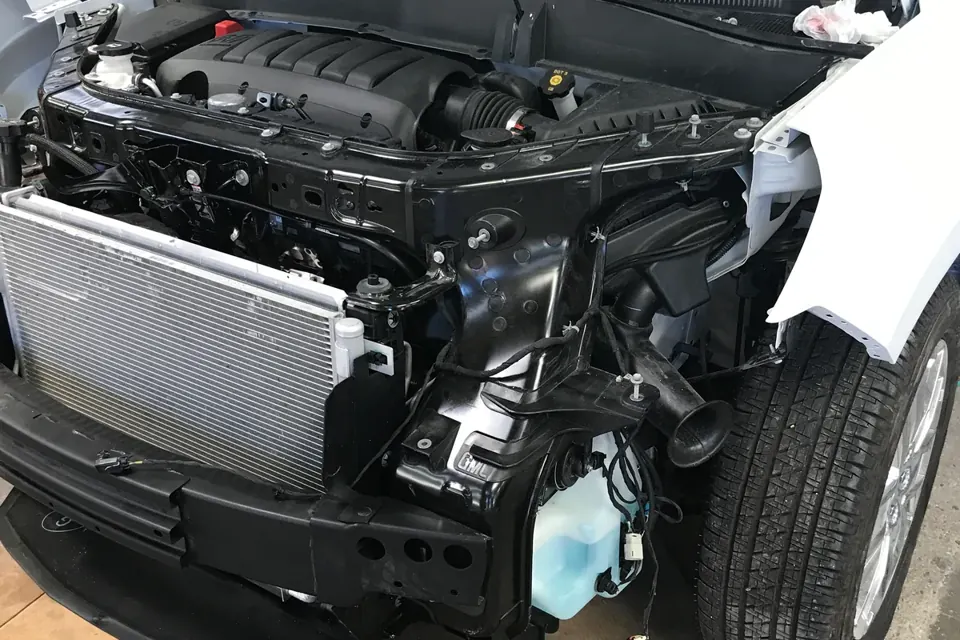
Owner-supplied GMC project archive detail with exterior components still removed. It illustrates why assembly and related checks are separate from visible finish, not a completed checklist, approved support method or verified functional result.
What to Clarify for Your Vehicle
Ask which disturbed functions and assemblies are included in final verification. Scanning or calibration requirements remain distinct where relevant. Avoid interpreting a polished exterior as a summary of all quality-control work.
Reassembly restores relationships between components
Reassembly involves more than making the exterior look complete. Attachments, trim fit, seals, electrical connections and affected functions may need checking under the repair plan. The exact requirements depend on the components disturbed.
A visually straight panel or an illuminated lamp answers only a limited question. Required inspections, setup or calibration need their own completion evidence where applicable.
Review the affected areas at handoff
Ask which final checks apply to the repair and whether any issue remains open. Review accessible fit and relevant functions with the shop. The owner should not dismantle the vehicle to inspect concealed work.
If something appears loose, does not operate normally or produces a warning, identify the condition before leaving when practical. Keep the final scope and relevant reports together. Appearance and documented verification complement each other; neither should be silently substituted for the other.
Example: the exterior is complete but a function needs checking
A panel looks finished after reassembly, but an affected lamp, window or other function still needs its relevant check. Appearance is a useful observation; it does not establish completion of a separate functional requirement.
Ask which checks apply to components disturbed during the repair. If electronic setup or calibration is required, retain its result separately from the exterior finish review. A broad statement that everything was put back together may need clarification.
At handoff, identify any accessible fit or operation concern without dismantling the vehicle yourself. The repair record should say what completed and what remains open. This makes the conversation specific rather than assuming that a clean exterior proves every concealed attachment and system was verified.
Related Guidance
Reassembly brings several repair areas back together
A collision repair can involve removing panels, trim, lamps, wiring attachments and other components for access. Reassembly concerns how those items return to the repaired vehicle under the applicable procedures. It is more than placing the visible exterior parts back in position.
Ask which affected components and attachments are included in the reassembly scope. A correct-looking gap or freshly painted panel is one visible result, but it does not explain the condition of every connection, fastener or operating function near the repair. The relevant checks depend on the vehicle and work performed.
Do not attempt an owner inspection by pulling trim, opening connectors or checking fastener tightness. Ask the repairer for an understandable explanation of the applicable work and checks. A website checklist cannot replace the actual procedure or assess your vehicle remotely.
Connect each completed operation to the relevant verification
Physical assembly, diagnostic work and calibration answer different questions. Ask whether a system or component involved in the repair has an applicable functional, diagnostic or other check and whether that operation is complete. A cleared warning is not a complete explanation of an attachment or mechanical finding.
If a lamp, opening, window or other function changed during the collision, ask how that specific concern was addressed. The repairer should connect the original observation and assessed finding to the completed work rather than rely only on a general statement that the exterior looks good.
Keep pending operations visible in the repair update. A component installed does not automatically mean every related check is finished. Ask what remains before release and which record or explanation describes the completed configuration, particularly where the scope changed after further assessment.
Use the handoff to clarify the actual repair
At pickup, review the final invoice and any supplied check explanations or care instructions. Ask about an unfamiliar operation and raise a remaining function or warning concern before assuming the repair is complete. An initial estimate may not describe the full work performed after disassembly.
If a concern appears later, record the timing and circumstances you actually observed. Contact the repairer with the relevant work record and ask whether the vehicle should be transported. Do not repeatedly operate a damaged or binding mechanism to demonstrate it, or make extra drives to evaluate a handling concern.
For Boudreaux’s New Orleans or Luling, confirm the collecting facility and contact. A clear handoff should identify completed operations, relevant guidance and the route for reporting a concern. This guide does not promise an identical checklist or a particular test for every vehicle; the applicable procedure governs the work.