
BOUDREAUX’S COLLISION · REPAIR EDUCATION
Keys and Access for Collision Repairs
The shop may need the correct keys or access arrangements to move the vehicle and inspect affected areas. Missing access can interrupt an assessment or another planned operation. Remote functions, special keys or unusual locking behavior should be mentioned.
Illustration: Keys and Access for Collision Repairs
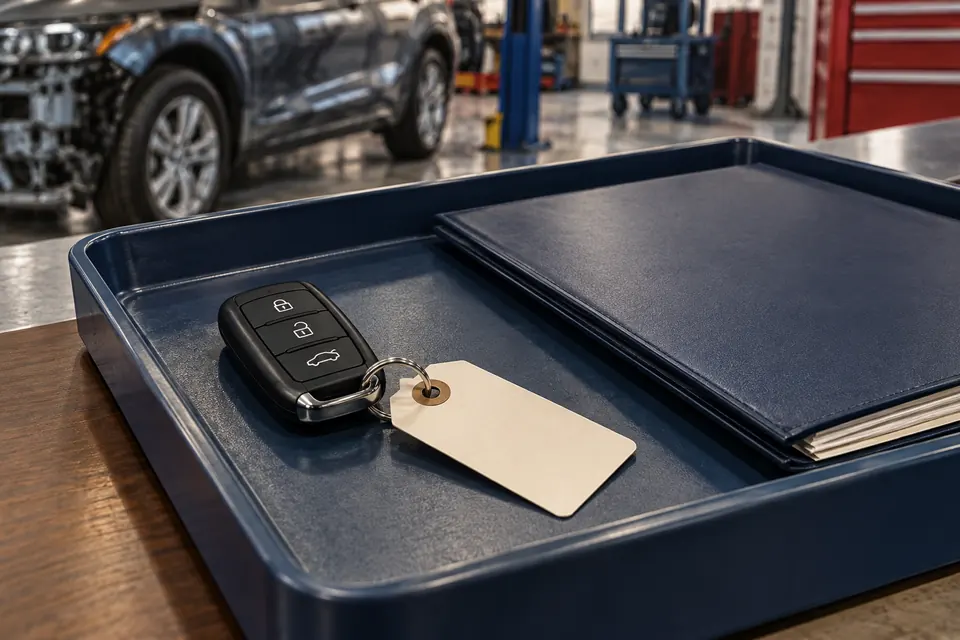
Generated educational illustration: keys and confirmed handoff context. Not an actual customer repair, diagnostic result, staff member or Boudreaux’s facility.
What to Clarify for Your Vehicle
Ask which keys and permissions are needed and how they will be handled. Do not share unrelated account passwords through a general estimate form. If access is limited, explain the situation before transport so the selected location can confirm arrangements.
The repairer needs a reliable access arrangement
Keys, fobs and any relevant access instructions should be discussed during intake. A vehicle that can be unlocked may still require a particular key or arrangement to move or operate it. Identify unusual locks, aftermarket security equipment or known fob problems.
Do not hide a key on the vehicle or assume an unattended drop-off is available. Confirm the shop’s actual instructions and the destination before handing the vehicle to a transport provider.
Keep the handoff traceable
Ask how the key will be transferred and identify how many keys or fobs are provided. If transport is involved, clarify who is carrying the key and how the receiving shop will obtain it.
Share only access information needed for the repair through an appropriate channel. Remove unrelated keys from the ring. At pickup, confirm the return of the items provided and report any access concern promptly rather than assuming it is part of the collision damage.
Example: transport arrives without a clear key handoff
A vehicle is delivered to the intended shop, but the key remains with someone else and no access arrangement was confirmed. The destination may be correct while the intake is still delayed. Clarify who transfers the key before transport begins.
Tell the shop about a fob problem, unusual lock or added security system that affects access. Provide only the relevant information through the appropriate channel. Do not hide a key on the vehicle as a substitute for an agreed handoff.
Record which keys or fobs were provided and confirm their return at pickup. If a transport or destination change occurs, update the access arrangement too. This example shows a practical dependency that is easy to miss when the conversation focuses only on the tow address.
Related Guidance
Confirm what access the receiving shop needs
A repairer may need appropriate access to assess the vehicle, move it as permitted or perform planned operations. Tell the receiving shop whether a working key or fob is available and whether the collision has affected an opening, lock or normal access. Do not assume every vehicle or drop-off arrangement uses the same key process.
If the vehicle relies on a digital key or another access arrangement, describe that fact before arrival. Ask how the shop wants to coordinate access. Do not send an account password, authentication code or unrelated login details through a general estimate form.
Keep the access question separate from repair authorization and transport. Possession of a key does not establish that the vehicle can be driven safely, that a repair appointment is confirmed or that all proposed work has been authorized.
Plan the actual handoff rather than an assumed key drop
Confirm the chosen shop, receiving time and the person or process handling the vehicle. If transport is being arranged, clarify how the key and relevant vehicle information will reach the receiving contact. Do not rely on a guessed after-hours box or leave access items at an unconfirmed location.
Tell the shop about known access complications, such as a damaged door or a key that did not function normally before the collision. Describe the condition without forcing the lock or manipulating damaged parts to demonstrate it. The repairer should determine the appropriate assessment.
If someone else handles drop-off, confirm the receiving arrangements and what information they need. Do not assume that transporting the vehicle or handing over a key gives that person authority to approve new scope or make unrelated decisions. Ask the shop how those roles should be kept clear.
Keep access and collection records with the repair information
At intake, clarify the arrangements for keys or other access items and retain any handoff record provided. Ask how later access or collection will be coordinated. A repair update does not automatically establish that you can retrieve the vehicle at an unannounced time.
Before pickup, confirm who is collecting the vehicle and how the relevant access items and handoff instructions will be provided. Ask about an unresolved lock or access concern rather than assuming a repaired exterior panel means the original issue is addressed.
Boudreaux’s New Orleans and Luling facilities have separate receiving contacts. Identify the actual location whenever discussing keys, transport or collection. A confirmed destination and handoff process help the repairer receive the correct vehicle while avoiding unnecessary sharing of account credentials or assumptions about after-hours access.