
BOUDREAUX’S COLLISION · REPAIR EDUCATION
ADAS Prerequisites: Tire Pressure and Vehicle Setup
Some calibration procedures specify vehicle setup conditions, which can include tire pressure and other physical prerequisites. The exact list belongs to the vehicle’s procedure. Beginning an operation without required conditions can undermine its usefulness.
From the Boudreaux’s archive
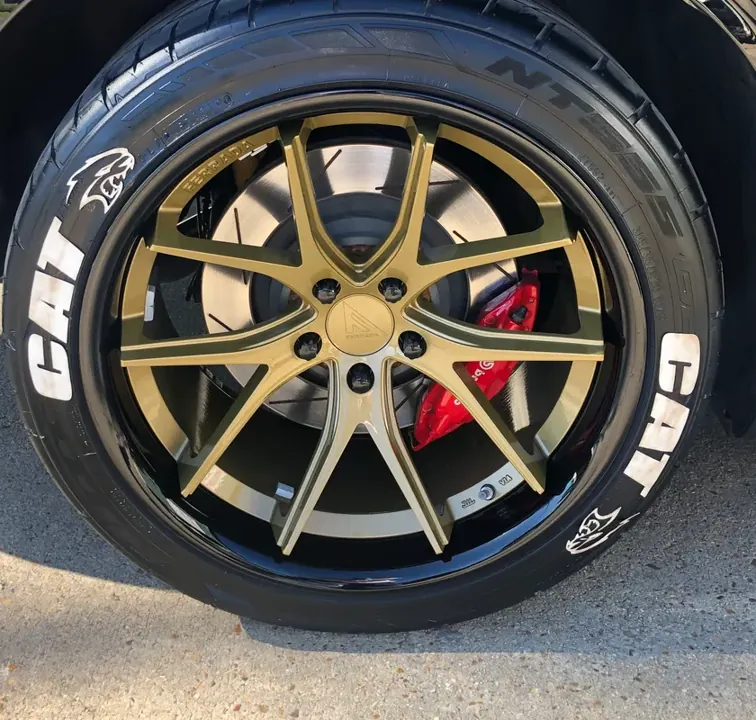
Owner-supplied archive wheel-and-tire detail. It illustrates configuration context without establishing pressure, tire suitability, impact condition or readiness for a calibration procedure.
What to Clarify for Your Vehicle
Ask which prerequisites apply and whether related physical concerns have been resolved first. This explanation is not a universal calibration checklist or a claim that every system has identical requirements. Documentation should identify the procedure used for the actual vehicle.
Vehicle preparation is part of the procedure
Calibration instructions may specify tire pressure, wheel and tire configuration, load or other setup conditions. Those details can affect how the vehicle sits and how a sensor is aimed. The correct conditions must come from the procedure for the actual vehicle.
A general instruction to calibrate the system is therefore incomplete without the preparation it requires. The repairer should identify prerequisites before beginning, including any conditions that must first be corrected.
Clarify unusual tires or recent changes
Tell the shop about nonstandard wheels, tire changes and existing tire concerns. A vehicle modification may affect the applicable setup or require further assessment. It should not be silently assumed to match the original configuration.
Ask whether required preparation was completed and whether anything prevented the procedure from finishing. A recorded result should describe the work actually completed, including any limitation. Owners should not adjust tire pressure to a guessed calibration value; normal operation and a specific service procedure can have different contexts.
Example: a calibration appointment after wheel work
A vehicle arrives for calibration after a tire or wheel repair. Before beginning, the technician needs to determine which preparation conditions apply. A pressure warning, mismatched setup or unresolved tire concern should be assessed in its own context rather than ignored because the calibration equipment is available.
The owner may have fitted different wheels months earlier and assumed the vehicle identification number tells the whole story. It does not necessarily describe the current installed configuration. Sharing the modification history helps the repairer research the suitable procedure and explain any limitation.
If the procedure cannot finish, ask which prerequisite was not met and what the next step involves. Do not interpret the delay as proof that the sensor is damaged. Likewise, do not assume a completed wheel alignment covers every calibration requirement. The record should identify preparation, the procedure performed and its result. This makes a schedule change understandable without asking the owner to select technical settings.
Further repair information
I-CAR: preparing the vehicle for calibration
General background does not replace the applicable vehicle information, owner’s manual or procedure for the actual operation.
Related Guidance
Understand why preparation is a milestone, not the result
If the team reports that the vehicle is being prepared, ask which conditions remain and what procedure follows. Preparation establishes the starting state for the applicable work. It should not be presented as proof that the required procedure completed. A later result needs its own explanation and available record.
If a configuration or damaged component prevents progress, ask what has been found and what decision is next. Do not assume the tire size is the sole cause of an unsuccessful operation. The team should evaluate the relevant conditions and explain the actual dependency. Keep the revised scope and any additional authorization distinct from an earlier plan.
When another provider performs the electronic work, ask how vehicle configuration and completed physical repairs are communicated. A handoff should not leave a provider researching a different wheel or tire setup. Keep the relevant result with the repair file and ask about any remaining limitation before delivery.