
From the Boudreaux’s archive
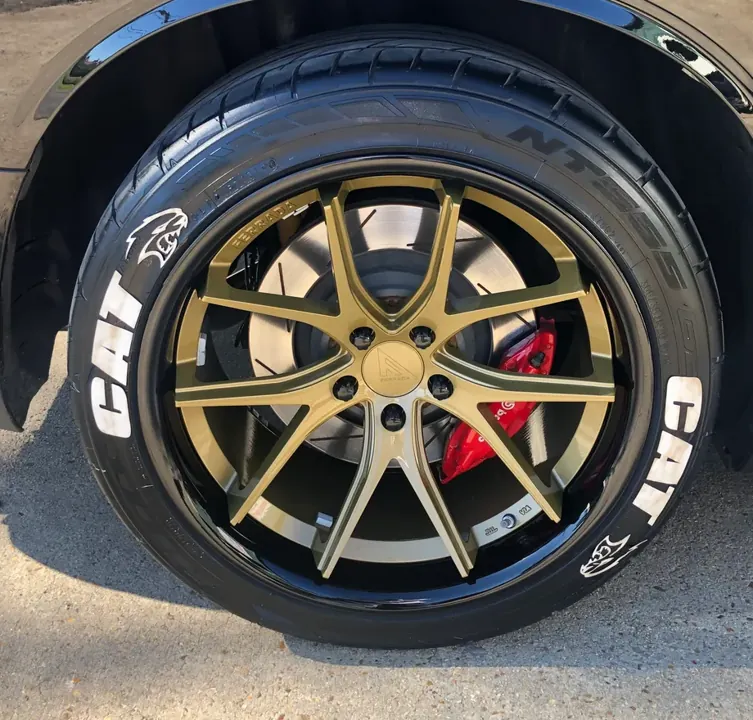
Owner-supplied wheel-and-tire archive view, cropped to the wheel area. It does not document uneven wear, impact damage, alignment readings or a collision-related cause; assess the actual tire, history and vehicle findings.
Does uneven wear prove collision-related alignment damage?
Uneven tire wear can be associated with alignment, tire condition or suspension issues, but it does not by itself prove the collision caused the problem. Prior condition and new symptoms matter.
An inspection can compare wear, component condition and wheel geometry. Ask what evidence links the finding to the impact and whether a damaged part needs correction before adjustment. Photos of existing wear and a clear timeline can help the discussion.
How This Fits Into the Repair Plan
Identify the tire, observation date and earlier history before drawing a conclusion. Keep tread condition, component findings, initial geometry and completed verification clear in the record.
Related Repair Guidance
Describe the wear and its timing
Uneven wear is an observation that needs the actual tire and vehicle context. Identify which tire is affected and when you first noticed the condition. A broad wear label does not establish one universal cause or prove that the collision created every existing tire concern.
Share earlier wear history, known tire or wheel changes and any recent work. Distinguish what existed before the event from what changed afterward. If the history is uncertain, say so rather than assigning a date or diagnosis from appearance alone.
Mention related pulling, rubbing, wheel position changes or warnings. These observations can guide different assessment questions. They should not automatically be treated as proof of one failed component or one alignment correction.
Do not continue driving deliberately to collect more wear or reproduce an unsafe symptom. Discuss appropriate assessment and transport if the condition is uncertain. Take photographs only from a safe position without reaching beneath unstable damaged areas.
Related reading: Tire Damage After a Collision and Why a Vehicle May Pull After an Accident.
Separate tire condition from geometry and component findings
A tire condition, wheel alignment and physical suspension or mounting-area finding are different questions. Ask which relevant assessments support the proposal and what each result establishes. A geometry adjustment should not silently become the complete diagnosis of every wear concern.
The actual tire and adjoining components may need separate assessment. Ask what is confirmed and what remains provisional until inspection or measurement. A replacement tire line does not independently establish every wheel, steering, suspension or structural condition.
Applicable vehicle information should govern the supported operation. Ask which findings and requirements explain repair, replacement or related checks. A similar-looking wear pattern on another vehicle is not a complete method or diagnosis for yours.
If an assistance-system requirement follows from the actual alignment or suspension work, ask which operation applies. Scanning and calibration are separate tasks. A no-code summary is not universal proof of every relevant geometry or setup requirement.
Keep the wear question connected to the record
For general tire-condition information, see NHTSA’s tire safety resources. The actual tire and collision-related findings still need assessment.
If assessment changes the scope, request the dated revision and reason. Ask whether it concerns tire condition, an adjoining component, alignment, relevant setup or verification. Keep those descriptions clear so the new total can be understood.
At pickup, ask which operations and checks were completed and which relevant records are available. Discuss any remaining pulling, rubbing, warning or tire concern with the team. One successful result should not obscure another unresolved observation.
For a later concern, record the conditions and timing and contact Boudreaux’s before continued deliberate testing. The actual vehicle and repair record help discuss the next assessment rather than guessing at the cause from one wear label.
Where insurance is involved, separate technical scope from claim review and responsibility. Ask the shop about supported work and the insurer about its actual decision. Clarify the insurer’s decision for the actual condition and claim.