
Illustration: Clearcoat Damage and Repair Decisions
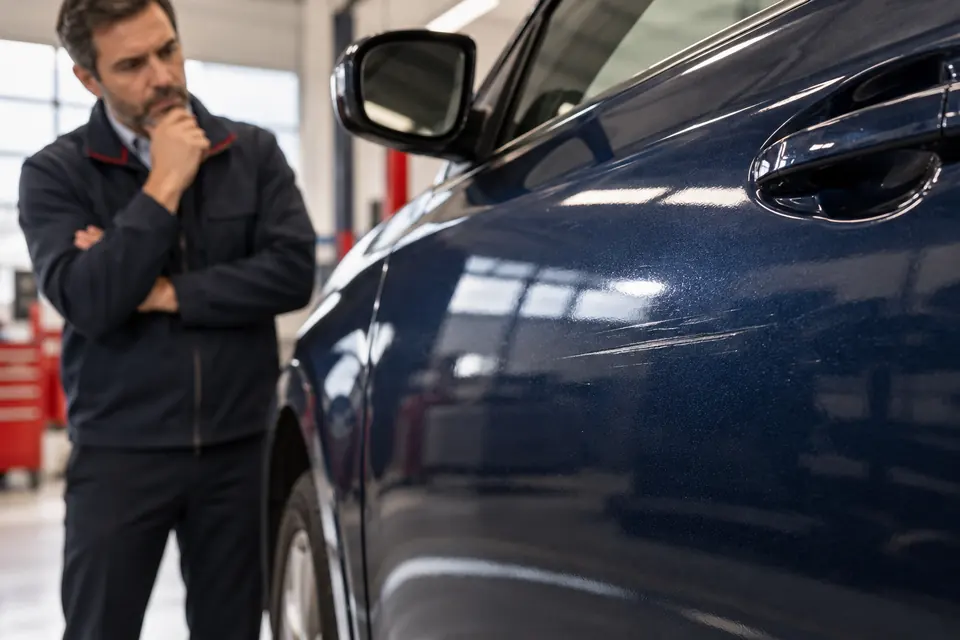
Generated educational illustration: finish surface scratch assessment. Not an actual customer repair, diagnostic result, staff member or Boudreaux’s facility.
Can every clearcoat scratch be polished away?
Clearcoat damage affects the outer finish layer, but the depth and condition of the surrounding coating influence the repair. A surface mark and a failing or deeply damaged coating are different problems.
A repair may require more than polishing if the damage extends through the coating. Refinish-system requirements determine the appropriate repair boundary. Ask whether the basecoat or substrate is affected and what process will restore the finish, rather than assuming all scratches can be buffed out.
How This Fits Into the Repair Plan
Describe the visible concern and prior surface history, then clarify the assessed layer, preparation and panel coverage. Keep color blending and clearcoat scope distinct under the applicable finish-system requirements.
Related Repair Guidance
Distinguish the visible symptom from the affected layer
A dull patch, scratch, peeling area or changed gloss describes appearance, but it does not identify the complete affected layer or cause. Tell the shop what you observed and when it appeared. Ask which assessment establishes whether the concern involves clearcoat, another layer or a different condition.
Photographs can show the area and its relationship to nearby surfaces. Include a safe overall view and a closer image in useful lighting. A phone image may alter glare and color, so it should support the conversation without being treated as a complete finish diagnosis.
Share known previous repairs, coatings, polishing or chemical exposure. Distinguish what was actually done from assumptions about the product. That history helps the shop assess the surface and explain which condition belongs to the proposed collision-repair scope.
Do not begin sanding or polishing an unfamiliar finish to discover whether the issue disappears. The supported operation depends on the actual condition and finish type. Altering the area before assessment can remove useful evidence or create a different surface question.
Related reading: Basecoat and Clearcoat: Different Layers, Different Jobs and Paint Defects After Repair: What to Discuss With the Shop.
Clarify color blending and clearcoat coverage separately
Color matching, basecoat blending and clearcoat application are related but different parts of refinishing. Ask the estimator to explain which operation applies to the affected panel. A general phrase such as blend the paint may not tell you which layer or surface is being discussed.
Applicable vehicle and paint-maker requirements should govern the proposed finish work. Ask how the plan addresses the relevant panel and preparation rather than assuming a clearcoat spot repair is appropriate wherever the visible mark ends. The owner should understand the scope without choosing an application boundary from a photograph.
Related access, removal and adjoining operations can affect the installed scope. Ask which pieces need to be removed or addressed and why. A quote for one finish material does not describe the full work necessary to prepare and refinish the area.
If assessment changes the proposed method, request the finding and dated revision. Ask whether the change concerns the affected layer, surface preparation, panel coverage or adjoining work. Keep that explanation with the estimate so the total can be understood in terms of actual operations.
Review the finish and preserve useful follow-up information
At pickup, discuss the visible finish in conditions that make the concern understandable. Ask what refinish work was completed and which care instructions apply. Gloss, color appearance and the completion of underlying operations should not be collapsed into one unexplained conclusion.
If you later notice peeling, a changed patch or another finish concern, record the location and circumstances. Contact the repairing shop before applying wax, polish or another coating to address it. A new product can make the original condition harder to assess.
Ask about the applicable terms for the actual repair if warranty or follow-up is a concern. Another product’s promise or an online clearcoat example does not establish those terms. Clarify those terms directly and have the actual surface assessed.
Questions About Clearcoat Damage and Repair Decisions
Technical Reference
PPG: clearcoat application. Use the applicable vehicle information and selected product-system instructions for the actual surface. This reference does not identify Boudreaux’s paint brand, warranty or affiliation.