
Illustration: Tire Damage After a Collision
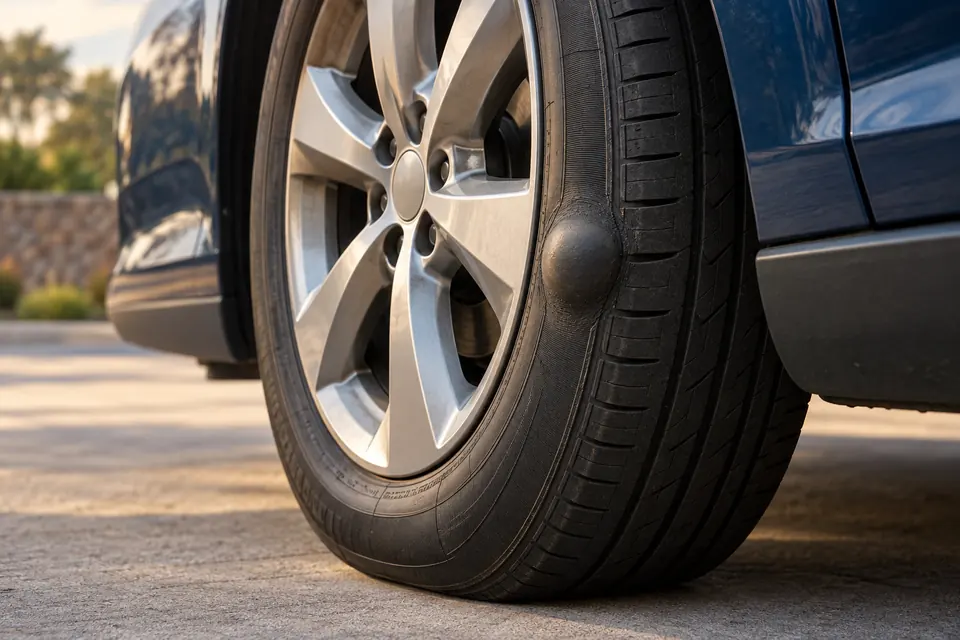
Generated educational illustration: tire sidewall impact observation. Not an actual customer repair, diagnostic result, staff member or Boudreaux’s facility.
Is a tire safe because it still holds air?
Collision-related tire damage can include cuts, bulges, air loss or contact with damaged body parts. An exterior photo may not show the complete condition.
A wheel or suspension impact should not be judged only by whether the tire remains inflated. Have the condition evaluated before continuing to drive when damage is suspected. Ask which tire, wheel and clearance checks are needed alongside the body repair.
How This Fits Into the Repair Plan
Identify physical damage and pressure observations separately. Ask which tire, wheel and clearance assessments support the proposal and avoid treating an exterior image as a repairability decision.
Related Repair Guidance
Report physical damage and changed behavior
A tire concern after impact should be described separately from wheel or body-panel damage. Identify the tire and any visible cut, bulge, air-loss concern, rubbing or changed behavior. Ask which assessment establishes the condition rather than assuming the exterior mark describes every effect of the collision.
NHTSA’s tire-safety guidance identifies physical damage as a reason to stop using a tire. Do not continue using a visibly damaged tire to test whether the concern disappears. Discuss appropriate transport and assessment rather than treating normal rolling or a short route as proof of condition.
Mention earlier wear, repairs or known tire and wheel changes. These facts help distinguish the actual history from the new event. A condition first noticed after impact should be assessed without automatically assigning every tire issue to the collision.
Take photographs only from a safe position. Do not move an uncertain vehicle or reach beneath unstable parts for a closer view. Explain access limits and let the team identify the supported inspection.
Related reading: Bent Wheels and Wheel Damage After a Crash and Uneven Tire Wear After a Collision.
Distinguish the tire, wheel and related geometry
A tire and wheel are separate components, and the surrounding suspension or mounting area can present another question. Ask which findings are confirmed and what remains provisional. A tire replacement line should not be expanded into proof that every adjoining component is sound.
A pressure-related warning and physical tire condition are different kinds of information. NHTSA explains that tire-pressure warning systems do not replace routine pressure checks; an absent warning is not a full condition assessment. Ask what relevant electronic and physical assessments apply. An absent warning does not independently establish every damaged-surface or adjoining-area question.
USTMA’s tire-repair overview explains that a complete puncture-repair inspection requires removing the tire from the wheel and assessing all damage. That is a different decision from judging a sidewall injury or impact condition from an exterior image.
If replacement is proposed, clarify the actual tire identity, vehicle requirements and related scope. A familiar size label alone may not explain the complete compatibility and installed arrangement. Ask which information supports the proposal rather than selecting a part from a broad internet comparison.
Alignment and other relevant checks should follow the actual findings and work. Ask what each result establishes. A geometry report does not independently describe every tire condition, and a new tire does not document every structural or suspension requirement.
Review the completed tire-area proposal
If assessment changes the scope, request the dated revision and reason. Ask whether it concerns the tire, wheel, adjoining component, replacement arrangement or verification. Keep those descriptions clear so a new total can be understood at operation level.
At pickup, ask which tire and related work was completed and which relevant records or instructions are available. Discuss any remaining rubbing, warning or handling concern with the team. One successful visible result should not obscure another unresolved observation.
For a later concern, record the conditions and timing and contact Boudreaux’s before further deliberate use or improvised corrections. The actual repair record helps discuss the next assessment without guessing at the cause from one tire symptom.
Clarify the supported replacement arrangement with the repairing team and the actual tire-related claim decision or payment responsibility with the insurer.
Read NHTSA’s tire-safety information for official consumer guidance.
Questions About Tire Damage After a Collision
Plan assessment without creating another risk
Take photographs only from a safe position and tell the shop about pressure loss or the impact sequence. Do not continue driving on a visibly bulging tire to see whether it worsens. Ask about suitable assistance and transport rather than relying on a photo to judge safety.