
BOUDREAUX’S COLLISION · REPAIR EDUCATION
Photos of Interior Warning Messages
A clear photo of an existing warning message can help preserve its wording and context. It supplements the intake conversation but does not replace a scan, diagnosis or physical inspection. The message may describe a system condition rather than its cause.
Illustration: Photos of Interior Warning Messages
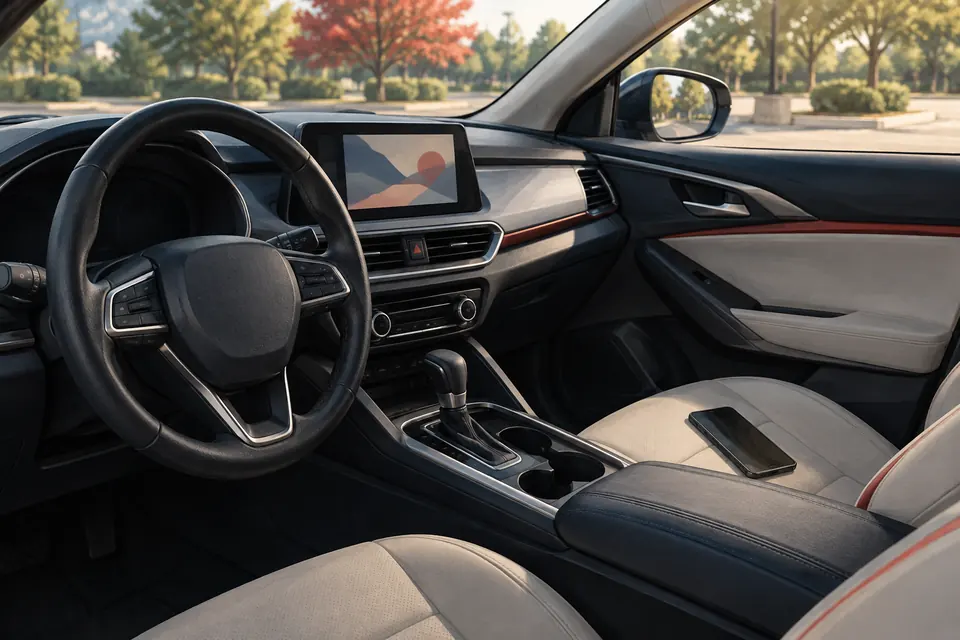
Generated educational illustration: parked dashboard photo context. Not an actual customer repair, diagnostic result, staff member or Boudreaux’s facility.
What to Clarify for Your Vehicle
Take a photo only when the vehicle and surroundings are safe. Include the exact wording in your request and note when it appeared. Avoid repeatedly operating a damaged vehicle to produce a better picture. Share personal information only where needed for the repair conversation.
Capture the wording and the wider context
A photo of a warning message preserves wording that is easy to forget. Include the display clearly and note when the message appeared. Several warnings can occur together, so do not summarize a specific message as simply a check-engine light.
Take the photograph only while safely parked. Do not use a phone while driving to capture a transient message. If it disappears before you can photograph it safely, write down what you remember.
Share relevant information without clearing it
Tell the shop whether the warning existed before the collision and what happened immediately before it appeared. Avoid clearing faults or disconnecting the battery merely to remove the display. The repairer may need the original information.
Check the photo for unrelated personal details before sharing it. Use the shop’s agreed channel and identify the vehicle and timing. A display photo is supporting history; scanning and inspection are still needed to understand the cause.
Example: several warnings appear together
An owner remembers seeing several dashboard messages after the impact but can only recall one. A safely captured display photo can preserve the wording and sequence. If no photo was possible while parked, a written note is still useful; do not recreate a driving situation to obtain one.
Tell the shop whether the vehicle had been moved, jump-started or powered on after the event. That context does not diagnose the warnings, but can help the repairer understand the conditions when they appeared.
Keep the original image and share the relevant view through the agreed channel. Do not clear messages just to make the dashboard look normal before intake. The repairer needs to assess the information, and a warning photograph should remain supporting history rather than a substitute for diagnosis.
Related Guidance
A warning photograph records the message, not the diagnosis
A photograph can preserve the exact wording or symbol shown on the dashboard. That can help a repairer understand what the vehicle reported and when you noticed it. It does not establish the cause of the message or identify every component affected by the collision.
Tell the shop whether the warning was present before the event, appeared afterward or changed during necessary movement. Include the timing in your description rather than relying on an image filename alone. If you do not know the earlier status, say so; an uncertain history is more accurate than an assumed clean dashboard.
Follow the vehicle’s warning guidance and seek appropriate assistance when needed. Taking a photograph is secondary to immediate safety. Do not keep driving, restart the vehicle or operate a damaged system merely to make the message appear for the camera.
Take the record only from a safe parked position
Do not photograph the dashboard while driving or ask a driver to look at a phone. If the vehicle can be safely stationary and access is appropriate, capture the wording clearly without handling damaged controls. A readable view is more useful than a large collection of blurred images.
Check what else is visible before sharing. A screen may show navigation destinations, a connected phone, contact details or other information unrelated to the repair. Include only what the receiving shop needs. Do not share account passwords or unrelated personal records with an estimate request.
Where more than one warning appeared, describe each and its timing rather than assuming all messages identify one failed part. Ask the repairer what further assessment is needed. A dashboard image supports intake; it is not a substitute for the applicable physical or diagnostic work.
Connect the photograph to the repair question
Give the image a simple date and vehicle reference, and send it through the selected shop’s confirmed contact method. Explain the concern in the message so the repairer does not have to infer its meaning from a symbol alone. Keep a copy of the original photograph with your intake notes.
After assessment, ask how the reported warning was addressed and whether any related issue remains unresolved. A message that has disappeared does not, by itself, establish that physical collision damage has been repaired. The plan and completed-work explanation should describe the applicable finding and checks.
For Boudreaux’s New Orleans or Luling, choose the receiving location and provide a reachable contact method. If a warning appears after delivery, record the circumstances safely and contact the repairer before making another trip. Do not restart or drive the vehicle repeatedly to gather a more dramatic example.