
BOUDREAUX’S COLLISION · REPAIR EDUCATION
Keeping Claim Communication Focused
A useful update identifies the vehicle, claim reference, estimate version and exact question. Long message threads can obscure whether the next step involves assessment, authorization, parts or payment. Clear communication helps the parties respond to the actual issue.
Illustration: Keeping Claim Communication Focused
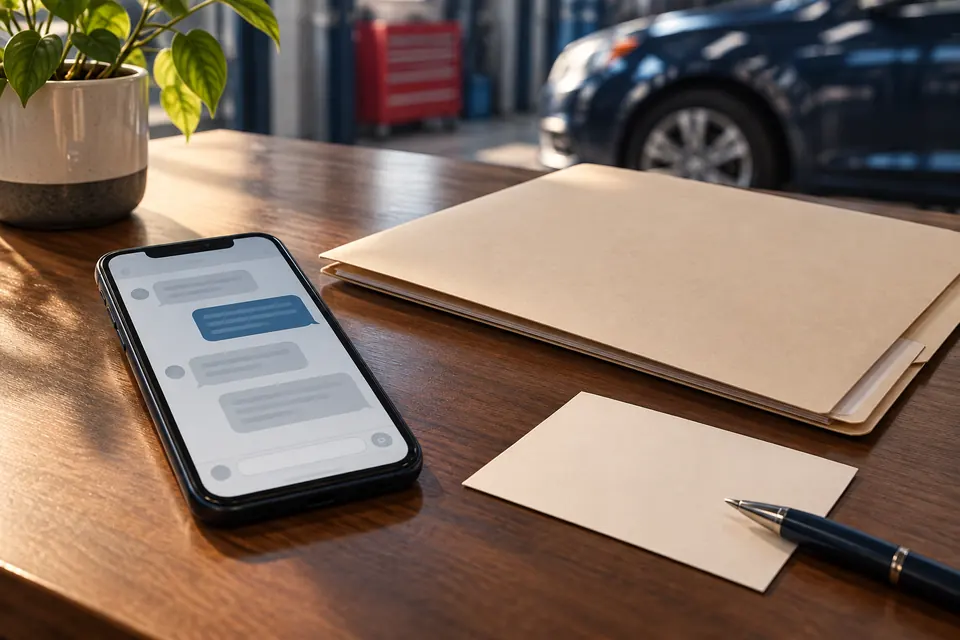
Generated educational illustration: focused claim question context. Not an actual customer repair, diagnostic result, staff member or Boudreaux’s facility.
What to Clarify for Your Vehicle
Use a short list of unresolved items and keep attachments labeled. Avoid resending personal information unrelated to the question. A well-organized message supports follow-up but does not guarantee a response time or a claim outcome.
Give each message a clear purpose
A focused claim message identifies the vehicle or claim reference, the relevant estimate version and one decision or question. That makes it easier for the recipient to respond accurately. A long sequence of unlabeled photos or forwarded messages can obscure the issue.
Separate requests about scope, approval, payment and timing when they require different answers. Include the relevant document rather than an unrelated collection of records.
Keep the discussion traceable
After an important call, keep a dated note of who you spoke with, what was discussed and any agreed next step. If a point needs written clarification, request it through the established channel. Do not assume silence means approval.
Before sending another follow-up, identify what remains unanswered and who is responsible for that answer. The goal is a usable record of the decision, not repeated messages that leave the same ambiguity. Protect personal information that is unrelated to the repair question.
Example: replacing a long message chain with a focused request
A thread contains several photos, two estimate versions and a payment question, but no one has identified the decision needed. The next message should name the current document and ask one specific question, such as whether a particular revised operation has been addressed.
Attach the relevant record through the established channel and explain its date or version. If the recipient is responsible for a different part of the process, ask who handles the remaining question. Repeating the entire thread may not resolve that responsibility.
Keep a dated note of important calls and agreed next steps. If an answer is incomplete, identify the unanswered point in the follow-up. The result is a usable decision record rather than a growing collection of messages that everyone interprets differently. Avoid sending unrelated identification or payment details simply because they were included in an earlier screenshot.
Related Guidance
Give each question a vehicle and document reference
A useful claim message identifies the vehicle, claim reference when available, chosen repair shop and the estimate or invoice version being discussed. Then state the question about a specific operation, amount or response. That structure helps the receiving contact find the relevant record without reviewing an entire conversation history.
Keep one issue clear within each message. For example, ask whether a particular added operation has a claim response, rather than combining an unclear part line, a rental question and a pickup assumption into one broad request for an update. Related issues can be listed separately when they need different answers.
Use the correct contact for the question. The repairer explains the assessed vehicle scope; the insurer explains the claim response and policy matters. A concise message should not assume that either person has already made a decision for the other.
Record responses without turning projections into promises
After a conversation, note the date, person, specific question and answer. Identify an unresolved item and the next expected update. If the answer changes your understanding of scope, payment or collection, ask for the relevant written explanation or current document.
Keep a projected repair date distinct from a completed stage. A part expected next week is not the same as a part received and installed. An amount under review is not the same as an issued payment. Using accurate stage descriptions helps prevent a later message from repeating a projection as if it were a confirmed result.
Where a response is unclear, ask a focused follow-up using the same version and line. Repeatedly forwarding a long thread without identifying the unanswered item can make the issue harder to resolve. Preserve the original correspondence and add your own brief index or notes separately.
Share the information needed for the actual request
Ask what supporting material the recipient needs and send it through a confirmed contact method. A relevant estimate line, identified photograph or repair note may clarify the issue. Unrelated personal documents should not be included simply because they are in your claim folder.
For a symptom or safety concern, contact the repairer directly and explain the observation before making another trip. Do not let a payment or paperwork discussion stand in for a decision about how the vehicle should be moved. Record the receiving arrangement separately from the claim question.
When contacting Boudreaux’s, specify New Orleans or Luling and the vehicle’s current stage. Use the contact information to start the repair conversation, and retain the relevant insurer reference for claim matters. Clear records and specific questions reduce unnecessary repetition while keeping the actual repair and payment decisions visible.