
BOUDREAUX’S COLLISION · REPAIR EDUCATION
Radar Covers, Emblems and Material Restrictions
A radar sensor may operate through a cover, emblem or other designated surface. The allowed material and refinish conditions can be system-specific. A visually similar replacement or repair can differ in ways relevant to sensor operation.
Illustration: Radar Covers, Emblems and Material Restrictions
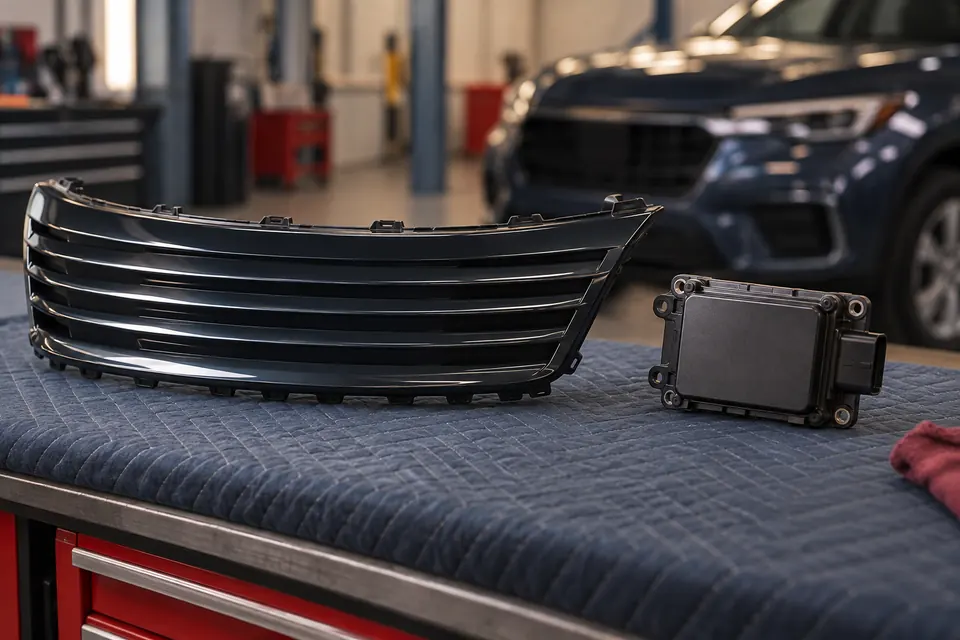
Generated educational illustration: radar cover material review. Not an actual customer repair, diagnostic result, staff member or Boudreaux’s facility.
What to Clarify for Your Vehicle
Ask whether the damaged surface is in a radar path and which repair restrictions apply. Do not assume a cover can be filled, coated or replaced with any look-alike part. The correct component and surface requirements are separate from calibration and scanning.
The surface in front of radar can be functional
A radar sensor may sit behind a cover, grille or emblem. That surface can be part of the sensing environment even though it looks like ordinary exterior trim. Material, thickness, coatings and repairs in the relevant area may be restricted by vehicle-specific instructions.
The appropriate replacement or repair decision therefore needs more than matching the exterior shape. A cosmetically similar emblem or repaired cover is not automatically suitable for a radar-equipped configuration.
Identify the part and any restricted repair area
Ask whether radar-related restrictions apply to the affected component, and how the proposed part and refinishing approach were checked against them. Calibration requirements are a separate question; calibration does not automatically make an unsuitable material acceptable.
Tell the shop about replacement emblems, wraps, films or previous repairs near the sensor area. Those details help identify the vehicle’s actual configuration. If a feature becomes unavailable after repair, provide the message and conditions rather than assuming the emblem or sensor is the cause.
Example: an emblem replacement after a front impact
Imagine an estimate includes a damaged front emblem and the vehicle has radar behind that area. An online part may look identical in a product photo, yet the repairer still needs to identify whether it is the correct specification for the radar-equipped vehicle. Exterior shape and price alone do not resolve compatibility.
The same distinction applies if someone proposes filling a gouge or adding a decorative film. The material in the sensor’s field can be subject to restrictions. The shop should research the actual component and affected area rather than applying a general bumper-repair method everywhere. If calibration is required afterward, it is an additional procedural issue, not a cure for using an unsuitable cover.
Ask the shop to identify the proposed part and explain any repair or coating restriction that affected the scope. Tell it about previous cosmetic changes in that area. The useful comparison between proposals is the component specification and required work, rather than whether both quotes contain the word emblem.
Further repair information
I-CAR: materials in a radar sensor’s path
General background does not replace the applicable vehicle information, owner’s manual or procedure for the actual operation.
Related Guidance
Discuss part selection before choosing a visual substitute
If the plan includes replacing an emblem or cover, ask how the correct version is identified. Similar-looking trim pieces may have different intended uses. Do not buy a decorative substitute simply because its shape and badge match a photograph. Have the repairer review the actual part and applicable requirements before assuming it can be used.
If the estimate changes from a cosmetic repair to replacement, ask which finding or restriction prompted that decision. Keep the dated proposal and explanation together. A sensor-area requirement should be understandable to the owner without revealing every technical procedure. Payment questions can then be discussed separately with the responsible claim representative.
Ask which system-related operations apply after the physical work and how the available result will be documented. A clean exterior and a working dashboard indication do not independently explain the complete sensor-related scope. Confirm the selected shop’s arrangement for your vehicle instead of assuming every operation is performed in-house.