
BOUDREAUX’S COLLISION · REPAIR EDUCATION
Masking vs Removing Parts for Refinish Access
Masking protects selected areas from overspray, while removal can provide access to edges or surfaces that would otherwise remain covered. Which approach is appropriate depends on the component, repair boundary and procedure. Removing trim can also create attachment or sealing requirements.
From the Boudreaux’s archive
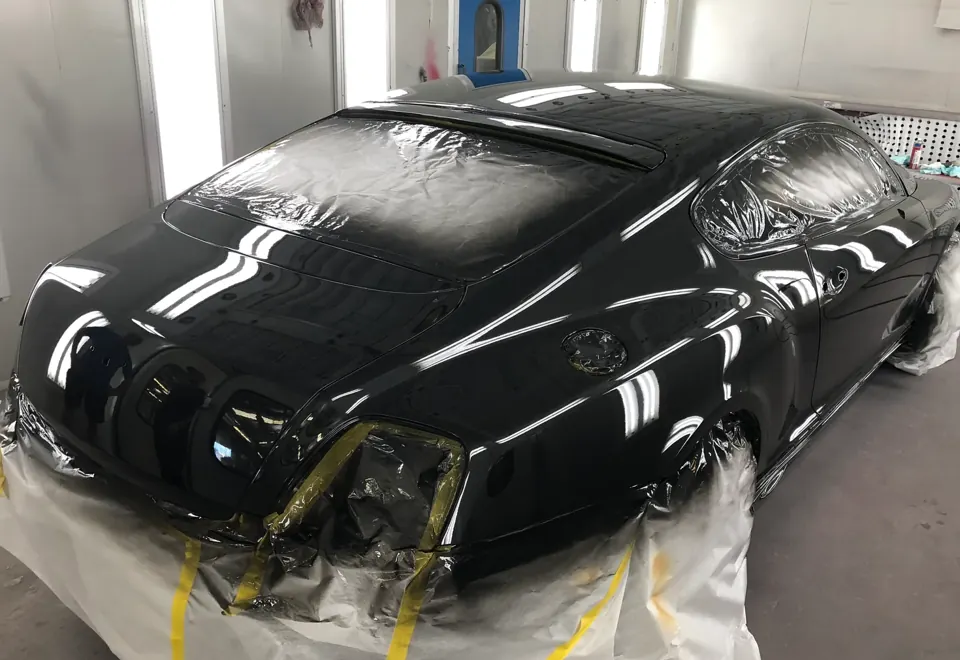
Owner-supplied paint-project archive detail showing masking and open rear lamp areas. It illustrates access and protection context, not a universal removal rule, completed installation or proof that the same method applies to another vehicle.
What to Clarify for Your Vehicle
Ask why a specific part is being removed or masked and whether required retainers are included. More disassembly is not automatically necessary everywhere, but masking should not substitute for access the repair actually requires. The goal is appropriate access and protection, not one universal method.
Access determines the work around the paint repair
Masking protects an area that remains in place. Removing a component creates access behind or around it. They are different operations, and the suitable choice depends on the vehicle, component and refinishing requirements. Masking is not automatically inadequate, and removal is not automatically required for every adjacent part.
A handle, lamp, molding or weatherstrip may interfere with access to a repair boundary or panel edge. Removing it can also introduce attachment, sealing or setup requirements. Those related operations belong in the planning discussion, rather than appearing as unexplained extras.
Why an estimate may include removal and installation
Removal and installation can be necessary even when the removed component is undamaged. The purpose may be to expose a surface, protect the part during refinishing or allow the assembly to be completed correctly. That is different from replacing the component because it is damaged.
For example, a lamp removed for access might be reinstalled, while a broken mounting point might require repair or replacement under the applicable instructions. The labor descriptions should make that distinction clear. A listed access operation is not proof that the part itself has collision damage.
Reviewing the plan and the finished boundaries
Ask what is being removed for access and whether any clips, seals or other attachments are expected to be replaced. If an operation is added after disassembly, ask which access problem or damaged attachment prompted it.
At pickup, review visible trim fit, accessible finish boundaries and the operation of affected components. If you notice paint on a seal, an uneven edge or a loose molding, identify the exact area for the shop. Avoid pulling off trim to investigate it yourself; doing so can change the condition the shop needs to inspect.
Related Guidance
Review finish access and completed assembly separately
Ask how the proposed access arrangement fits the finishing sequence and what remains before delivery. A painted surface can be a completed stage while reinstallation or another applicable check remains. Conversely, a component being back in position does not independently describe every surface that was refinished or protected. The update should name the actual stage and relevant next step.
At handoff, retain the final scope, relevant revisions and any provided instructions. If a loose edge, finish line, noise or function concern appears later, identify its location and timing without declaring masking or removal to be the cause. Do not peel material, pull trim or move a component to investigate the repair yourself. Ask the provider to assess the actual condition and record. This page explains the scope conversation without promising one access method or identical service arrangements at both locations.