
BOUDREAUX’S COLLISION · REPAIR EDUCATION
Refinishing Edges, Jambs and Hidden Surfaces
A replaced or repaired panel can have exposed edges, jambs or other surfaces beyond its main exterior face. The required refinish scope depends on the part, access and coating requirements. Exterior color coverage does not show the treatment of all disturbed surfaces.
From the Boudreaux’s archive
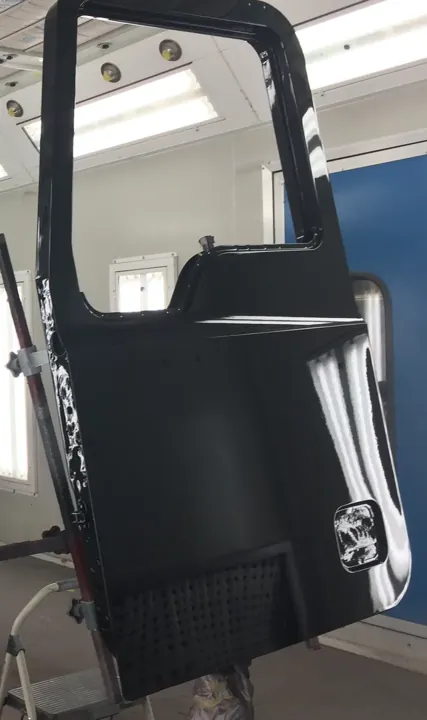
Owner-supplied archive detail of a detached door in a refinishing area. It supplies panel-edge and access context; the visible exterior does not establish every hidden-surface treatment, coating requirement or completed result.
What to Clarify for Your Vehicle
Ask which surfaces require protection or finish and whether removal of adjacent pieces is needed for access. The estimate should distinguish exterior refinishing from additional relevant operations. Do not assume every hidden surface needs the same cosmetic finish, or that every hidden surface can be left unprotected.
Visible surfaces are only part of a panel
Panel edges, door jambs and concealed surfaces can be part of a refinishing plan even when they are not obvious in an exterior photograph. Their treatment depends on the repair, replacement part and applicable procedures. A replacement panel may require work on surfaces that are inaccessible after assembly.
These areas also help explain why painting a panel is not always one isolated operation. Access, preparation, protection and reassembly may be needed around the refinishing work. The written scope should make the intended areas clear.
Distinguishing finish work from corrosion protection
Exterior color and corrosion protection serve different purposes. A finish that looks complete from outside does not by itself demonstrate that required protection on concealed areas has been restored. Likewise, a protective treatment is not necessarily intended to look like a polished exterior surface.
For a door replacement, the exterior face, edges and interior surfaces may each involve different preparation or protection requirements. The owner does not need to inspect dismantled areas personally, but can request an explanation of what the repair includes and any supporting records the shop provides.
A practical scope question before authorization
Ask whether the estimate covers the surfaces affected by removal, replacement or repair, including relevant edges and concealed areas. If the estimate changes after disassembly, find out which newly accessible areas require attention. A revised scope should identify the work rather than relying on the phrase complete paint job.
At delivery, point out any visible unfinished edge or overspray concern by location. Do not assume every concealed surface should have the same gloss as the exterior; the appropriate treatment is determined by its function and the applicable repair instructions.
Further repair information
PPG: internal repair finish background
I-CAR: corrosion-protection sequence
General background and product examples do not replace the applicable instructions for the actual vehicle, material and operation.
Related Guidance
Keep appearance and concealed protection in their own questions
Exterior color and finish, edge treatment and other applicable protective work can answer different questions. Ask how each relevant operation is identified in the final scope. A smooth panel photograph can illustrate the visible result without independently documenting every concealed treatment, attachment or installation requirement.
At delivery, retain the relevant component description, revisions and any care instructions. If a concern appears, identify the edge, opening or surface and when it was observed. Do not scrape protection, remove trim or apply another product to investigate it. Let the provider review the actual condition and repair record. A clear location report is more useful than declaring that every hidden area was missed from one photograph. This page explains a customer scope discussion without promising a particular product, finish method or warranty at both shops.